Aggressive Behavior in Children: Why It Happens and How to Respond (Ages 2-7)

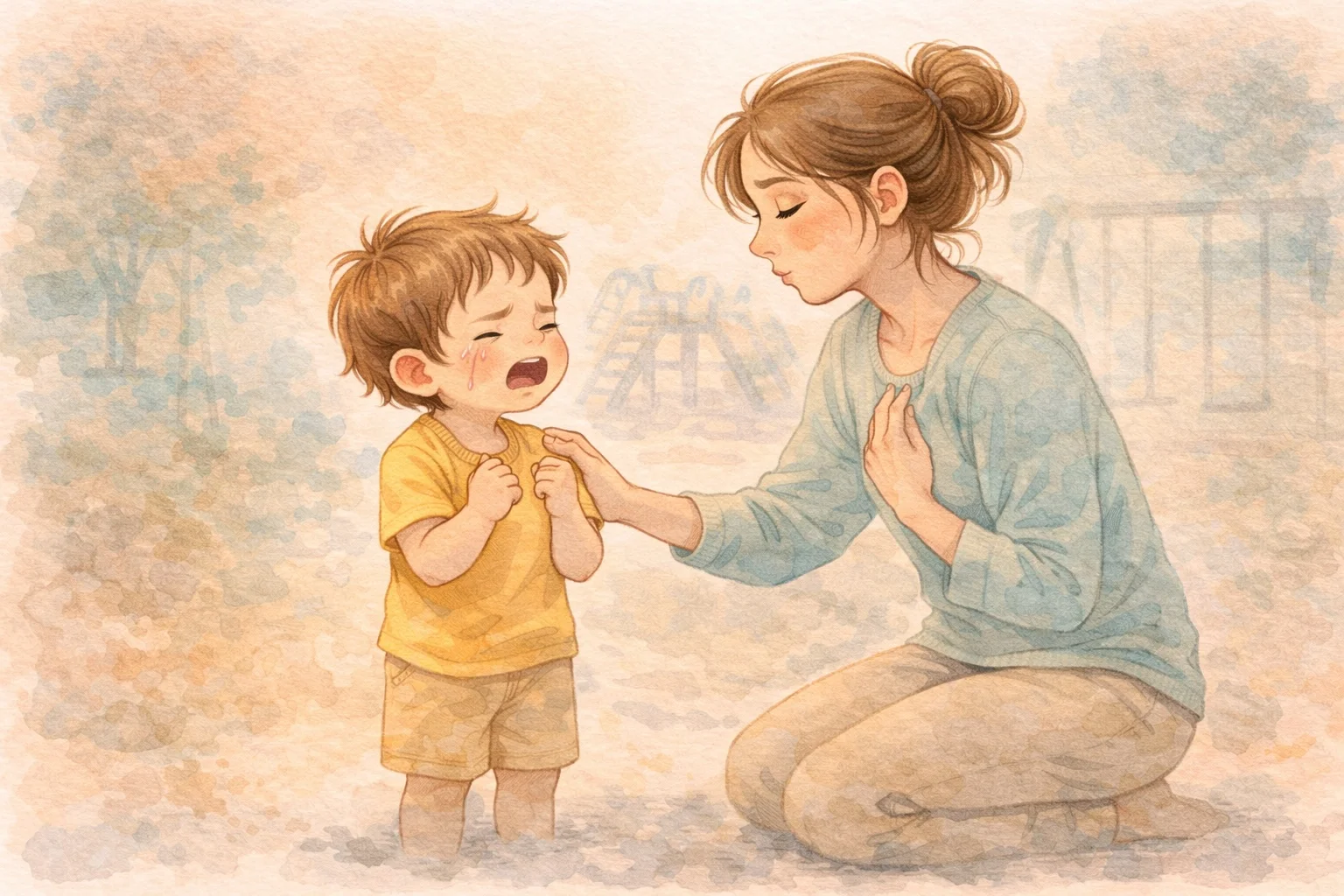
When your sweet 4-year-old hauls off and punches another child at the playground, the shame and fear hit you before anything else. Your face flushes. Other parents stare. And the panicked thought racing through your mind is: "What is wrong with my child?"
Nothing. Nothing is wrong with your child.
Aggressive behavior in young children — the hitting, kicking, biting, throwing, pushing, and screaming — is one of the most common concerns parents bring to pediatricians and child psychologists. And while it feels alarming in the moment, the research is clear: aggression in children ages 2-7 is almost always a communication problem, not a character problem. Your child isn't broken. Their brain is under construction.
Understanding why aggression happens and how to respond effectively can transform your most dreaded parenting moments into opportunities for real emotional growth. This guide will walk you through the brain science, age-by-age expectations, proven strategies, and the signals that tell you when it's time to seek professional support.
- ✓Aggression in children ages 2-7 is almost always a communication problem, not a character problem
- ✓Your child's prefrontal cortex (the "brake pedal") won't be fully developed until age 25 — they default to aggression because better response systems aren't built yet
- ✓Co-regulate first, teach later — you can't reason with a brain in survival mode
- ✓Consistent, compassionate strategies typically reduce aggression by 40-60% within 4-6 weeks
What's Really Happening in Your Child's Brain
The Amygdala Hijack
To understand your child's aggression, you need to understand two parts of their brain. The amygdala is the alarm system — it detects threats and triggers the fight-or-flight response in milliseconds. The prefrontal cortex is the brake pedal — it assesses situations rationally, controls impulses, and makes thoughtful decisions.
Here's the problem: the amygdala is fully operational at birth. The prefrontal cortex won't be fully developed until your child is approximately 25 years old.
When your 3-year-old gets shoved on the playground, their amygdala fires instantly: Danger! Fight! The prefrontal cortex, which would normally step in and say, "Wait, let's use our words," is essentially offline. The alarm is blaring so loudly that the rational brain can't be heard. Your child doesn't choose aggression — their brain defaults to it because the more sophisticated response system isn't built yet.
This is not a discipline failure. It's architecture.
The Stress Response Cascade
When a child becomes aggressive, their body is flooded with cortisol and adrenaline. Their heart rate spikes, muscles tense, breathing becomes shallow, and their capacity for language, empathy, and logical thinking drops to near zero. In this state, your child literally cannot:
- Hear your reasoning ("Use your words!")
- Feel empathy ("How do you think she feels?")
- Control their body ("Stop hitting right now!")
- Process consequences ("If you do that again, we're leaving")
Trying to teach or discipline during the stress response is like trying to have a conversation with someone whose house is on fire. First, you have to put out the fire.
Three Types of Aggression (And Why It Matters)
Not all aggression is the same, and understanding the type helps you respond effectively.
Reactive Aggression (Emotional Overwhelm)
This is the most common type in young children. The child is flooded with emotion — frustration, fear, anger, overstimulation — and their body explodes before their brain can catch up. You'll recognize it by the emotional intensity that comes with it: tears, screaming, red face, obvious distress.
What it sounds like from the child's perspective: "I can't handle this feeling and my body is doing something before I can stop it!"
Instrumental Aggression (Goal-Directed)
The child wants something specific — a toy, a turn, a particular seat — and uses physical force to get it. This type is more calculated and less emotional. You'll notice it's often quick and purposeful, without the emotional meltdown that accompanies reactive aggression.
What it sounds like from the child's perspective: "I want that thing and pushing is the fastest way to get it."
Frustration-Based Aggression (Skill Gap)
The child is trying to do something they can't yet accomplish — communicate a complex feeling, solve a social problem, complete a task — and the gap between what they want and what they can do becomes unbearable. This type often involves throwing or destroying things.
What it sounds like from the child's perspective: "I'm trying so hard and it's not working and I can't take it anymore!"
Each type calls for a slightly different response, but all three share a common thread: the child needs skills they don't yet have.
What's Normal at Every Age
One of the most helpful things you can know is what to expect. Aggression that's perfectly normal at 2 looks different at 6.
Ages 2-3: The Peak Years
Physical aggression is at its highest during this period. Nearly all toddlers hit, push, grab, or bite at some point. Language is still developing, impulse control is minimal, and the concept of sharing is genuinely beyond their cognitive capacity. Tantrums with physical components — throwing themselves on the floor, flailing, throwing objects — are standard. If your 2-year-old pushes another child to get a toy, that's not a red flag. It's a developmental reality.
Ages 3-4: The Communication Shift
As language develops rapidly, you should start seeing a gradual decrease in physical aggression. Children begin to use words alongside (and sometimes instead of) physical actions. But during moments of big emotion, they'll still default to their bodies. This is also the age where power struggles intensify, and aggression can flare during battles over autonomy.
Ages 4-5: The Empathy Emergence
Children begin to understand — at least sometimes — that their actions hurt others. They may show remorse after aggression, even if they couldn't stop themselves in the moment. Verbal aggression (name-calling, threats) may increase as physical aggression decreases. This is actually progress: they're moving from body to words, even if the words aren't kind yet.
Ages 5-7: The Self-Regulation Window
By this age, most children can manage mild frustration without physical aggression. When aggression does occur, it's typically during intense emotional moments or when multiple stressors pile up (hunger, tiredness, social conflict). Children this age can begin to identify their triggers, practice coping strategies, and engage in meaningful conversations about their behavior after the fact. If physical aggression is still frequent and intense at this stage, it warrants closer attention. Our understanding defiance guide explores what's happening when school-age children continue to struggle with behavioral regulation.
7 Strategies That Actually Reduce Aggression
Strategy 1: Safety First, Always
When aggression happens, your only immediate priority is safety. Stop the behavior, protect the target, and protect your child from hurting themselves or escalating further.
What this looks like in practice:
- Physically step between children (calmly, not aggressively)
- Use gentle but firm holds if needed: "I'm going to hold your hands until your body is safe"
- Move your child to a less stimulating space
- Attend to any child who was hurt
Strategy 2: Co-Regulate Before You Educate
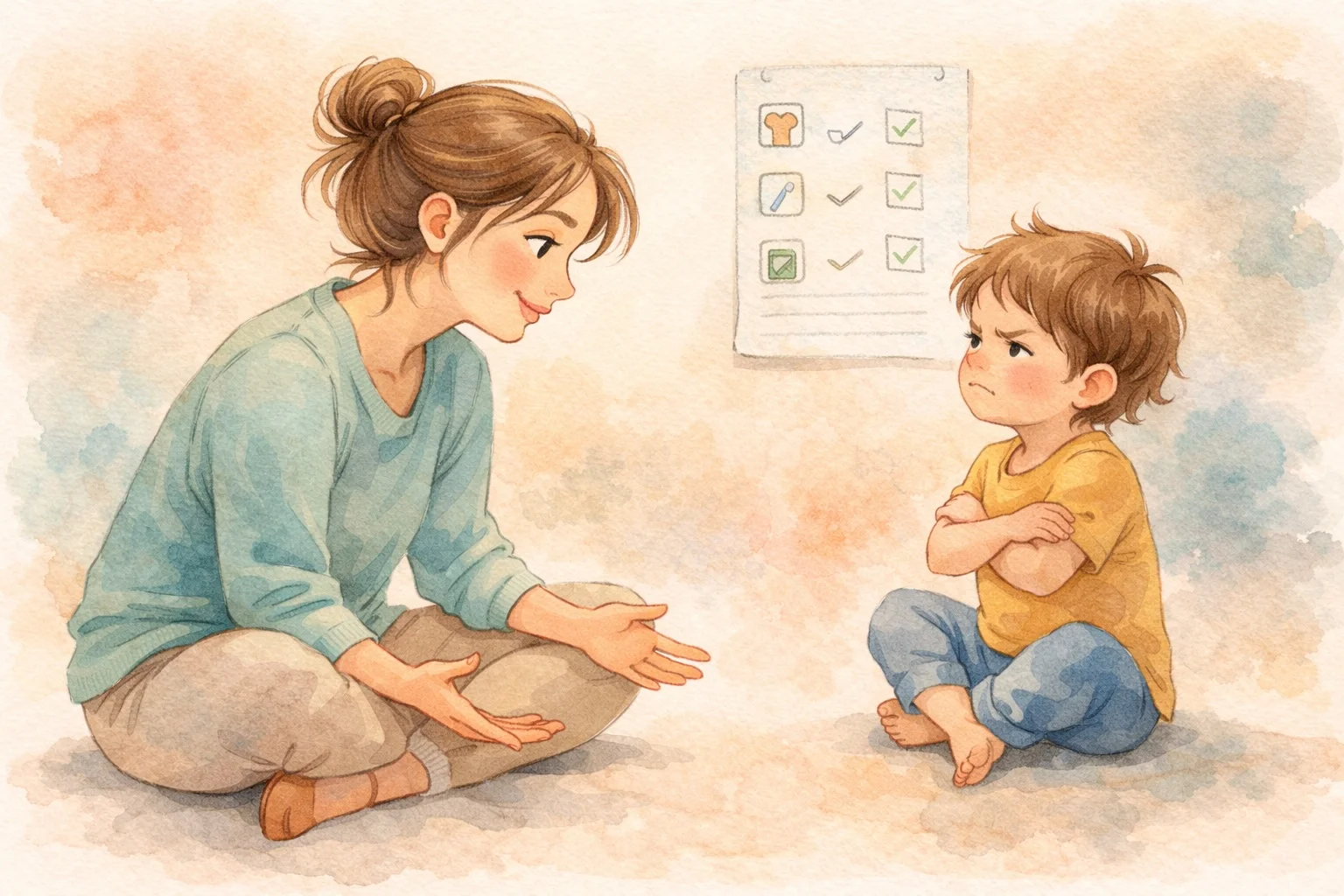
Your child's nervous system is on fire. Before they can learn anything, they need your calm nervous system to help bring theirs back to baseline. This is co-regulation, and it's the most powerful tool you have.
Co-regulation techniques:
- Slow your own breathing visibly — let them see your chest rise and fall
- Lower your voice to just above a whisper
- Reduce your words to short, simple phrases: "I'm here. You're safe. I've got you."
- Offer physical comfort if they'll accept it — a hand on their back, sitting close
- Wait — this is the hardest part. It may take 5-15 minutes for the stress hormones to clear
Your calm presence is not passive. It's doing the heaviest neurological lifting of the entire interaction. You are literally lending your child the regulation they cannot yet produce on their own.
Strategy 3: Name the Feeling Behind the Fist
Once your child is beginning to calm (not fully calm, just starting to come down), name what you see. This is not about excusing the behavior — it's about helping your child understand what drove it.
More naming scripts:
- "That was really scary when she pushed you, and your body wanted to push back."
- "You wanted another turn SO badly and it felt impossible to wait."
- "Your body had too much energy and it all came out at once."
When children hear their internal experience accurately described, it builds a critical bridge between sensation and language. Over time, they learn to say "I'm furious" instead of throwing a block.
Strategy 4: Teach Alternatives (When They're Calm)
This is where the real skill-building happens — but it must happen during calm moments, not during or immediately after an aggressive episode. The teaching brain and the survival brain cannot operate simultaneously.
Alternatives to teach:
- Stomping feet for anger ("Let your feet be angry, not your hands")
- Squeezing a pillow or stress ball for the urge to hit
- Using a "mad voice" — loud, controlled words instead of physical action
- Walking away to a designated calm spot
- Asking an adult for help before the feelings get too big
How to practice:
- Choose one alternative at a time
- Role-play during calm, connected moments
- Use stuffed animals or puppets to practice scenarios
- Praise any attempt to use the alternative, even imperfect ones
- Be patient — new neural pathways take weeks to strengthen
Strategy 5: Become a Trigger Detective
Aggression doesn't come from nowhere. There's almost always a pattern, and finding it gives you the power to prevent rather than react.
Common triggers to track:
- Time of day (before meals, after school, late afternoon)
- Transitions (leaving the park, stopping play, going to bed)
- Sensory load (loud environments, crowded spaces, rough textures)
- Social situations (specific children, group settings, competition)
- Physical state (hungry, tired, sick, overstimulated)
- Emotional state (jealousy about sibling, anxiety about school, feeling disconnected)
Keep a simple log for one week. Note when aggression happens, what preceded it, and what your child seemed to need. Patterns will emerge, and those patterns are your prevention roadmap.
Strategy 6: Fill the Connection Bank Account
Think of your relationship with your child as a bank account. Every moment of genuine connection — play, laughter, eye contact, warmth — is a deposit. Every conflict, correction, and stressful moment is a withdrawal.
Children with a full connection bank account handle frustration better, recover from upsets faster, and are more willing to accept limits. Children running on empty are more reactive, more aggressive, and harder to reach.
Daily connection deposits:
- 10 minutes of child-led play where you follow their lead entirely
- Physical affection — not just when they're hurt, but randomly throughout the day
- Specific praise for things you notice: "You waited so patiently for your turn. That took real strength."
- Laughter — be silly together, have inside jokes, tickle and wrestle (with consent)
- Bedtime ritual that includes one-on-one conversation: "Tell me the best part of your day"
Strategy 7: Role-Play and Rehearse
Children learn through practice, and the most effective practice happens through play. Role-playing challenging scenarios during calm moments helps children build neural pathways for better responses before they're needed.
Role-play ideas:
- "Let's pretend I take your toy. What could you do instead of hitting?"
- "I'm going to be the kid who won't share. Show me how you could handle it."
- "Let's practice what to do when your body starts feeling like a volcano"
- Take turns being the "angry kid" and the "helper kid"
Make it fun. Use silly voices. Let your child play the adult sometimes. The more they practice, the more automatic the alternative responses become.
The Parent Self-Regulation Challenge
Here's the truth nobody talks about enough: your child's aggression triggers your own stress response. When your kid hits another child, YOUR amygdala fires too. Shame, fear, anger, helplessness — they all flood in. And if you respond from your own hijacked state, you'll either escalate the situation or model exactly the dysregulation you're trying to help your child overcome.
Managing your own response:
- Recognize your triggers. What specifically about your child's aggression sets you off? Is it the public embarrassment? The fear that something is "wrong"? The feeling of failure?
- Have a personal script. Before the next incident, decide what you'll say to yourself: "This is a developing brain, not a bad child. I can stay calm."
- Breathe first. Take one deep breath before you speak or move. One single breath can be the difference between a reactive response and a regulated one.
- Forgive yourself quickly. You will lose your cool sometimes. That doesn't undo all the good work. Repair matters more than perfection.
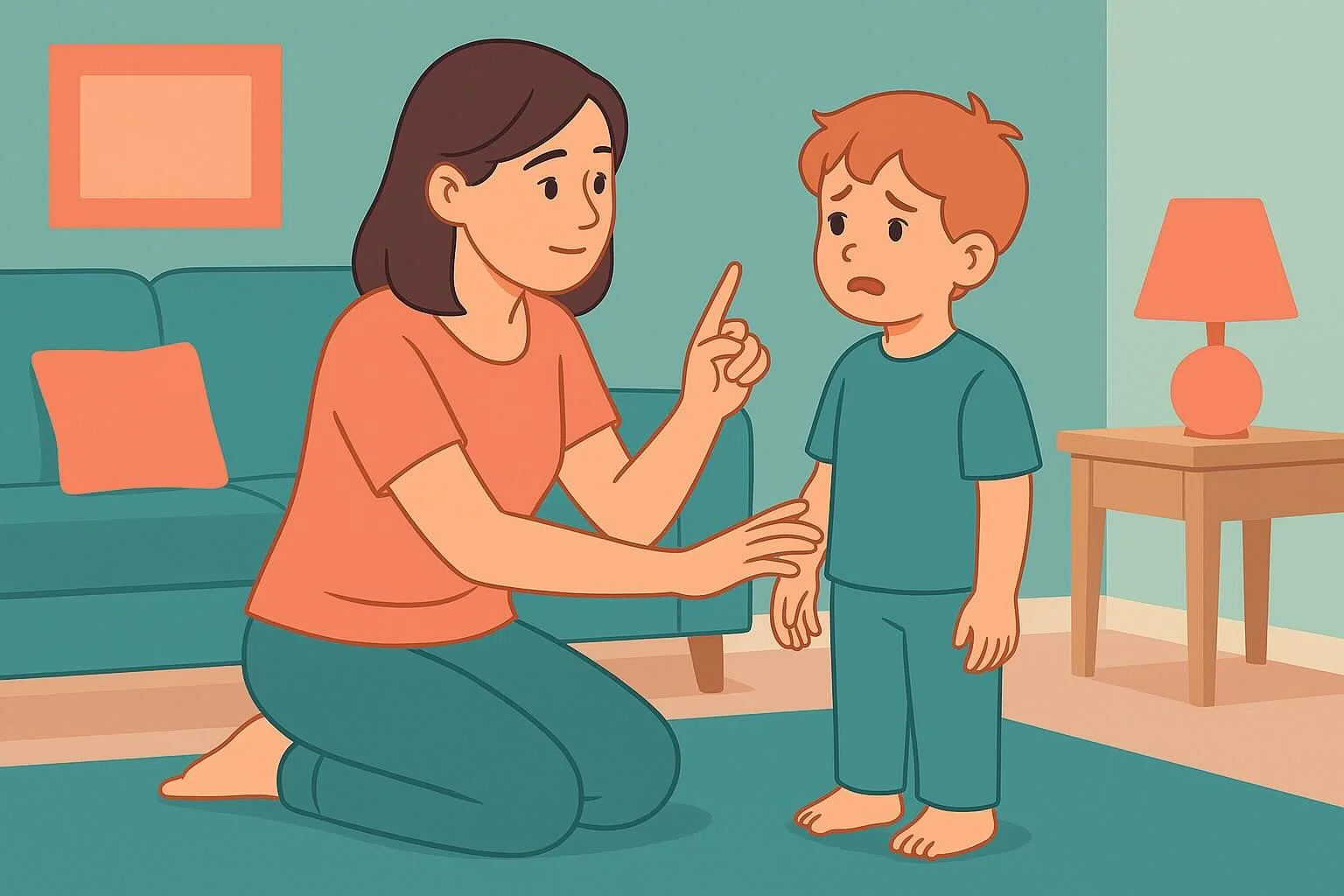
What is WRONG with you?! We don't HIT!" (yelled while grabbing child's arm)
I'm not going to let you hit. I'm here. Let's take a breath together." (said calmly while blocking the hit)
For a deeper exploration of building emotional safety during intense moments, including how to stay regulated when your child's behavior pushes your buttons, check out our dedicated guide.
Week-by-Week Action Plan
Week 1: Observe and Understand
- Track all aggressive incidents (time, trigger, type, your response)
- Identify your child's top 3 triggers
- Practice YOUR calm response — rehearse it mentally
- Begin daily 10-minute connection time
- Read one children's book about feelings together each day
Week 2: Introduce Safety and Co-Regulation
- Implement the safety-first approach for every incident
- Practice co-regulation: sit with your child through the storm
- Start naming feelings: "You were angry" / "That felt unfair"
- Introduce one calm-down tool (breathing, squeezing a pillow)
- Continue tracking to look for trigger patterns
Week 3: Teach and Practice
- Role-play one challenging scenario daily during calm moments
- Practice the chosen alternative behavior (stomping, mad voice, walking away)
- Begin teaching feeling words during everyday moments, not just after aggression
- Discuss what happened with your child 30 minutes after incidents (not during)
- Partner with school/daycare on consistent language and approach
Week 4: Strengthen and Celebrate
- Notice and celebrate every moment your child manages frustration without aggression — no matter how small
- Adjust your approach based on what's working
- Add a second alternative behavior to their toolkit
- Increase independence: "Your body was getting angry. What can you do?"
- Review your tracking log and note improvements
Most families who implement these strategies consistently see a 40-60% reduction in aggressive episodes within 4-6 weeks. Progress isn't linear — you'll have bad days and setbacks — but the overall trajectory matters more than any single incident.
Success Stories from Real Parents
Dana's Volcano Discovery
"My 3-year-old son was hitting constantly — at home, at preschool, during playdates. I was getting calls almost every day. We started the 'volcano body' concept: 'Is your body getting hot? Is it rumbling?' He learned to say 'My volcano is getting big!' and we'd immediately do deep breaths together. Within three weeks, the hitting at school dropped from daily to maybe once a week. His teacher couldn't believe it. He still gets angry — he's THREE — but now he has words for what's happening inside him."
Jorge and Beth's Connection Turnaround
"When our second baby arrived, our 5-year-old daughter started pushing, pinching, and kicking — mostly directed at us, sometimes at the baby. We were terrified and exhausted. Then we realized her connection bank was completely empty. We started 'Sofia's Special Time' — 15 minutes every evening where the baby was with the other parent and she had our total, undivided attention. She chose what we did. No phones, no baby, no interruptions. The aggression dropped dramatically within two weeks. She didn't need discipline. She needed us."
Priya's Trigger Map
"My 4-year-old was lashing out after school every single day — throwing shoes, hitting his sister, screaming. I thought he was just being defiant. When I started tracking, I noticed it was ALWAYS between 3:30 and 4:30 pm, and he hadn't eaten since noon lunch at school. We started meeting him with a big snack in the car at pickup. That alone cut the after-school aggression in half. The rest we solved by giving him 20 minutes of quiet time with audiobooks before expecting him to interact with anyone. Sometimes the solution is simpler than you think."
When to Seek Professional Help
Aggression that falls within the normal developmental range responds to consistent, compassionate intervention. But some aggression signals a need for professional evaluation and support. Trust your instincts — you know your child better than anyone.
Red Flags That Warrant Professional Evaluation
Intensity and Frequency:
- Aggressive episodes are happening daily despite 2-3 months of consistent strategies
- Your child is causing genuine injury to themselves or others (beyond minor bumps)
- Aggression is escalating in intensity over time rather than decreasing
- Episodes last unusually long (30+ minutes of sustained aggression)
Behavioral Patterns:
- Aggression occurs in every setting (home, school, with all caregivers)
- Your child shows cruelty toward animals
- Destruction of property is deliberate and frequent
- Your child shows little or no remorse after hurting someone (after age 4-5)
- Aggression seems planned or premeditated rather than reactive
Developmental Concerns:
- Significant speech or language delays alongside aggression
- Regression in previously mastered skills
- Difficulty with sensory processing (extreme reactions to textures, sounds, lights)
- Aggression accompanied by significant anxiety or mood changes
Social Impact:
- Your child has been excluded from school or daycare
- Siblings or peers are afraid of your child
- Your child cannot maintain any friendships
- Family life is dominated by managing aggression
Who to contact: Start with your pediatrician, who can rule out medical causes and refer you to a child psychologist, developmental pediatrician, or behavioral specialist. Early intervention consistently produces the best outcomes.
What You're Really Teaching
When you respond to aggression with calm firmness instead of punishment, when you name feelings instead of shaming, when you teach alternatives instead of just saying "stop" — you're not being soft. You're building your child's emotional architecture from the inside out.
Every co-regulated moment strengthens neural pathways for self-regulation. Every named emotion expands their internal vocabulary. Every practiced alternative creates a new option where "hit" used to be the only one. You are literally constructing the brain circuits your child will use to manage conflict, frustration, and strong emotions for the rest of their life.
This is the hardest, most important work of early parenthood. And you're doing it.
Your Next Steps
You don't need to overhaul everything at once. Start with one strategy that feels manageable and build from there. Consistency with one approach will always outperform scattered attempts at many.
If your child's aggression includes specific behaviors like hitting, our complete guide to child hitting offers detailed scripts and response protocols. For biting specifically, see our toddler biting guide.
For a broader framework on setting limits with warmth and respect, explore our positive discipline examples for 3-year-olds, which covers age-appropriate strategies that reduce the power struggles and frustration that often fuel aggressive behavior.
If tantrums are a big part of the picture, our complete guide to toddler tantrums provides the full toolkit for navigating emotional storms — from prevention to in-the-moment response to long-term skill building.
Your child's aggression is not a verdict on who they are. It's a signal about what they need. And the fact that you're here, reading and learning, tells me they have exactly the parent they need to help them through it.
24/7 AI Parenting Assistant
Get instant, personalized advice with expert-curated parenting knowledge. Chat with your AI coach anytime, anywhere.
Challenging Moments Support
Access step-by-step parenting strategies, quick tips, and age-specific guidance for difficult situations when you need it most.
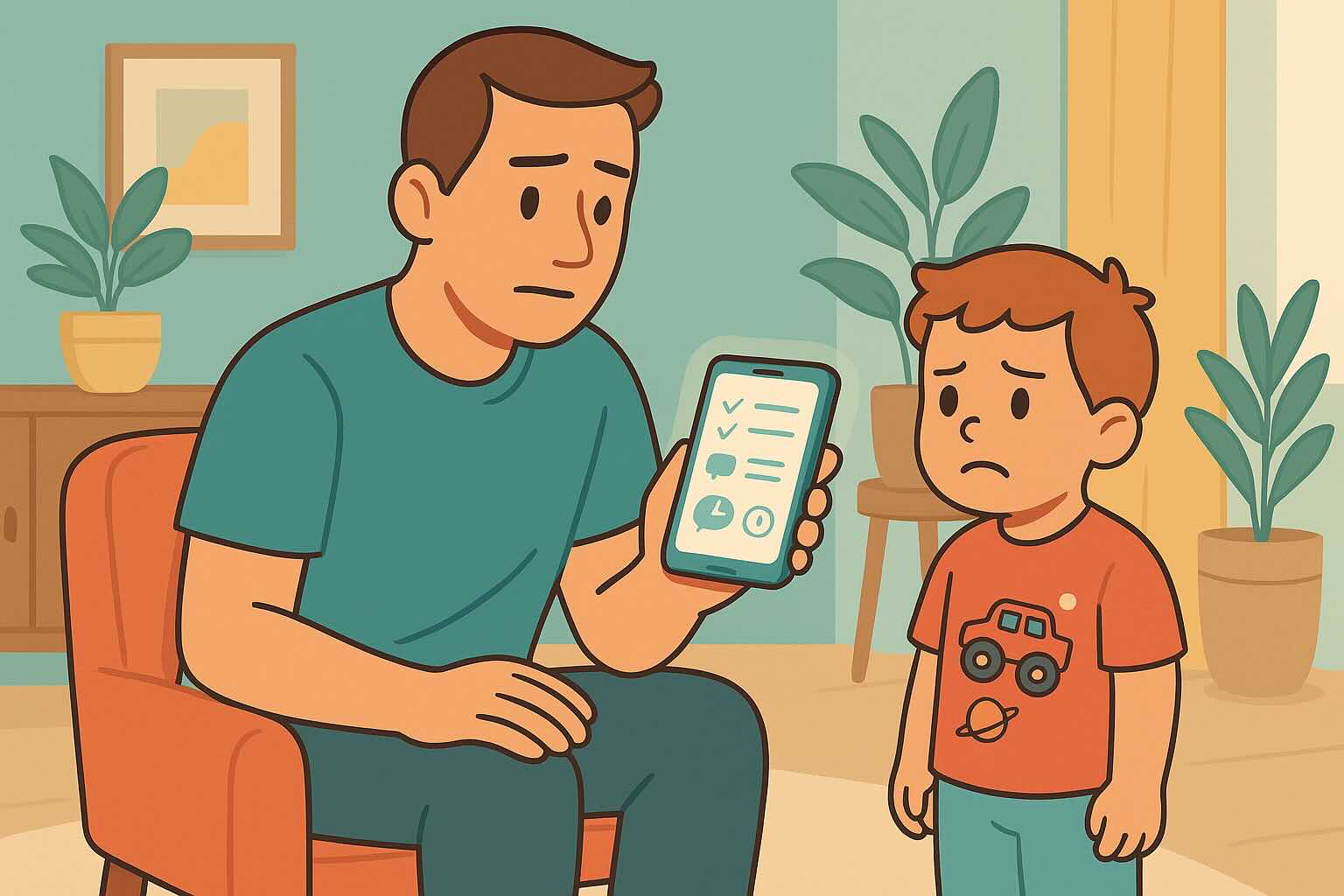
Boundary Setting Scripts
Set firm, loving boundaries without punishment using evidence-based scripts and strategies that build cooperation and respect.
Frequently Asked Questions
Download RootWise Today


Need personalized support?
RootWise's AI coach can provide tailored strategies for your specific situation, available 24/7 when you need it most.
Learn More About AI Coaching →