Why Toddler Tantrums Are Normal (And Actually Healthy): What Every Parent Should Know


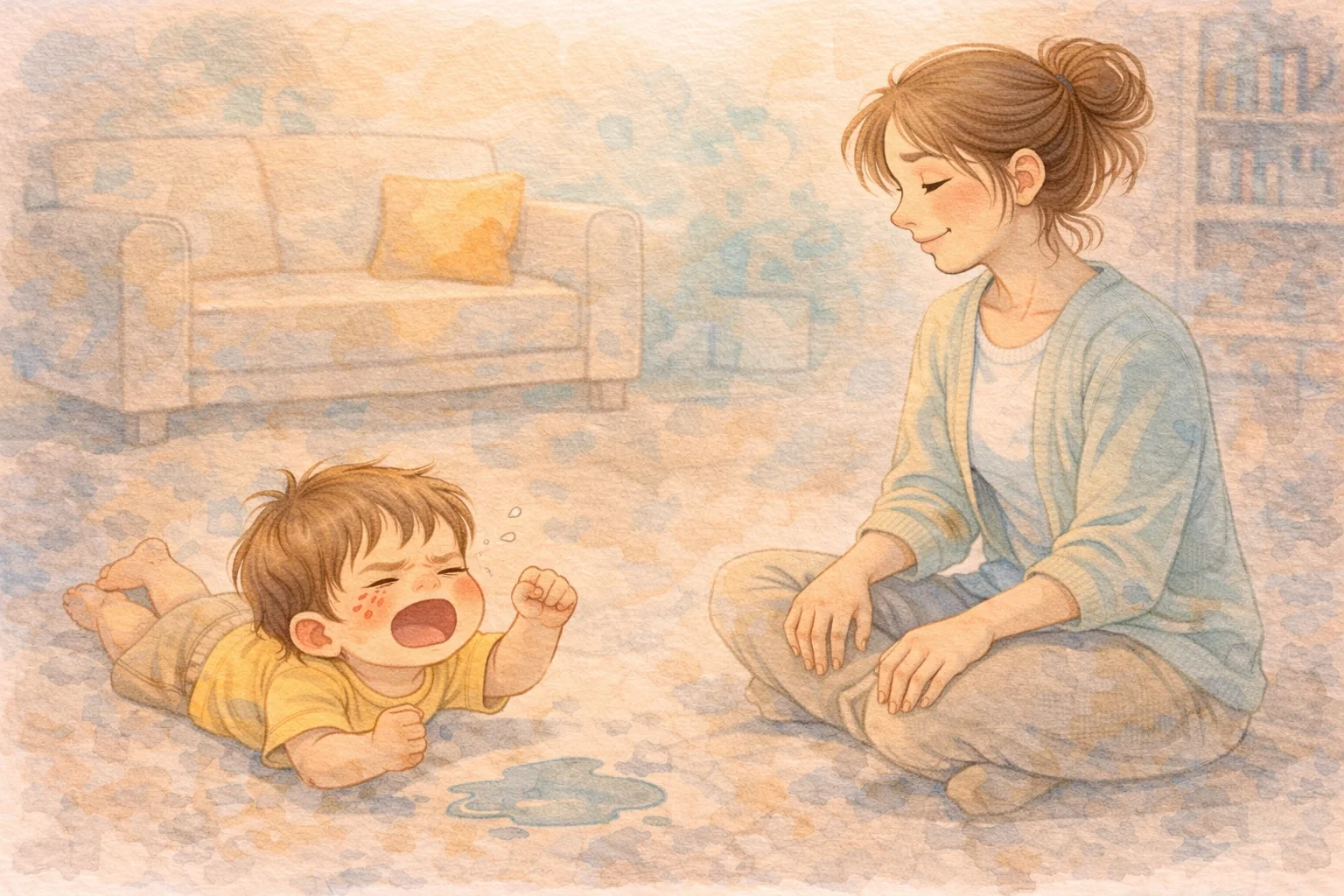
If you've ever wondered whether your child's meltdowns are "normal," you're asking the right question—and you're not alone. The short answer is yes. But here's the part that might surprise you: tantrums aren't just normal, they're actually a sign of healthy development.
This reframe can change everything about how you experience those moments when your toddler is screaming on the kitchen floor because you cut their toast the wrong way.
For practical step-by-step strategies during tantrums, see our complete tantrum response guide. This article focuses on understanding why tantrums happen and what your actual job is during them—which is probably different from what you think.
The Core Truth: Tantrums Mean Your Child Has Access to Desire
Here's a perspective that can fundamentally shift how you see meltdowns: a child who has tantrums is a child who still has access to their desires, wants, and feelings.
Think about what a tantrum actually represents. Your child wants something—really, genuinely wants it. They're disappointed. They're frustrated. They're expressing that disappointment loudly and physically because they don't yet have the developmental capacity to handle those big feelings in more "acceptable" ways.
Would you rather have a child who never expresses disappointment? A child who learns early to suppress their desires and pretend not to care? Of course not.
The goal of parenting through tantrums isn't to eliminate strong feelings—it's to help your child learn to manage them over time while preserving their capacity to feel deeply.
This perspective is inspired by the work of Dr. Becky Kennedy, clinical psychologist and founder of Good Inside, whose research-backed approach helps parents reframe challenging moments as opportunities for connection rather than problems to solve.
Reframing Tantrums: Dysregulation, Not Disobedience
One of the most powerful mindset shifts you can make is understanding what's actually happening during a tantrum. Your child isn't:
- Being manipulative
- Trying to control you
- Testing your limits (on purpose)
- Giving you a hard time
Your child is having a hard time. There's a profound difference.
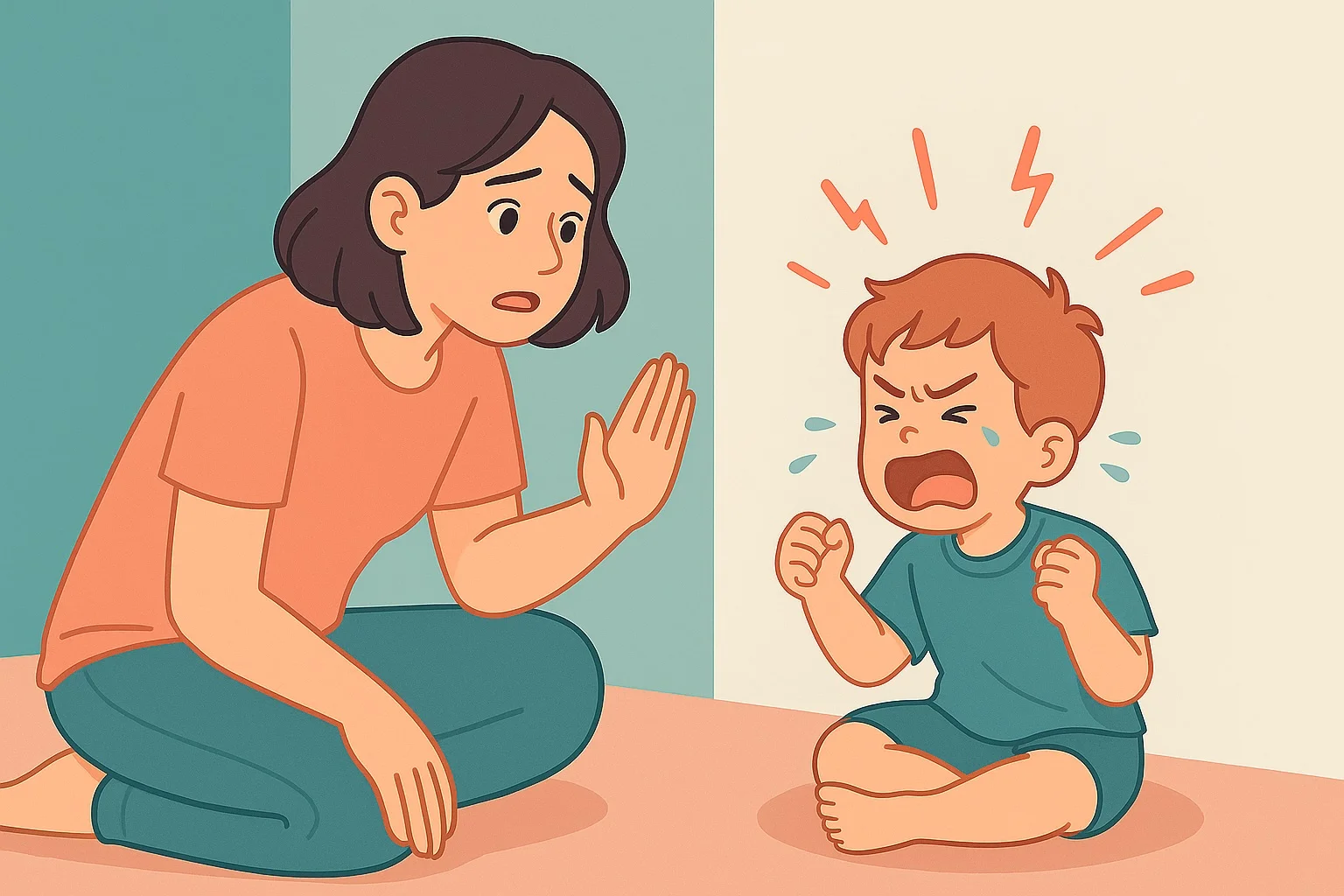
A tantrum is a biological state of dysregulation. Your child's nervous system has become overwhelmed, and they've lost access to their ability to think clearly, regulate their emotions, or respond to reason. It's like their internal alarm system went off, and everything else got shut down.
Understanding the science behind toddler tantrums can help this make even more sense—their developing brain literally cannot control emotions the way adult brains can.
The Volcano Inside
Imagine a volcano that's been slowly building pressure all day. Small things add heat: a disappointing breakfast, a toy that wouldn't work, a transition that felt too fast, tiredness creeping in, maybe hunger they couldn't articulate.
Then something seemingly tiny happens—you gave them the blue cup instead of the red one—and the volcano erupts.
Was it really about the cup? No. The cup was just the final bit of pressure that exceeded what their system could contain. The meltdown is proportional to everything that built up, not just the visible trigger.
Why Small Things Trigger Big Meltdowns
This brings us to one of the most important things to understand about tantrums: the trigger is almost never the real issue.
Your child might be melting down about:
- The "wrong" color plate
- A broken cracker
- Their sleeve feeling weird
- You singing a song differently
- A toy not working perfectly
But what's really happening is that they've been accumulating stress, disappointment, and emotional load throughout the day (or week), and they've reached capacity. That tiny last straw released everything they've been containing.
This is why tantrums often happen:
- At the end of the day (accumulated tiredness and stress)
- After big transitions (the effort of adapting depletes resources)
- When they've been "good" all day somewhere else (they were holding it together)
- During developmental leaps (extra internal demands)
For more on identifying these patterns, our guide to toddler tantrum triggers goes deeper into common causes and prevention.
Your Real Job During Tantrums (It's Simpler Than You Think)
Here's the reframe that can take enormous pressure off your shoulders: your job during a tantrum is not to end the tantrum.
Your actual job is two things:
- Keep yourself calm
- Keep your child safe
That's it.
You don't need to:
- Fix the problem
- Teach a lesson
- Explain why they can't have the thing
- Get them to stop crying
- Make them understand
- Reason them out of it
None of those things work during emotional dysregulation anyway. When your child's nervous system is flooded, they literally cannot access logical reasoning. The prefrontal cortex—the brain region responsible for rational thought—goes partially offline during intense emotional states.
"Having a Hard Time" vs. "Giving Me a Hard Time"
This mantra can be a lifeline in difficult moments: "My child is having a hard time, not giving me a hard time."
When you can hold onto this perspective, everything changes. You shift from seeing your child as an opponent to seeing them as a small human who is overwhelmed and needs your calm presence—not your frustration, not your solutions, not your lectures.
Thrive vs. Survive: Knowing Which Mode You're In
Let's be honest about something: not every parenting moment is going to be beautiful. Sometimes you're in "thrive" mode—you're rested, resourced, and able to respond with patience and attunement. Other times, you're in "survive" mode—you're exhausted, touched-out, or dealing with your own stress.
Both are real. Both are valid.
Here's something important that often goes unsaid: sometimes there is no magic strategy. Sometimes your child is going to have a tantrum and there's nothing you can do to make it better in that moment. No special phrase will work. No technique will speed it along. And that's okay.
In those moments, your job shifts from "helping" to something even harder: surrendering to what is. Being present without trying to fix. Sitting with your child in their pain without feeling like you're failing because you can't make it stop.
On survive days, your goal might simply be getting through the tantrum without making things worse. That's enough. You don't have to perfectly implement strategies every time. You don't have to be endlessly patient.
And when you're in the middle of a tough moment, try this internal mantra: "I'm a good parent. I have a good kid. We're going through a hard time." This self-compassion isn't about excusing anything—it's about giving yourself the grace you need to stay present rather than spiraling into shame or frustration.
The key is recognizing which mode you're in and adjusting your expectations accordingly. A survive-mode response that keeps everyone safe is a success.
Practical Strategies That Actually Help
When you do have capacity, here are evidence-based approaches that support your child through tantrums while preserving connection.
1. Narrate Without Fixing
One of the most powerful things you can do is simply describe what you observe, without trying to change it. Speak slowly and rhythmically—almost like you're narrating a nature documentary. The pacing matters as much as the words:
- "You're really upset right now."
- "Your body is having big feelings."
- "You wanted that so much, and you can't have it."
- "Nothing feels good right now, huh?"
After you narrate, you can check in with a simple confirmation: "Did I get that right?" This shows your child you're truly trying to understand them, not just going through the motions.
This accomplishes several things: it helps your child feel seen, it builds their emotional vocabulary, and it keeps you present without escalating. For more phrases that work, see our tantrum communication scripts.
2. The Magic Words: "You Wish"
One particularly powerful phrase: "You wish that didn't happen." or "You wish you could have that."
These words validate the desire without negotiating about the reality. You're not agreeing they should have the candy—you're acknowledging that they wished they could.
- "You wish we could stay at the park forever."
- "You wish your tower hadn't fallen down."
- "You wish you could have another cookie."
3. Presence Over Strategies
Sometimes the most helpful thing is simply staying nearby while they cry. You don't need to touch them if they're pushing you away. You don't need to talk constantly. You just need to be present and calm.
Your regulated nervous system actually helps regulate theirs. This is called co-regulation, and it's one of the primary ways children learn to manage their emotions—by being near a calm adult who can contain the intensity with them.
4. Less Is More
During peak tantrum intensity, fewer words are better. Keep your voice low, your sentences short, and resist the urge to explain or reason. Long explanations during emotional flooding don't land—they often make things worse.
Try:
- "I'm here."
- "You're safe."
- "I'll stay with you."
When You Lose It: The Power of Repair
Here's something that needs to be said: you will sometimes lose your cool. You'll yell. You'll say things you wish you hadn't. You'll handle a tantrum in ways that don't match your values.
This doesn't make you a bad parent. It makes you human.
What matters most isn't perfect prevention—it's what happens after. Repair is one of the most important things you can model for your child.
When you've lost your temper, come back later (when everyone is calm) and say something like:
- "I got really frustrated earlier and raised my voice. That wasn't okay. I'm sorry."
- "Remember when Mommy yelled? I was overwhelmed, and I wish I'd handled that differently. I'm sorry I scared you."
- "I don't want to be someone who yells at you when I'm upset. I'm working on that."
This teaches your child that:
- Relationships can survive ruptures
- It's possible to acknowledge mistakes
- Adults are also learning to manage their emotions
- Connection can be restored after difficult moments
For a deeper dive into this crucial skill, see our complete guide to repairing connection after losing your cool.
Building Skills Outside the Storm
The best time to help your child develop emotional regulation skills is not during a tantrum. It's during calm, connected moments when their brain is fully available for learning.
Collecting Data During Tantrums
While you're staying calm and keeping your child safe, you can also observe:
- What triggered this? (The surface trigger and possible underlying causes)
- What time of day is it? What came before?
- How is their body responding?
- What helped, even a little?
- What made things worse?
This information helps you understand patterns and identify which skills to work on during calmer times.
Teaching Through Modeling
Children learn emotional regulation primarily by watching you. When you're frustrated (at an appropriate level to model), narrate out loud:
- "I'm feeling frustrated because this isn't working. I'm going to take a deep breath."
- "I'm disappointed we can't go to the park. It's hard when plans change."
- "I notice I'm getting annoyed. I'm going to take a little break."
Building Skills Through Play
Calm moments are perfect for:
- Reading books about emotions and using them as conversation starters
- Playing "feelings charades" or using emotion cards
- Practicing deep breathing when they don't need it (so it's available when they do)
- Role-playing scenarios with stuffed animals experiencing big feelings
- Creating a calm-down corner together before it's needed
One particularly powerful technique is pretend play with figurines. If your child has been struggling with a specific situation—say, leaving the playground—you can recreate it with toys during a calm moment:
Take two figurines and act out the scenario: "This little kid is at the playground and having SO much fun. And then the mommy says 'It's time to go!' And the kid is so mad! She wanted to stay! She didn't want to leave!"
Let your child observe you working through the feelings with the character. This gives them a safe, low-pressure way to process the same emotions they experience—and shows them what it looks like to move through disappointment.
Modeling Your Own Emotional Struggles
Here's something that might seem counterintuitive: one of the best ways to help your child with big feelings is to let them see you have small struggles.
Next time you bump your elbow on a doorframe or stub your toe, instead of brushing it off, try narrating your experience: "Ouch! That really hurt. I'm frustrated that happened. I'm going to take a breath... okay, I'm feeling a bit better now."
Why does this matter? When children see that even adults have moments of frustration, disappointment, and physical discomfort—and that we move through them—it does something powerful. It takes away the shame of aloneness. Your child no longer feels like they're the only one who struggles, the only one who has big reactions to small things.
This modeling works because it's authentic. You're not creating artificial scenarios—you're just being transparent about the small challenges that happen naturally. And by showing your child that feelings come and go, you're teaching them that their own storms will pass too.
Remember This
When you're in the middle of a tantrum and can't remember anything else, hold onto this: Your calm presence is enough. You don't need perfect words, flawless strategies, or a solution. You just need to be there—regulated and safe—while your child moves through the storm.
Key Takeaways
- ✅ Tantrums are normal and developmentally healthy — they mean your child has access to desires and feelings
- ✅ Tantrums are dysregulation, not disobedience — your child is having a hard time, not giving you one
- ✅ The trigger is rarely the real issue — meltdowns reflect accumulated stress, not just the visible cause
- ✅ Your job is to stay calm and keep them safe — not to end the tantrum or teach lessons in the moment
- ✅ Presence beats strategies — your regulated nervous system helps regulate theirs
- ✅ Repair matters more than prevention — when you lose it, coming back and apologizing teaches valuable lessons
- ✅ Build skills in calm moments — practice emotional regulation when they don't need it
- ✅ This phase will pass — tantrums decrease naturally as brain development progresses
Your Child Is Not Broken (And Neither Are You)
The next time your toddler has a meltdown because you peeled their banana when they wanted to peel it themselves, take a breath. Remember: this is normal. This is healthy. This is your child learning how to have big feelings in a world that will give them plenty of reasons to feel disappointed.
Your job isn't to raise a child who never gets upset. It's to raise a child who knows their feelings are valid, that they're loved even when they're struggling, and that they can learn to navigate the hard moments—with you right there beside them.
This article was inspired by the work of Dr. Becky Kennedy and the Good Inside approach to parenting. The perspectives shared here represent evidence-based principles from child development research. Individual experiences vary significantly based on child temperament, family circumstances, and developmental factors. Always consult with your pediatrician if you have concerns about your child's emotional development or behavior patterns.
Struggling with tantrums?
Get personalized coaching support available 24/7. Your parenting coach understands what you're going through.
Try RootWise Free →Free Tantrum Scripts
Help your toddler manage big emotions with these strategies and scripts.
Frequently Asked Questions
Download RootWise Today


Need personalized support?
RootWise's AI coach can provide tailored strategies for your specific situation, available 24/7 when you need it most.
Learn More About AI Coaching →