2 Year Old Tantrums: Why They Happen & How to Respond

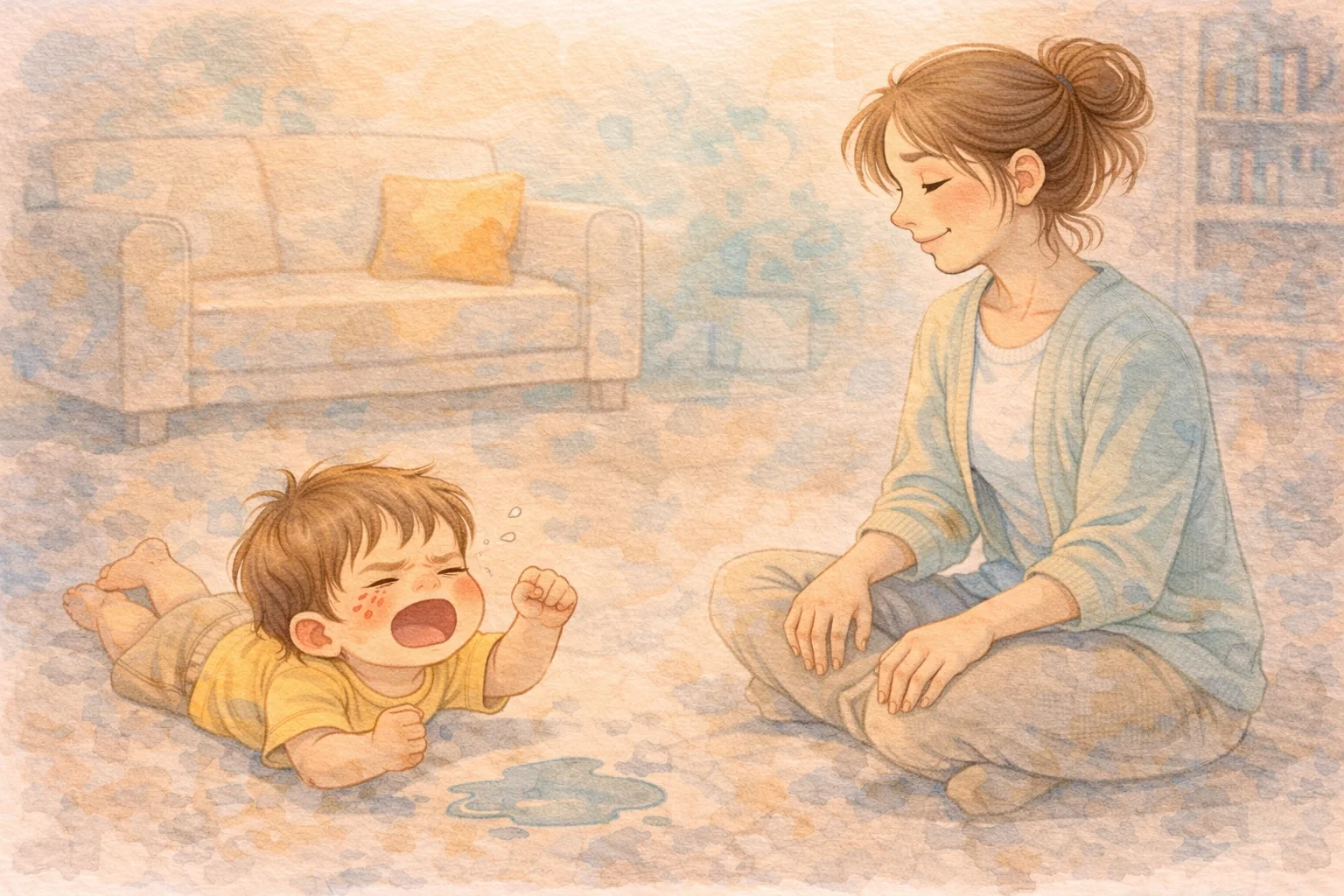
You're in the grocery store and your 2-year-old spots a bright red box of cookies. You say "not today," and suddenly the world ends. They're on the floor, screaming, kicking, tears streaming down their face. Everyone is staring. You feel the heat rise in your cheeks and wonder: Is this normal? Am I doing something wrong?
Here's the truth: you're not doing anything wrong, and your 2-year-old isn't broken. Welcome to one of the most intense, and most normal, phases of early childhood. Two-year-old tantrums are a sign that your child's brain is growing at an incredible pace, and their emotions are simply too big for their little nervous system to handle yet.
This guide will help you understand exactly what's going on inside your 2-year-old's brain, why tantrums peak at this age, and how to respond with calm confidence when the next meltdown hits.
- ✓Tantrums at age 2 are peak normal — up to 91% of toddlers have them regularly
- ✓Your child's emotional brain is fully active, but the regulation center is barely online
- ✓Stay calm, get close, validate with simple words, keep them safe, then reconnect
- ✓Prevention works best: routines, choices, transition warnings, and meeting basic needs
Understanding Your 2 Year Old's Emotional World
At age 2, your child is caught in a powerful developmental tug-of-war. On one side, they have a rapidly growing sense of self. They know what they want, they have opinions, and they are fiercely determined to do things their way. On the other side, they have a brain that simply isn't wired yet to handle disappointment, delay, or frustration.
This isn't a flaw. It's how human development works. And understanding this tension is the single most important thing you can do to handle tantrums more effectively.
The 2-Year-Old Brain: Why Tantrums Peak Now
Your toddler's prefrontal cortex, the part of the brain responsible for impulse control, emotional regulation, and logical thinking, is in the very early stages of development. It won't be fully mature until their mid-twenties. At age 2, it's barely online.
Meanwhile, the amygdala, the brain's emotional alarm system, is fully operational and incredibly reactive. When your 2-year-old wants the cookie and hears "no," their amygdala fires a massive emotional response. Without a functioning prefrontal cortex to put the brakes on, that response floods their entire system. The result? A full-body tantrum.
What makes age 2 the peak tantrum window:
- The language-emotion gap. Your child understands far more than they can say. They may have 50-300 words, but emotions are complex. Imagine feeling furious and not being able to explain why. That frustration alone is enough to trigger a meltdown.
- The autonomy drive. "Me do it!" becomes a constant refrain. Your 2-year-old desperately wants independence, but their skills haven't caught up with their ambition. Pouring their own milk, buckling their own seat belt, choosing their own clothes: when they can't do it, or you do it for them, the frustration is real and intense.
- Rigid thinking. Two-year-olds think in black and white. If they pictured wearing the red shirt and you hand them the blue one, their brain can't flexibly adjust. The expectation was "red," and anything else feels genuinely wrong.
- Limited impulse control. When a 2-year-old wants something, they want it now. The ability to wait, compromise, or accept "later" requires brain circuitry that simply doesn't exist yet.
For the science behind these developmental changes, see our tantrum science guide.
Typical 2 Year Old Tantrum Triggers
Knowing what sets your child off helps you stay one step ahead. While every child is different, here are the most common triggers at age 2:
Autonomy triggers (the "me do it" moments):
- Being helped when they wanted to do it themselves
- Not being allowed to make a choice
- Having something taken away
- Being physically moved or carried when they wanted to walk
- Someone else pressing the elevator button or opening the door
Transition triggers:
- Leaving a fun activity (the park, a friend's house, bath time)
- Being rushed through something they're enjoying
- Unexpected changes to routine or plans
- Moving from one activity to the next without warning
Communication triggers:
- Wanting something but not having the words to ask
- Being misunderstood by a caregiver
- Saying "no" to something they don't understand yet
- Feeling unheard when they're trying to tell you something
Basic needs triggers:
- Hunger (blood sugar drops fast at this age)
- Tiredness or missed naps
- Overstimulation from busy environments
- Physical discomfort (teething, wet diaper, too hot)
Boundary triggers:
- Being told "no" or "not now"
- Having limits set on screen time, food, or activities
- Sharing toys with siblings or peers
- Power struggles over daily routines
The Expert's 5-Step Method for 2 Year Old Tantrums
When a tantrum hits, your response matters more than the tantrum itself. Here's a step-by-step approach designed specifically for the 2-year-old brain.
Step 1: Pause and Regulate Yourself First
Before you do anything, take one slow breath. Your 2-year-old's nervous system is directly influenced by yours. If you tense up, raise your voice, or rush to fix it, their alarm system ramps up even higher.
What to do:
- Drop your shoulders and unclench your jaw
- Take 2-3 slow breaths
- Remind yourself: This is normal. They're not giving me a hard time, they're having a hard time.
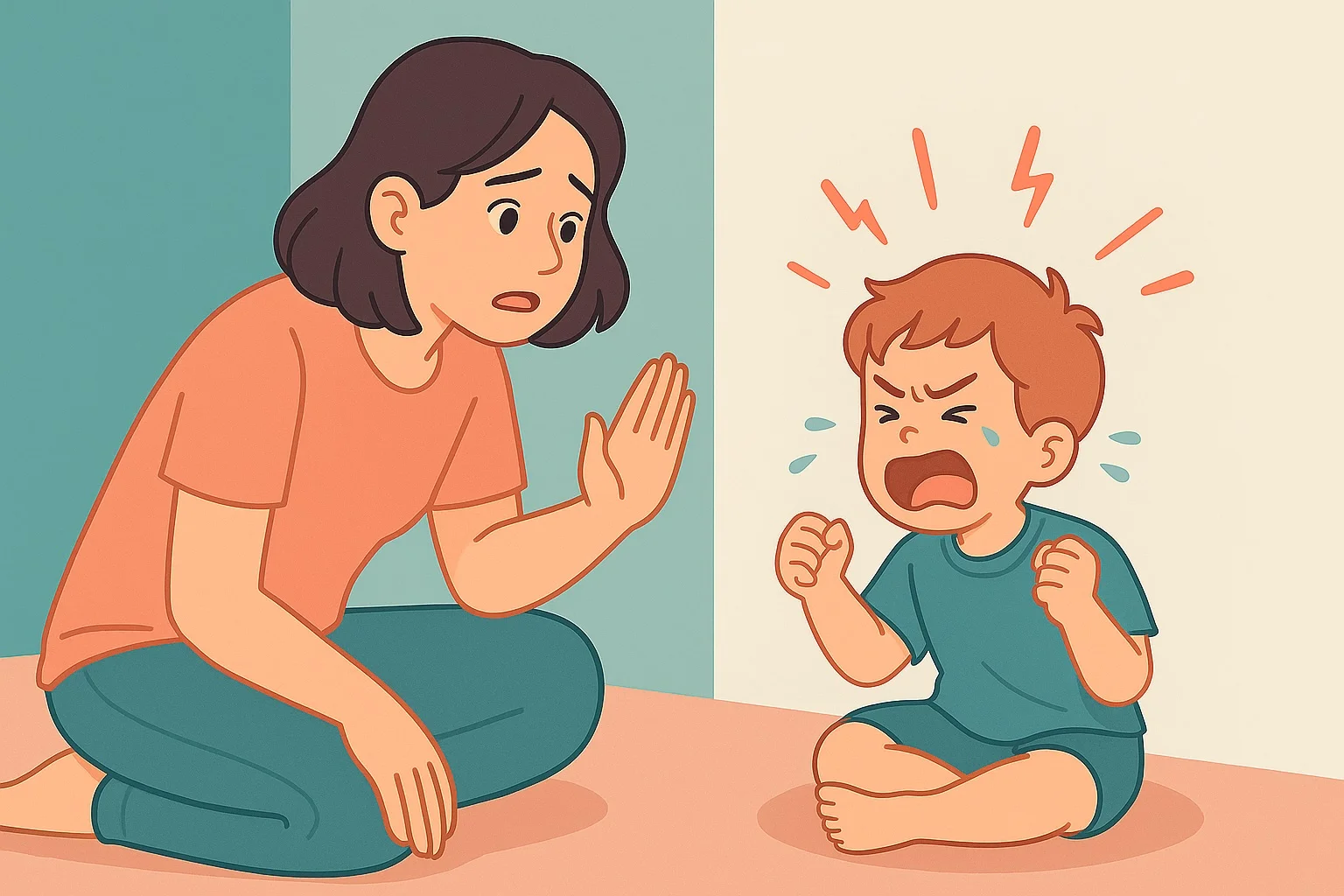
Step 2: Get Close and Get Low
Two-year-olds need physical closeness during emotional storms far more than older children do. Their nervous systems are still heavily dependent on co-regulation, meaning they literally need your calm body nearby to help their body calm down.
What to do:
- Get down to their level (kneel or sit)
- Stay within arm's reach, even if they push you away
- If they'll accept it, offer a gentle touch on the back or hold them
- If they don't want to be touched, stay close and say: "I'm right here."
Step 3: Validate with Simple Words
Your 2-year-old can't process long explanations during a tantrum. Their thinking brain is offline. Use short, warm phrases that name what they're feeling.
There's no reason to be upset. You can't have everything you want.
You're so mad. You wanted that cookie. That's a hard feeling.
What NOT to say (yet):
- "You can't have everything you want." (Too abstract)
- "If you stop crying, we can talk about it." (Conditional)
- "There's no reason to be upset." (Dismissive)
Step 4: Keep Them Safe, Then Wait
Once you've acknowledged their feelings, your main job is to keep them safe while the storm passes. You don't need to fix it, distract them, or make it stop. Two-year-olds need to ride the wave.
What to do:
- Block hitting or kicking gently: "I won't let you hit. I'll keep you safe."
- Move dangerous objects out of reach
- If you're in public, calmly move to a quieter spot if possible
- Stay present without talking too much
Most 2-year-old tantrums peak within the first 1-2 minutes and begin to wind down after that. Your calm presence is doing more than you realize.
Step 5: Reconnect and Move On
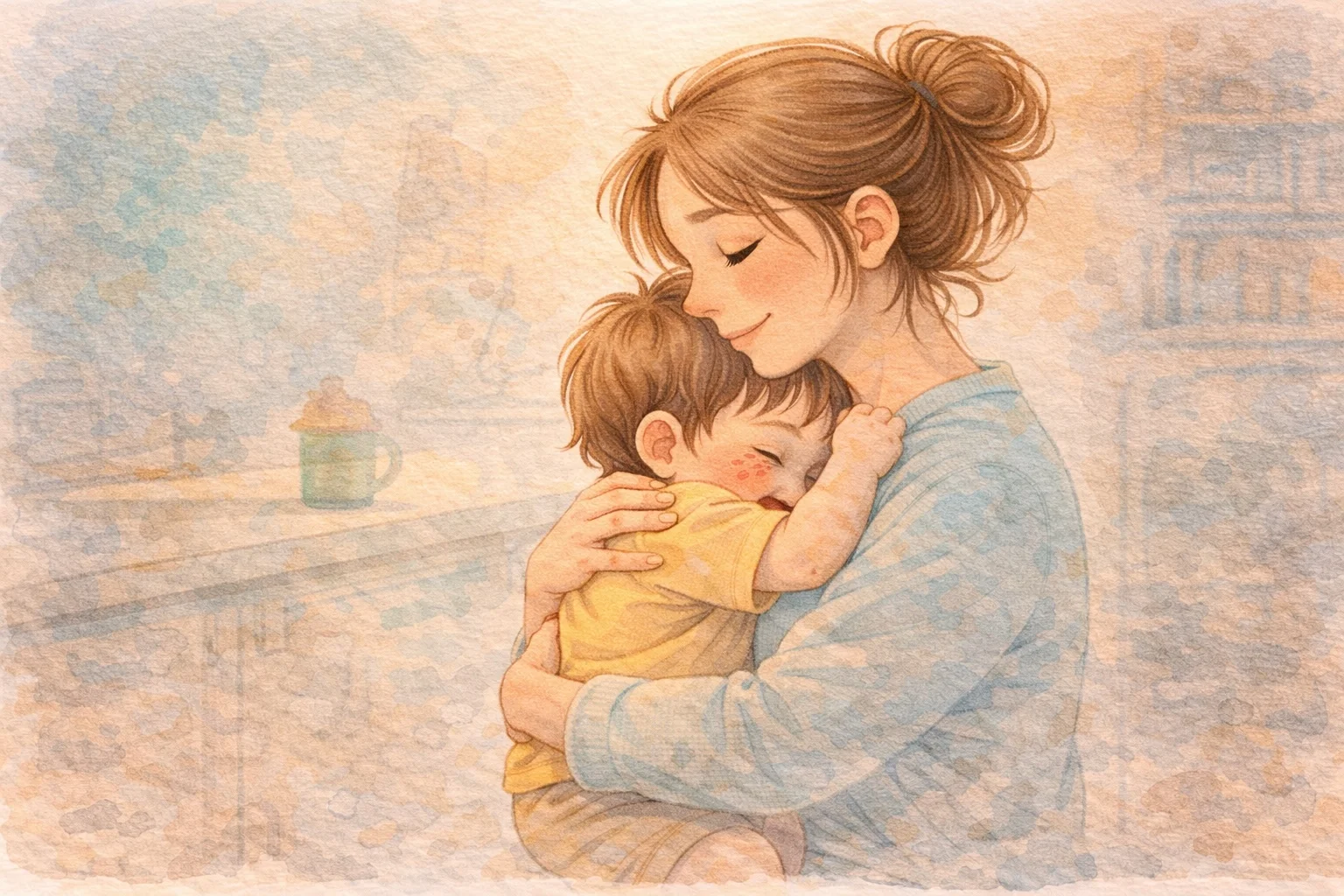
When the crying slows and your child looks up at you or reaches for comfort, that's your signal. This is the reconnection moment, and it matters enormously.
What to do:
- Open your arms for a hug if they want one
- Say something brief and warm: "That was really hard. I'm here."
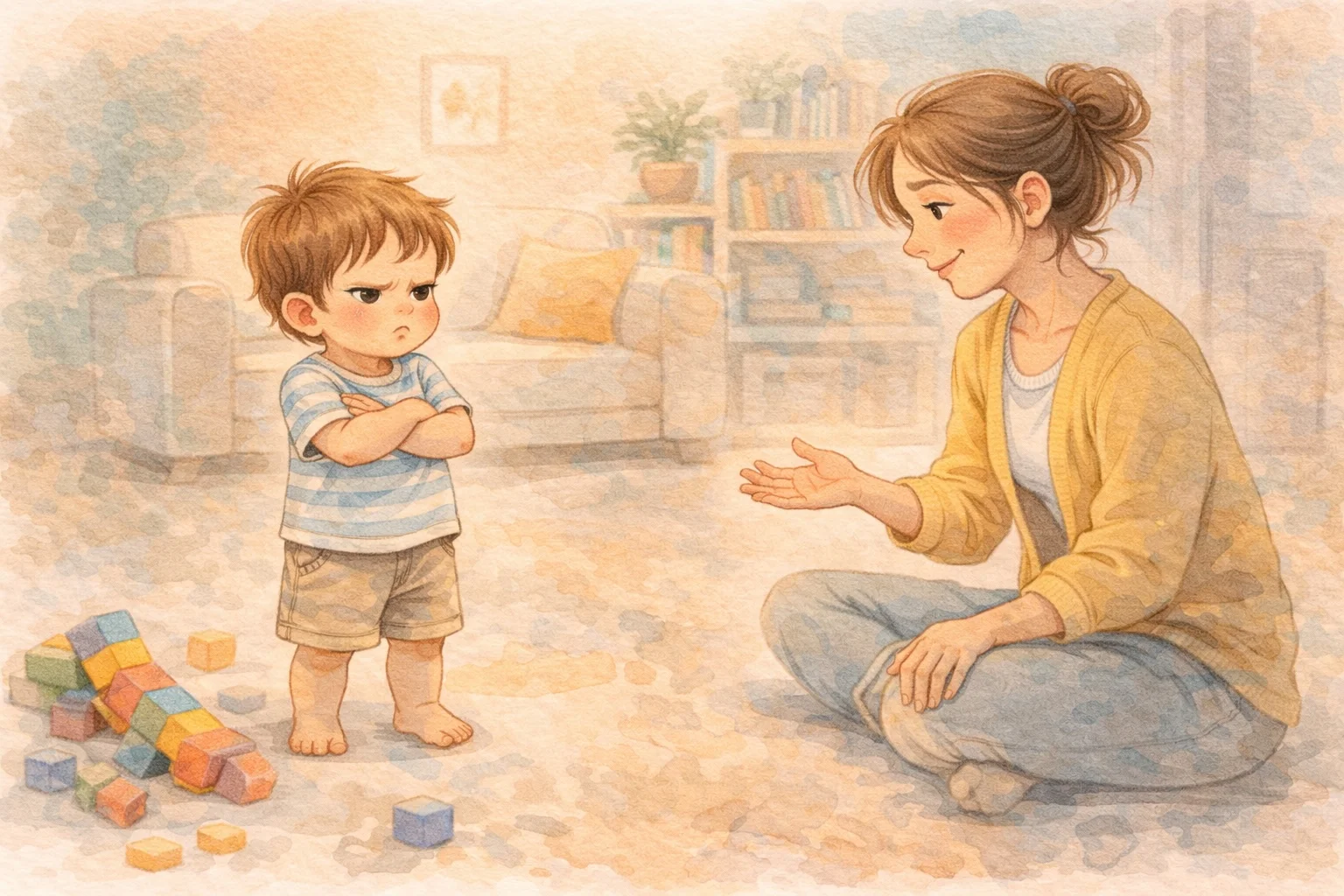
- Offer a simple choice to help them feel in control again: "Do you want to walk or be carried?"
- Move forward without rehashing what happened. At age 2, long discussions about behavior don't land. They learn from your repeated, consistent response over time.
For more detailed communication approaches, see our tantrum communication scripts guide.
What Works Differently at Age 2
If you've read about tantrum strategies for older toddlers and preschoolers, it's important to know that the 2-year-old brain needs a different approach. What works at 3 or 4 doesn't always work at 2.
More Physical Comfort, Less Talking
At age 3 and beyond, kids can benefit from emotion coaching and talking through feelings during a tantrum. At 2, your child's language processing shuts down when emotions run high. Your body is your best tool. A warm hug, a gentle hand on their back, or simply sitting quietly next to them does more than any words.
Distraction Still Works (Use It)
By age 3, distraction becomes less effective because children are more persistent and their memory is stronger. But at 2, a well-timed redirect can genuinely shift your child's attention and prevent a full meltdown.
Effective distractions at age 2:
- "Oh look, do you see that dog over there?"
- "I wonder what's in this bag. Should we check?"
- Singing a favorite song
- Offering a different (acceptable) choice
Simpler Language, Shorter Sentences
Where a 3-year-old can understand "I know you're frustrated because you wanted to stay at the park, and we need to go home for dinner," a 2-year-old needs: "You're sad. Time to go. I'll carry you."
Keep it to 3-5 word phrases during the storm. Save the explanations for calm moments.
Expect More Physical Expression
Two-year-olds hit, kick, throw, bite, and flop to the floor. This isn't aggression in the way we think of it. It's their body expressing what their words can't. Don't take it personally, and don't punish it. Simply block, redirect, and stay calm.
To understand how tantrums evolve as your child grows, our 18-month vs 2-year tantrum comparison breaks down the developmental differences, and the 3-year-old tantrum guide covers what to expect next.
Prevention Strategies That Actually Work for 2 Year Olds
The best tantrum strategy is preventing the tantrum in the first place. You can't eliminate all tantrums (nor should you want to, as they're an important part of emotional development), but you can dramatically reduce their frequency.
Master the Art of the Transition Warning
Two-year-olds struggle with sudden changes. Give them a heads-up before every transition:
- "Two more slides, then we go home."
- "After this song, it's bath time."
- Use a visual timer or count down on your fingers
Offer Choices Throughout the Day
Your 2-year-old craves autonomy. Giving them age-appropriate choices satisfies that drive and reduces power struggles:
- "Red cup or blue cup?"
- "Banana or apple for snack?"
- "Walk or ride in the stroller?"
Keep it to two options. More than that overwhelms a 2-year-old.
Stay Ahead of Basic Needs
So many 2-year-old tantrums come down to hunger, fatigue, or overstimulation. Build your day around these needs:
- Snacks before meltdowns. Carry snacks everywhere. Offer food before your child gets hangry.
- Protect nap time. A well-rested 2-year-old has a dramatically bigger emotional capacity.
- Watch for overstimulation. Busy stores, loud restaurants, long outings: know your child's limits and build in quiet breaks.
Create Predictable Routines
When your 2-year-old knows what comes next, the world feels safer and more manageable. You don't need a rigid schedule, but consistent daily rhythms reduce anxiety and tantrums:
- Morning routine in the same order
- Consistent pre-meal and pre-nap rituals
- A predictable bedtime sequence
Say "Yes" More Creatively
Instead of a flat "no" (which is a tantrum trigger in itself), try reframing:
- "No running inside" becomes "You can run outside! Let's go."
- "No throwing balls in the house" becomes "Let's throw this soft ball together."
For a deeper look at prevention techniques, our tantrum prevention strategies guide covers this in detail.
The Terrible Twos: Reframing the Label
You've probably heard the phrase "terrible twos" a hundred times. But there's nothing terrible about what your child is going through. A better name might be the tremendous twos, because the amount of growth happening is staggering.
Between ages 2 and 3, your child will:
- Nearly triple their vocabulary
- Develop a stronger sense of self and identity
- Begin understanding emotions in themselves and others
- Learn the basics of empathy and social interaction
- Build the early foundations of self-control
Every tantrum is part of this process. Every time you respond with patience and consistency, you're helping wire their brain for emotional regulation. You're not just surviving tantrums: you're building your child's emotional intelligence.
For more on reframing how you think about this phase, our terrible twos survival guide and why tantrums are normal and healthy can help shift your perspective.
When to Seek Professional Help
Most 2-year-old tantrums are completely normal. But there are times when it's worth reaching out to your pediatrician.
Red Flags at Age 2
- Tantrums consistently lasting longer than 15-20 minutes
- More than 5 major tantrums per day for several weeks
- Self-harm during tantrums (head-banging, biting themselves)
- Extreme aggression toward others that doesn't improve with consistent strategies
- Significant regression in skills they previously had
- No improvement after 6-8 weeks of consistent, calm responses
- Language delays alongside frequent intense tantrums
- Complete inability to be comforted, even after the tantrum ends
Types of Support Available
- Your pediatrician can rule out medical causes and screen for developmental concerns
- Speech-language therapists can help if communication frustration is a major trigger
- Occupational therapists can assess sensory processing if meltdowns seem sensory-related
- Child psychologists can provide behavioral guidance for persistent challenges
- Parent coaches offer personalized strategies tailored to your child and family
Seeking help is not a sign that you've failed. It's a sign that you're paying attention and advocating for your child.
Key Takeaways for 2 Year Old Tantrums
- Tantrums at age 2 are peak normal. Up to 91% of toddlers this age have them regularly.
- The 2-year-old brain isn't built for emotional control yet. The prefrontal cortex is barely developing, while the emotional alarm system is fully active.
- Your calm is your superpower. Co-regulation through your steady presence is the most effective tool you have.
- Physical comfort beats long explanations. At age 2, a hug does more than a lecture.
- Prevention reduces frequency. Routines, choices, transition warnings, and meeting basic needs make a real difference.
- Distraction still works at 2. Use it without guilt, as it's developmentally appropriate.
- This phase passes. With your consistent, compassionate responses, tantrums will gradually decrease.
Remember: Your 2-year-old isn't giving you a hard time. They're having a hard time, and they need you to be their anchor in the storm. You're doing better than you think.
For the complete picture across all toddler ages, visit our complete toddler tantrums guide. And if you want personalized, in-the-moment support for those tough tantrum moments, your parenting coach is available 24/7.
This article is based on current child development research and evidence-based parenting strategies. Individual results vary depending on child temperament, consistency of approach, and family circumstances. Always consult your pediatrician with concerns about your child's development.
24/7 AI Parenting Assistant
Get instant, personalized advice with expert-curated parenting knowledge. Chat with your AI coach anytime, anywhere.
Challenging Moments Support
Access step-by-step parenting strategies, quick tips, and age-specific guidance for difficult situations when you need it most.
Struggling with tantrums?
Get personalized coaching support available 24/7. Your parenting coach understands what you're going through.
Try RootWise Free →Free Tantrum Scripts
Help your toddler manage big emotions with these strategies and scripts.
Frequently Asked Questions
Download RootWise Today


Need personalized support?
RootWise's AI coach can provide tailored strategies for your specific situation, available 24/7 when you need it most.
Learn More About AI Coaching →