18 Month Old vs 2 Year Old Tantrums

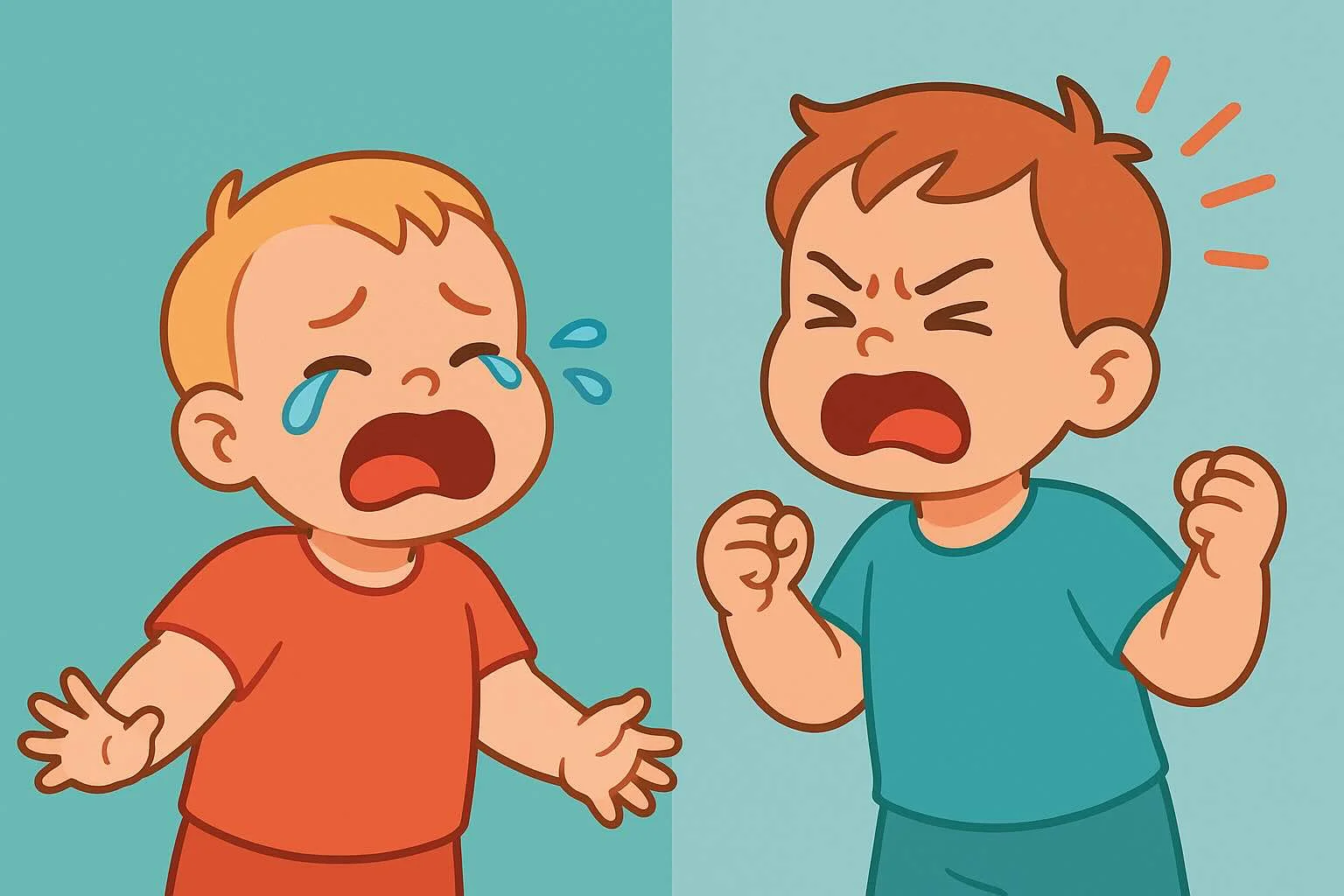
Table of Contents
Understanding Tantrum Differences: Watch This First
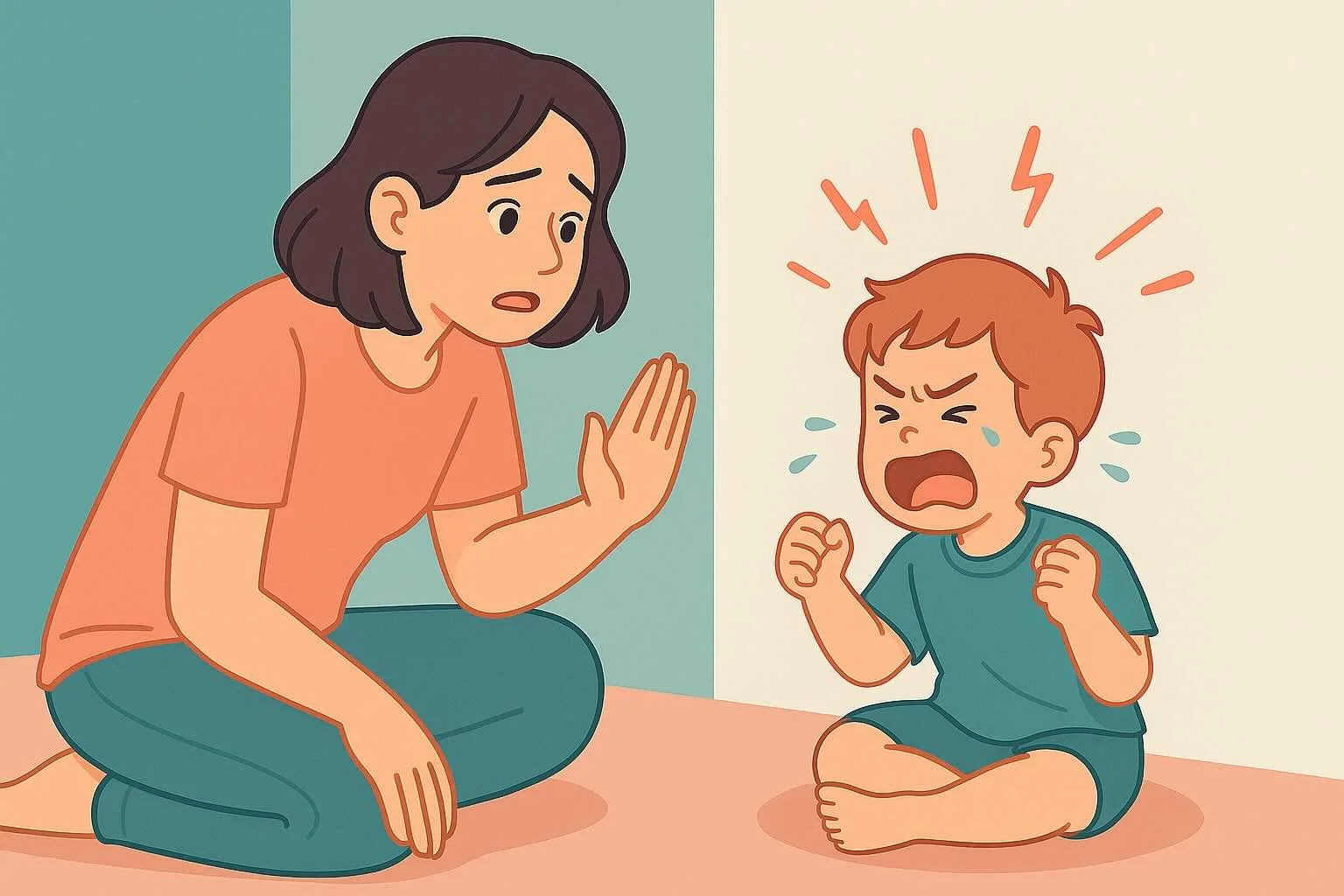
Watching your toddler melt down can be overwhelming, but understanding why their tantrums happen—and how they change as they grow—can transform your response from reactive to strategic. The truth is, an 18-month-old's meltdown serves a completely different purpose than a 2-year-old's tantrum, and your approach should reflect these developmental differences.
Tantrums peak in the toddler and preschool years, and they are close to universal. In a study of 1,490 preschoolers, 83.7% had tantrums at least sometimes, while only 8.6% had them daily. Most tantrums are far shorter than they feel, often over in a couple of minutes. Let's break down exactly what's happening in your toddler's brain and body at each age—and give you the specific strategies that work best for each stage.
For the complete response framework, see our main tantrum guide, and for proactive approaches, check out our prevention strategies. To understand the developmental science behind these age differences, our tantrum science guide explains how brain development affects emotional regulation at each stage.
- ✓18-month tantrums are primarily about basic needs and communication frustration — short, physical, and easy to redirect with comfort
- ✓2-year-old tantrums are longer and more complex, driven by autonomy battles and boundary testing
- ✓Physical comfort and distraction work for 18-month-olds; validation plus limited choices work for 2-year-olds
- ✓Both ages benefit from predictable routines and calm caregiver responses — never match their intensity
- ✓Red flags: tantrums over 15 minutes, more than 5 per day, or self-harm at any age warrant professional consultation
What You'll Learn in This Guide
- 18-Month Tantrum Characteristics - What's normal and why they happen
- 2-Year-Old Tantrum Evolution - How and why tantrums change
- Brain Development Differences - The science behind each stage
- Age-Specific Response Strategies - Exactly what works when
- Common Triggers by Age - What sets off tantrums at each stage (use prevention strategies to address these proactively)
- When to Be Concerned - Red flags for each developmental period
Estimated reading time: 7 minutes
Why Are 18-Month-Old Tantrums So Intense? The Communication Crisis Stage
What 18-Month Tantrums Look Like
At 18 months, tantrums are typically:
- Shorter in duration (most last 30 seconds to 3 minutes)
- More physical (throwing themselves down, arching back)
- Immediate response to frustration or unmet needs
- Less strategic and more reactive
- Easier to redirect with distraction or comfort
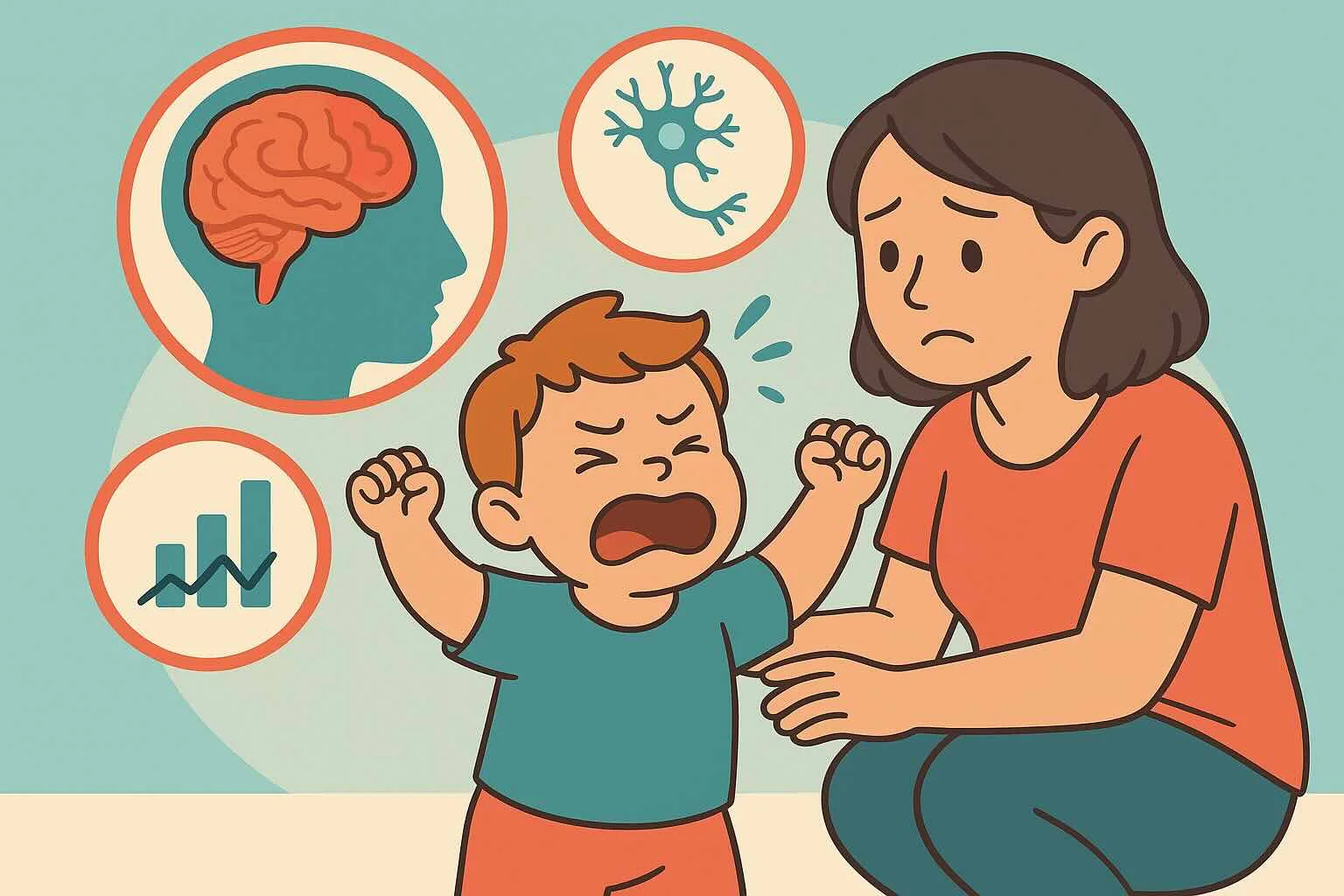
The 18-Month Brain: Under Construction
Your 18-month-old's brain is experiencing rapid development, but critical areas are still forming:
What's developed:
- Basic emotional centers (they feel everything intensely)
- Attachment systems (they know who keeps them safe)
- Motor skills (they can move but lack coordination)
- Memory formation (they remember what they like/dislike)
What's NOT developed:
- Language centers (150-300 words max vocabulary)
- Impulse control (virtually nonexistent)
- Emotional regulation (completely dependent on you)
- Logical thinking (cause-and-effect understanding is basic)
Common 18-Month Tantrum Triggers
Physical Needs:
- Hunger (blood sugar drops quickly at this age)
- Tiredness (need 11-14 hours of sleep daily)
- Overstimulation (easily overwhelmed by sensory input)
- Physical discomfort (wet diaper, too hot/cold)
Communication Frustration:
- Wanting something they can't ask for (limited to 20-50 words at this age)
- Understanding more than they can express
- Being misunderstood by caregivers
- Feeling unheard or ignored
Developmental Pushes:
- Wanting independence but lacking skills
- Exploring boundaries (what happens if I...)
- Testing caregiver responses
- Processing new experiences
Effective Strategies for 18-Month Tantrums
Immediate Response Framework:
Step 1: Address Basic Needs First
- Offer water, snack, or comfort item
- Check for physical discomfort
- Reduce stimulation (dim lights, quiet space)
Step 2: Use Physical Comfort
- Get down to their level
- Offer hugs or gentle touch (if they want it)
- Use calm, soothing voice
- Stay physically close
Step 3: Simple Language + Action
- "You're sad. Mama's here."
- "Hungry? Let's get crackers."
- "Tired? Time for cuddles."
- Show, don't just tell (demonstrate what you mean)
Step 4: Distraction and Redirection
- Point to something interesting
- Sing a favorite song
- Pull out a special toy
- Change locations if possible
Understanding 2-Year-Old Tantrums: The Terrible Twos "Autonomy Battle" Stage
What 2-Year-Old Tantrums Look Like
By age 2, tantrums evolve significantly:
- Longer duration (median 3 minutes, but can feel much longer)
- More complex emotional content
- Strategic elements (they learn what works)
- Boundary testing becomes prominent
- Language involvement (they might argue back)
The 2-Year-Old Brain: More Awareness, Same Limitations
New developments at age 2:
- Vocabulary explosion (50-300+ words, with wide individual variation)
- Basic understanding of time concepts (soon, later, after)
- Stronger sense of self ("me do it!")
- Better memory and pattern recognition
- Beginning awareness of others' emotions
{{warning: Be careful with digital calming. A 2023 study in JAMA Pediatrics followed children aged 3 to 5 and found that more frequent use of mobile devices to calm them was associated with greater emotional reactivity over the following months, particularly in boys and in children who were already more reactive.}}
Still developing:
- Emotional regulation (won't be mature until mid-20s)
- Impulse control (still very limited)
- Logical reasoning (magical thinking is normal)
- Flexible thinking (struggle with plan changes)
Common 2-Year-Old Tantrum Triggers
Autonomy Conflicts:
- Being told "no" to something they want
- Having someone do something they wanted to do
- Being rushed through activities
- Not being allowed to make choices
Emotional Overwhelm:
- Disappointment when expectations aren't met
- Frustration with tasks beyond their ability
- Anxiety about new situations or people
- Feeling misunderstood despite better language skills
Power Struggles:
- Testing limits and boundaries
- Wanting control over their environment
- Resistance to transitions
- Asserting independence in safe relationships
Effective Strategies for 2-Year-Old Tantrums
Advanced Response Framework:
Step 1: Emotional Validation + Boundaries
- "You're really angry that we have to leave the park."
- "It's hard when you can't have what you want."
- "I understand you're disappointed AND we still need to go."
Step 2: Offer Limited Choices
- "Would you like to walk to the car or should I carry you?"
- "Do you want to put on your shoes first or your coat?"
- "Should we count to 10 or take deep breaths together?"
Step 3: Use Their Growing Language
- Help them name feelings: "You seem frustrated."
- Teach cause and effect: "When we throw toys, they break."
- Introduce time concepts: "After lunch, we'll go to the park."
Step 4: Problem-Solve Together (After the Storm)
- "What can we do differently next time?"
- "How can I help you when you feel this way?"
- "Let's think of a plan for tomorrow."
Stop it right now! We're leaving and that's final!
You're really angry we have to leave. Do you want to walk or should I carry you?
For an in-depth look at this phase, see our terrible twos survival guide.
Side-by-Side Comparison: 18 Months vs 2 Years
Tantrum Duration and Intensity
| Aspect | 18 Months | 2 Years |
|---|---|---|
| Average Duration | 30 seconds - 3 minutes | 3 minutes (median) |
| Intensity | High but brief | High and sustained |
| Recovery Time | Quick with comfort | Needs processing time |
| Frequency | Very common, several times a week | Peak frequency, often daily at this stage |
Communication Abilities
| Aspect | 18 Months | 2 Years |
|---|---|---|
| Vocabulary | 20-50 words typically | 50-300+ words (wide individual variation) |
| Self-Expression | Pointing, crying, basic words | Simple sentences, some emotion words |
| Understanding | Simple commands | Multi-step instructions |
| Reasoning | None | Very basic |
Effective Interventions
| Strategy | 18 Months | 2 Years |
|---|---|---|
| Physical Comfort | Highly effective | Moderately effective |
| Distraction | Very effective | Less effective |
| Choices | Simple either/or | Multiple options work |
| Explanation | Keep very simple | Can handle basic reasoning |
| Time-outs | Not appropriate | Can be introduced carefully |
Red Flags: When to Seek Professional Help
Concerning Signs at 18 Months
- Tantrums lasting longer than 15-20 minutes consistently
- More than 5 tantrums per day regularly
- Complete inability to be comforted
- Aggressive behavior toward others that doesn't respond to intervention
- Self-harm during tantrums
- Significant regression in previously acquired skills
- No response to comfort or soothing techniques
Concerning Signs at 2 Years
- Tantrums increasing in frequency after age 2.5 (when they typically decrease)
- Daily tantrums continuing beyond typical developmental patterns
- Extreme aggression that doesn't improve with consistent intervention
- Tantrums that seem out of proportion to triggers
- Developmental delays in language or social skills
- Complete defiance of all boundaries and limits
- "Out of the blue" tantrums with no identifiable triggers
Updated Professional Guidelines (2023-2024)
Seek immediate consultation if:
- Tantrums interfere significantly with daily functioning
- Associated sleep problems or persistent negative mood between tantrums
- Pattern suggests possible neurodivergence (autism, ADHD, sensory processing differences)
- Any concerning behaviors that worry you as a parent
For context: in the study above, only 8.6% of preschoolers had tantrums every day. Daily tantrums are the exception, not the rule.
Age-Specific Prevention Strategies
For 18-Month-Olds: Environmental Management
Routine Optimization:
- Keep daily schedules very predictable
- Watch for early tired/hungry cues
- Limit overstimulating environments
- Have comfort items readily available
Communication Support:
- Use simple sign language for basic needs
- Narrate their emotions: "You're frustrated!"
- Respond quickly to early communication attempts
- Read emotion books together during calm times
For 2-Year-Olds: Skill Building
Emotional Intelligence Development:
- Teach feeling words during calm moments
- Practice deep breathing or counting together
- Create a "feelings chart" with pictures
- Model emotional regulation out loud
Independence with Support:
- Offer meaningful choices throughout the day
- Create "yes" spaces where they have control
- Use visual schedules for daily routines
- Celebrate successful emotional regulation
What this looks like in practice
Two shifts that change how the same tantrum plays out.
At 18 months: reading the tantrum as a message
The shift is from "how do I stop this" to "what is being communicated". At this age it is usually one of a very short list: hungry, tired, or wanting help with something just out of reach. A child with fifty words and a hundred wants has no other way to say it. Answering the need underneath, rather than the noise on top, resolves a surprising share of them before they escalate.
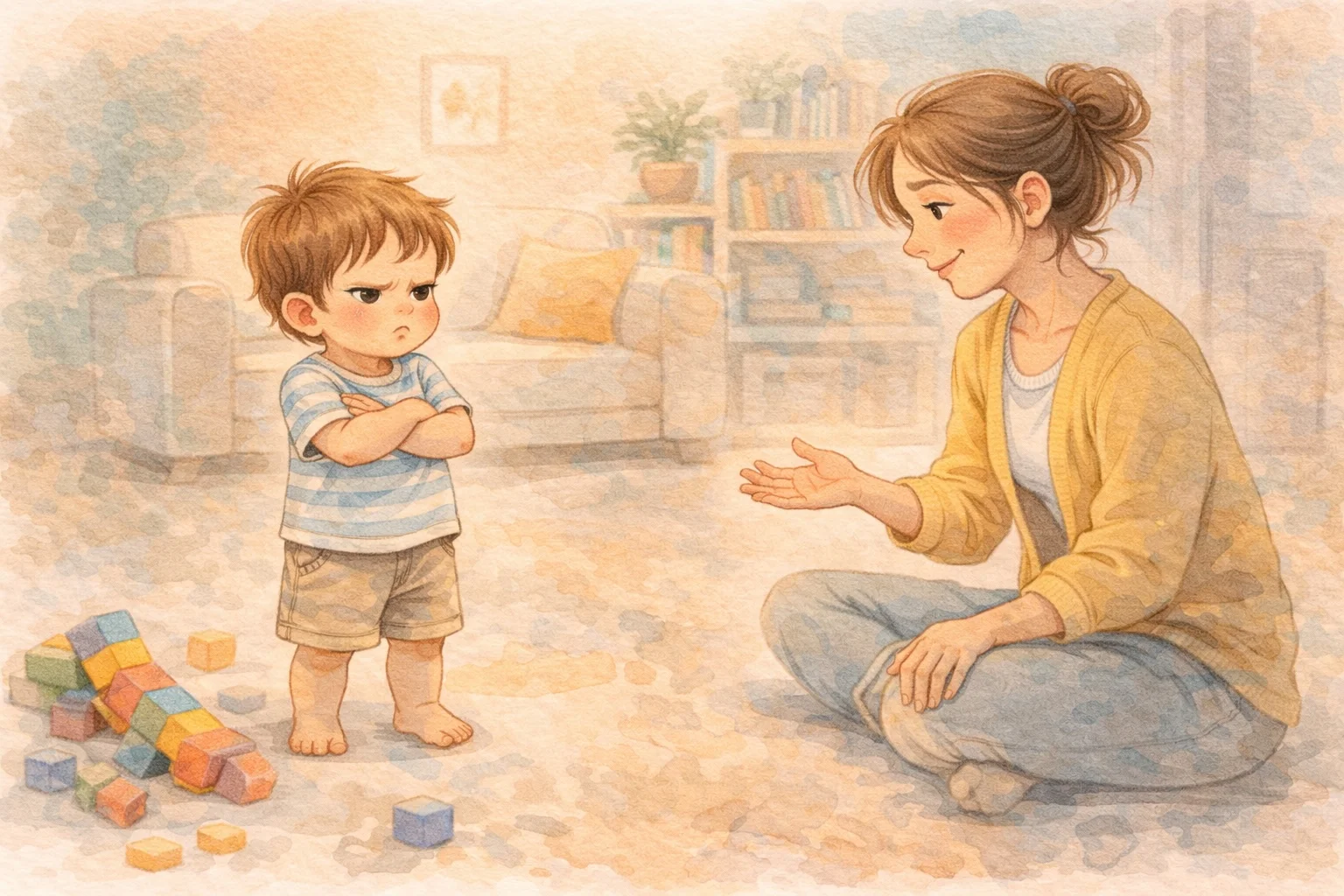
At 2 years: treating it as autonomy, not communication
The mistake at two is carrying on as though nothing changed. The need is no longer mostly "help me", it is "let me". Offering a real choice and holding the boundary at the same time gives the autonomy somewhere to go. The tantrums do not disappear, but they stop being a fight about who is in charge.
When you need the exact words rather than the theory, the what to say when your child hits and grocery store meltdown scripts cover the two moments toddler tantrums escalate fastest.
Your Age-Specific Action Plan
For 18-Month-Olds: Focus on Prevention
Week 1: Track triggers (hunger, tiredness, overstimulation) Week 2: Optimize environment and routines Week 3: Practice physical comfort techniques Week 4: Work on simple communication supports
For 2-Year-Olds: Build Emotional Skills
Week 1: Introduce feeling words and choices Week 2: Practice validation + boundary holding Week 3: Work on prevention through routine and choice-giving Week 4: Celebrate progress and adjust strategies
Special Considerations for Neurodivergent Children
From the app
One profile per child
Advice and scripts matched to each child's age, with a profile for every child in the family.
Autism and Sensory Processing Differences
Meltdowns vs. Tantrums:
- Meltdowns (autism): Sensory overwhelm, can't be "negotiated," child needs calming environment
- Tantrums (typical): Goal-directed behavior, responds to boundary-setting and redirection
Different approaches needed:
- Sensory-first strategies (reduce stimulation, offer sensory tools)
- Longer recovery times after meltdowns
- Visual supports and predictable routines are crucial
- May need occupational therapy consultation
ADHD and Emotional Dysregulation
- More intense emotions and longer recovery times
- Difficulty with transitions and unexpected changes
- May need movement breaks and sensory input
- Executive function challenges affect self-regulation
When to Consider Neurodivergent Evaluation
- Tantrums seem disproportionate to triggers
- Extreme sensitivity to sensory input (sounds, textures, lights)
- Significant difficulty with any change in routine
- Very delayed language development alongside intense tantrums
- Self-soothing behaviors that seem unusual
Key Takeaways: Age-Appropriate Tantrum Management
- ✅ 18-month tantrums are primarily about basic needs and communication frustration
- ✅ 2-year-old tantrums involve more complex emotions and autonomy seeking
- ✅ Physical comfort is crucial for younger toddlers, emotional validation for older ones
- ✅ Prevention strategies should match your child's developmental capabilities
- ✅ Flexibility is key as your child transitions between stages
- ✅ Understanding development reduces parent guilt and frustration
- ✅ Consistent responses help children learn what to expect
- ✅ Professional help is available if concerns arise
Remember: Your child's tantrums will evolve as they grow. Understanding these changes helps you respond with confidence rather than confusion.
For specific communication techniques adapted to each age group, our tantrum communication scripts guide provides language that matches your child's developmental capabilities. If you're dealing with public meltdowns, our public tantrum survival guide includes age-specific strategies for managing tantrums outside the home.
Ready to get age-specific strategies for your toddler? Track your child's development and get personalized tantrum support with the RootWise app.
Struggling with tantrums?
Get personalized coaching support available 24/7. Your parenting coach understands what you're going through.
Try RootWise FreeFrequently Asked Questions
Recommended Resources
These carefully selected resources complement the strategies in this guide and are built by parents, backed by research.
The Happiest Toddler on the Block
by Harvey Karp
New way to stop the daily battle of wills and raise a secure and well-behaved toddler.
Affiliate Disclosure: We earn a small commission from qualifying purchases made through our links. This helps support our content creation at no additional cost to you. We only recommend products we genuinely believe in.
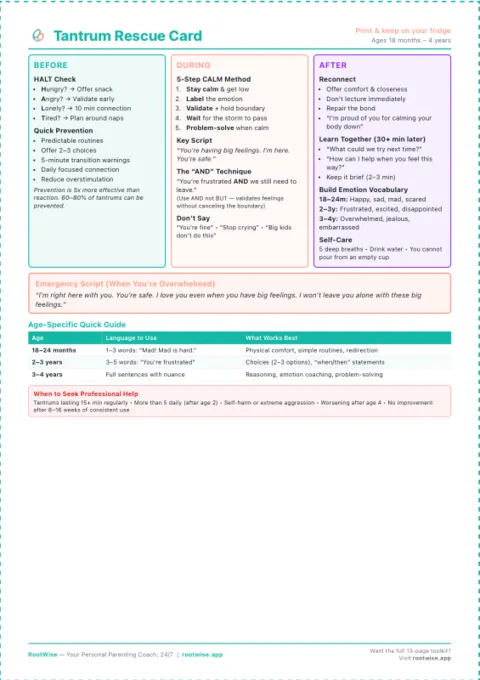
Free Tantrum Scripts
No spam, ever. Unsubscribe in one click.
Need personalized support?
Ask RootWise about your own situation and get an answer for your child's age, 24/7, when you need it most.
Get the app