Terrible Twos: Complete Survival Guide for Exhausted Parents

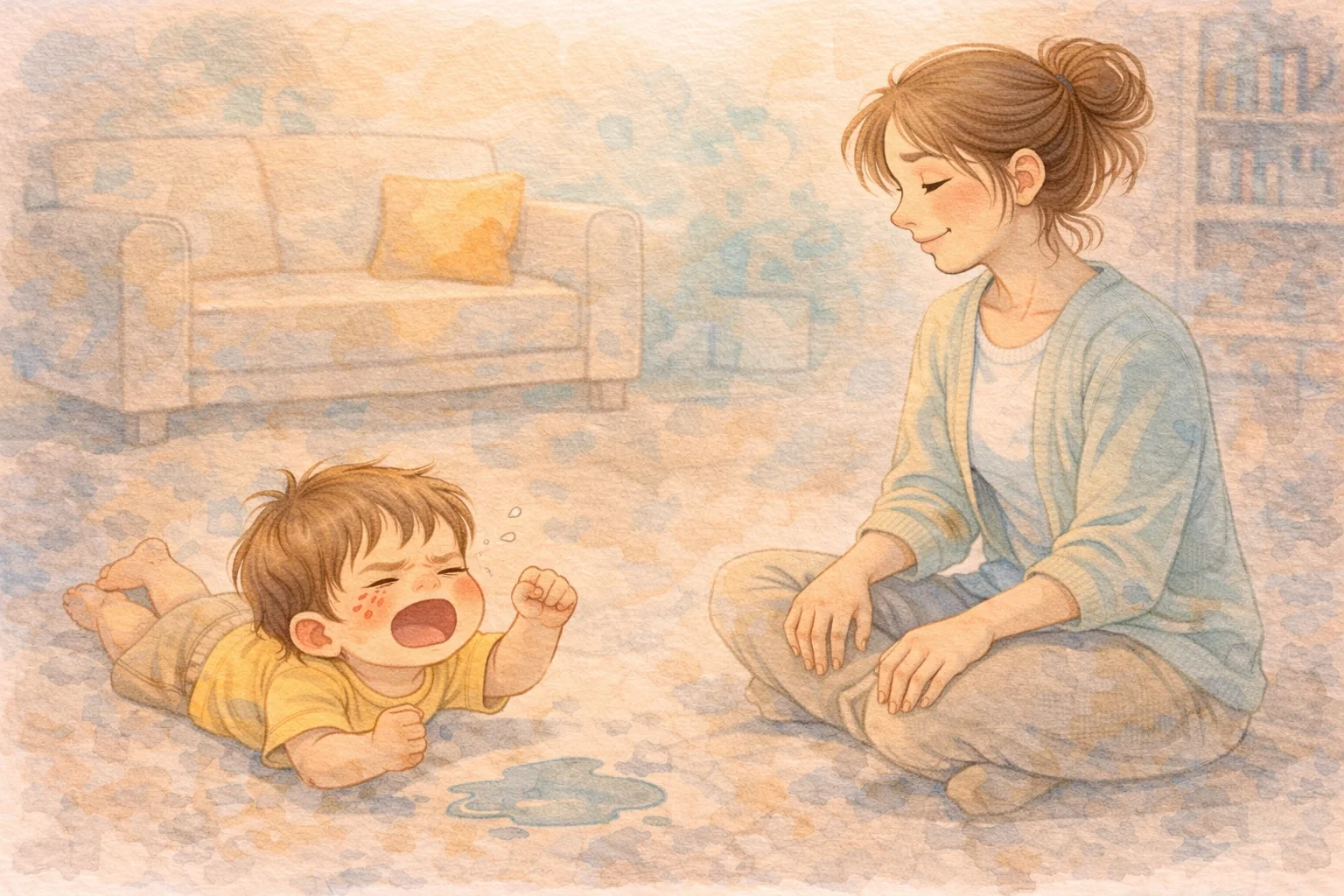
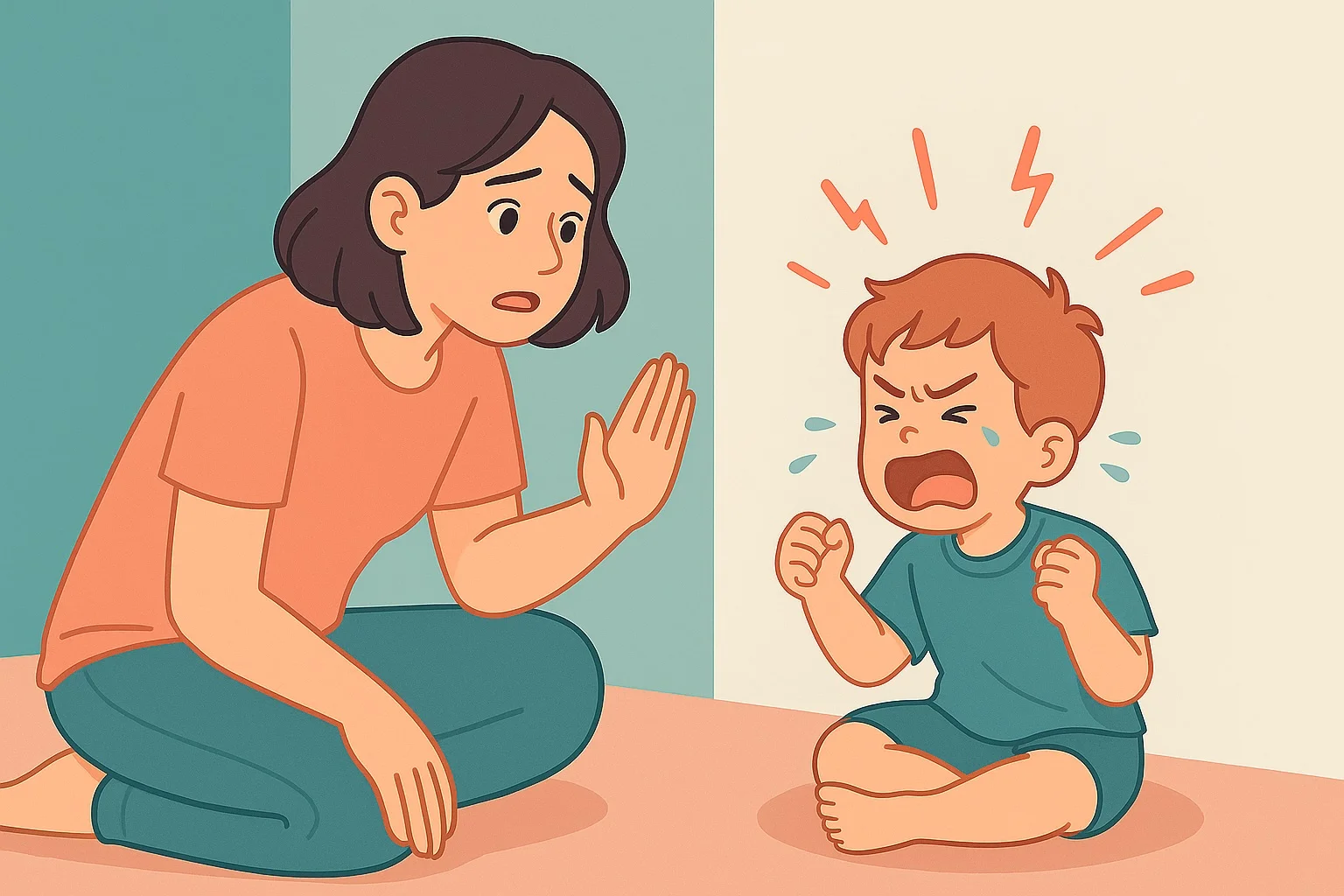
You're in the grocery store. Your 2-year-old wants the cereal box with the cartoon character on it. You say no. And suddenly, you're watching your child melt into a puddle of rage on the floor of aisle seven — screaming, kicking, and attracting the stares of every other shopper. Welcome to the terrible twos.
If this sounds like your daily reality, take a breath. You're not doing anything wrong, and your child isn't broken. The terrible twos are one of the most misunderstood phases of childhood — and once you understand what's really happening inside your toddler's brain, these challenging moments start to make a lot more sense.
This guide gives you the science behind the terrible twos and the practical, evidence-based strategies to get through it — not just surviving, but actually supporting your child's healthy development along the way.
- ✓The terrible twos are a developmental milestone, not a behavior problem
- ✓Your child's emotional brain is fully active but their regulation brain is barely under construction
- ✓Validate emotions first, redirect second — it's the most powerful tool you have
- ✓Offer limited choices to satisfy their need for autonomy without losing control
- ✓Stay calm — your nervous system regulation directly helps theirs
What Are the Terrible Twos, Really?
Let's start by retiring the word "terrible." What we call the terrible twos is actually one of the most important developmental leaps your child will ever make. Between roughly 18 months and 3 years old, your toddler is discovering something mind-blowing: they are a separate person with their own thoughts, wants, and opinions.
That realization is thrilling for them — and exhausting for you.
The terrible twos are marked by:
- A fierce drive for independence ("Me do it!")
- Intense emotions they can't yet control
- Frequent use of "no" as their favorite word
- Tantrums that seem wildly disproportionate to the situation
- Testing boundaries to understand how the world works
Here's what matters most: these behaviors aren't signs of a problem. They're signs of progress. Your child is doing exactly what they're supposed to be doing — they just don't have the brain wiring yet to do it gracefully.
For a deeper look at how tantrums fit into the bigger picture, check out our guide on why tantrums are normal and healthy.
When Do the Terrible Twos Start and End?
Despite the name, the terrible twos don't politely start on your child's second birthday and end on their third. The timeline is much more fluid than that.
Typical terrible twos timeline:
- 18 months: Early signs begin — increased frustration, first major tantrums, growing independence
- 20-24 months: Behaviors ramp up as language lags behind desires
- 2 to 2.5 years: The peak period for most children — maximum tantrums, boundary testing, and emotional intensity
- 2.5 to 3 years: Gradual improvement as language skills catch up
- 3 to 4 years: Most children move through this phase, though some transition into the "threenager" stage
Every child is different. Some breeze through with mild fussiness. Others hit the terrible twos like a hurricane. Both are normal. What matters isn't the intensity — it's how you respond.
For a detailed comparison of how tantrums change between 18 months and 2 years, see our 18 month vs 2 year old tantrums guide.
The Brain Science Behind the Terrible Twos
Understanding your toddler's brain changes everything. When you know why they're melting down, it's so much easier to respond with patience instead of frustration.
The Prefrontal Cortex Gap
Your toddler's emotional brain (the amygdala) is fully online and firing on all cylinders. It generates huge, powerful feelings — rage, joy, frustration, excitement — at full intensity. But the part of the brain that manages those emotions, the prefrontal cortex, is barely under construction. It won't be fully developed until their mid-twenties.
The Language-Emotion Gap
At age 2, your child understands far more than they can express. They might have a vocabulary of 50 to 300 words, but their emotional world is infinitely more complex. When they can't find the words for what they need, what they feel, or what they want — the frustration boils over into a tantrum.
This is why tantrums often decrease dramatically as language improves. Once children can say "I'm frustrated because I wanted the blue cup," they don't need to scream about it.
The Autonomy Drive
Around age 2, your child realizes they have a will of their own. They can want things, refuse things, and make choices. This is a critically important developmental milestone — it's the foundation of self-identity, confidence, and healthy boundaries later in life.
But right now? It mostly looks like your toddler screaming "NO!" when you try to put on their shoes.
For the full science behind toddler tantrums, explore our toddler tantrums and brain science guide.
Common Terrible Twos Behaviors (And What They Mean)
Understanding what's behind each behavior helps you respond effectively rather than reactively.
The Nonstop "No"
What it looks like: Your child says "no" to everything — even things they actually want. What it means: They're exercising their newly discovered power of refusal. Saying "no" is one of the first ways they experience having control over their world.
Epic Tantrums Over Tiny Things
What it looks like: A complete meltdown because you peeled their banana or gave them the wrong color cup. What it means: It's not really about the banana. Your toddler had a mental picture of how things should go, and when reality didn't match, their limited coping skills couldn't handle the disappointment.
Hitting, Biting, and Throwing
What it looks like: Physical aggression when frustrated, excited, or overwhelmed. What it means: They're communicating the only way they can in that moment. Their language can't keep up with the intensity of what they're feeling, so their body takes over.
Wild Mood Swings
What it looks like: Fiercely independent one moment ("Me do it!"), then desperately clingy the next. What it means: The drive for independence is scary. They want to explore the world but still need the safety of you. These swings are healthy — they're practicing leaving and returning to their secure base.
Food Refusal and Pickiness
What it looks like: Rejecting foods they loved last week, insisting on the same meal every day. What it means: Food is one of the few things they can control. This is autonomy in action, and it's completely normal for this age.
Resisting Routines
What it looks like: Fighting diaper changes, bedtime, getting dressed, getting in the car seat. What it means: They don't want to stop what they're doing to do what you need them to do. Transitions are one of the hardest things for the toddler brain to handle.
Your Survival Strategy: 7 Evidence-Based Approaches
These strategies aren't about stopping the terrible twos — they're about getting through them while supporting your child's development and protecting your sanity.
1. Validate Their Emotions First
Before you redirect, correct, or solve anything, name what your child is feeling. This is the single most powerful thing you can do during a tantrum.
Try saying:
- "You're so frustrated right now."
- "You really wanted that, and it's hard to hear no."
- "You're angry because you wanted to do it yourself."
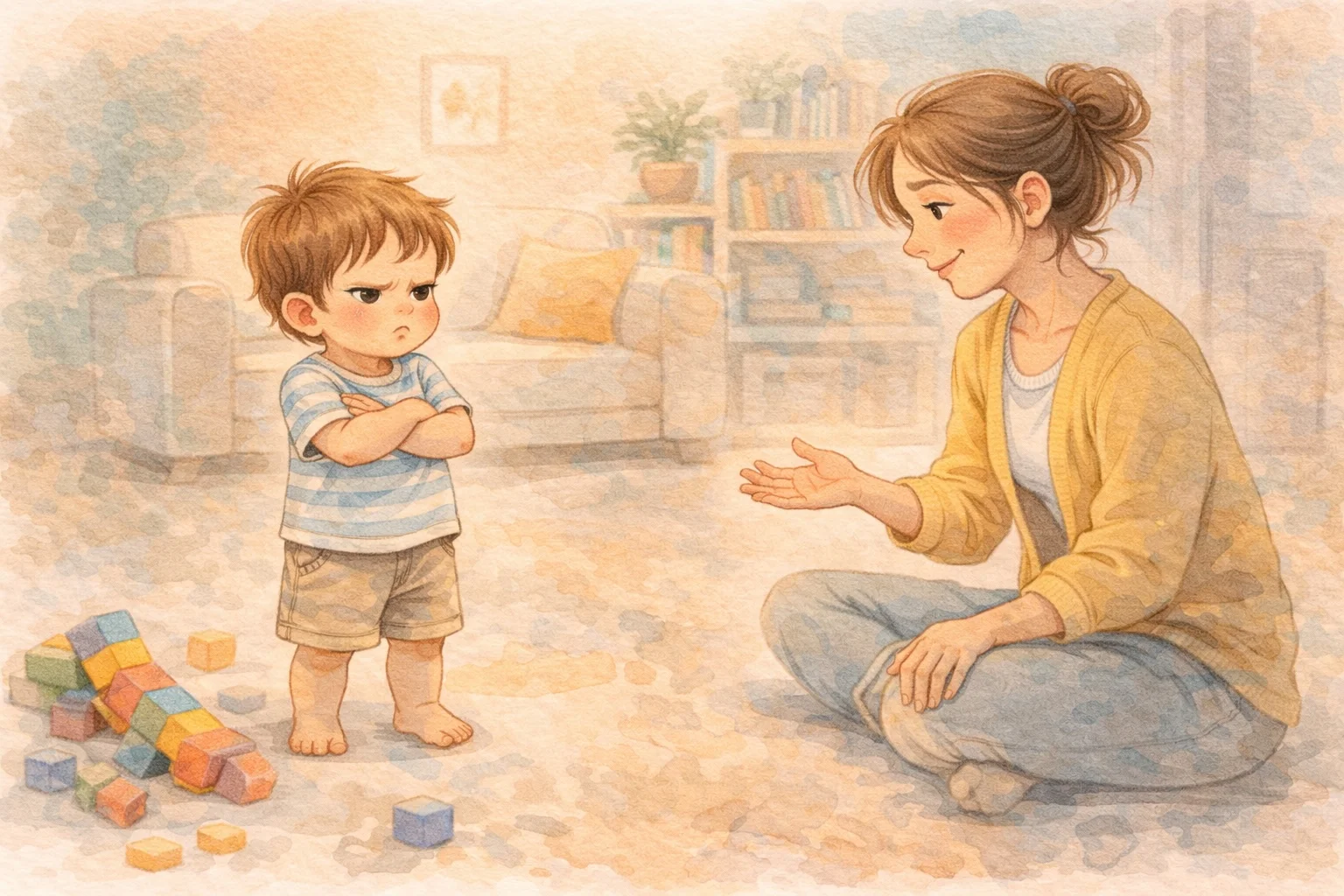
Validation doesn't mean you give in. It means you acknowledge their experience before moving to the boundary. Children who feel understood recover from tantrums faster.
2. Offer Choices (Not Open-Ended Questions)
Your 2-year-old wants control. Give them some — on your terms.
Put your shoes on.
Do you want to wear the red shoes or the blue shoes?
Time for bath.
Do you want bubbles in your bath or the rubber ducks?
Limit choices to 2-3 options. Too many overwhelms them; too few feels controlling.
3. Maintain Routines Like Your Sanity Depends on It (It Does)
Predictability is a toddler's best friend. When they know what comes next, they feel safer — and safer children have fewer meltdowns.
Routine tips for the terrible twos:
- Keep mealtimes, naps, and bedtime consistent
- Use simple verbal cues: "First lunch, then playground"
- Give transition warnings: "Two more minutes, then we clean up"
- Create visual routines with pictures for complex sequences like bedtime
4. Pick Your Battles Wisely
Not every hill is worth dying on. Ask yourself: Does this actually matter, or am I just tired?
Worth holding firm on: Safety, hurting others, essential routines Worth letting go: Wearing mismatched clothes, eating only crackers for lunch, wanting to carry a weird toy to the store
When you reduce the number of "no"s in your child's day, the "no"s that remain carry more weight.
5. Stay Calm (Even When You're Not)
Your child's nervous system is wired to mirror yours. When you stay regulated, you're literally helping their brain calm down. When you escalate, they escalate.
Quick regulation strategies for you:
- Take three slow breaths before responding
- Lower your voice instead of raising it
- Drop your shoulders and unclench your jaw
- Remind yourself: "This is not an emergency."
For more on managing power struggles without losing your cool, see our managing power struggles guide.
6. Use Distraction Wisely
Distraction gets a bad reputation, but for 2-year-olds it's a legitimate and effective strategy. Their brains are wired for novelty, and redirecting attention before a full meltdown is not avoiding the problem — it's working with their developmental stage.
Effective distractions:
- "Oh, look at that dog! What sound does a dog make?"
- "Can you help me find all the red things?"
- "Should we sing your favorite song?"
The key is timing. Distraction works best before or at the very beginning of a meltdown — not when they're in the middle of full-blown rage.
7. Build Connection Throughout the Day
The best tantrum strategy is prevention, and the best prevention is connection. Children who feel securely connected to their caregivers have an easier time accepting limits and recovering from disappointment.
Connection boosters:
- 10-15 minutes of child-led play every day (no phones, no agenda)
- Physical affection: hugs, cuddles, roughhousing
- Narrating what you notice: "You stacked three blocks! You're concentrating so hard."
- Repair after conflict: "I got frustrated earlier. I'm sorry. I love you even when things are hard."
For a complete approach to tantrum prevention, read our tantrum prevention strategies guide.
Age-Appropriate Expectations: What's Realistic at 2
One of the biggest sources of frustration during the terrible twos is expecting too much. Here's a reality check on what your 2-year-old can and can't do.
What IS Realistic at Age 2
- Following simple, one-step instructions ("Please bring me the book")
- Saying "no" or expressing preferences
- Playing alongside other children (parallel play)
- Recovering from tantrums within a few minutes with your support
- Understanding basic routines when they're consistent
- Feeling empathy in simple ways (noticing when someone is sad)
- Starting to use words for some feelings
What is NOT Realistic at Age 2
- Sharing willingly and consistently
- Controlling impulses reliably
- Managing disappointment without visible upset
- Sitting still for extended periods
- Waiting patiently for more than a minute or two
- Reasoning through conflicts logically
- Remembering rules without reminders
- Regulating emotions without adult help
When you adjust your expectations to match your child's actual developmental capabilities, everything gets easier. You stop seeing defiance and start seeing a child who's doing the best they can with the brain they have right now.
When to Seek Help
The terrible twos are normal — but that doesn't mean you should white-knuckle it alone if something feels off. Trust your instincts.
Normal Terrible Twos vs. Red Flags
Normal (even if exhausting):
- Tantrums lasting 1-5 minutes
- 1-3 tantrums per day during peak periods
- Tantrums triggered by identifiable causes (hunger, tiredness, frustration, transitions)
- Your child can be comforted eventually
- Happy, engaged moments between tantrums
- Steady progress in language and social skills
Worth a conversation with your pediatrician:
- Tantrums consistently lasting 15+ minutes
- More than 5 major tantrums per day
- Self-harm during tantrums (head banging, biting themselves)
- Persistent aggression that doesn't improve with consistent responses
- Regression in language or skills they previously had
- Very limited language development for their age
- Seeming unhappy or withdrawn most of the time between tantrums
- No improvement after 6-8 weeks of consistent strategies
- Your gut telling you something isn't right
Seeking help is not a failure. It's good parenting. Early intervention, when needed, makes a significant difference, and most of the time your pediatrician will reassure you that everything is on track.
For more detailed guidance on what's typical at age 3 and beyond, see our 3 year old tantrums expert guide.
The Bigger Picture: You're Building Something Important
Here's what nobody tells you when you're standing in that grocery store aisle with a screaming toddler: this is where emotional intelligence begins.
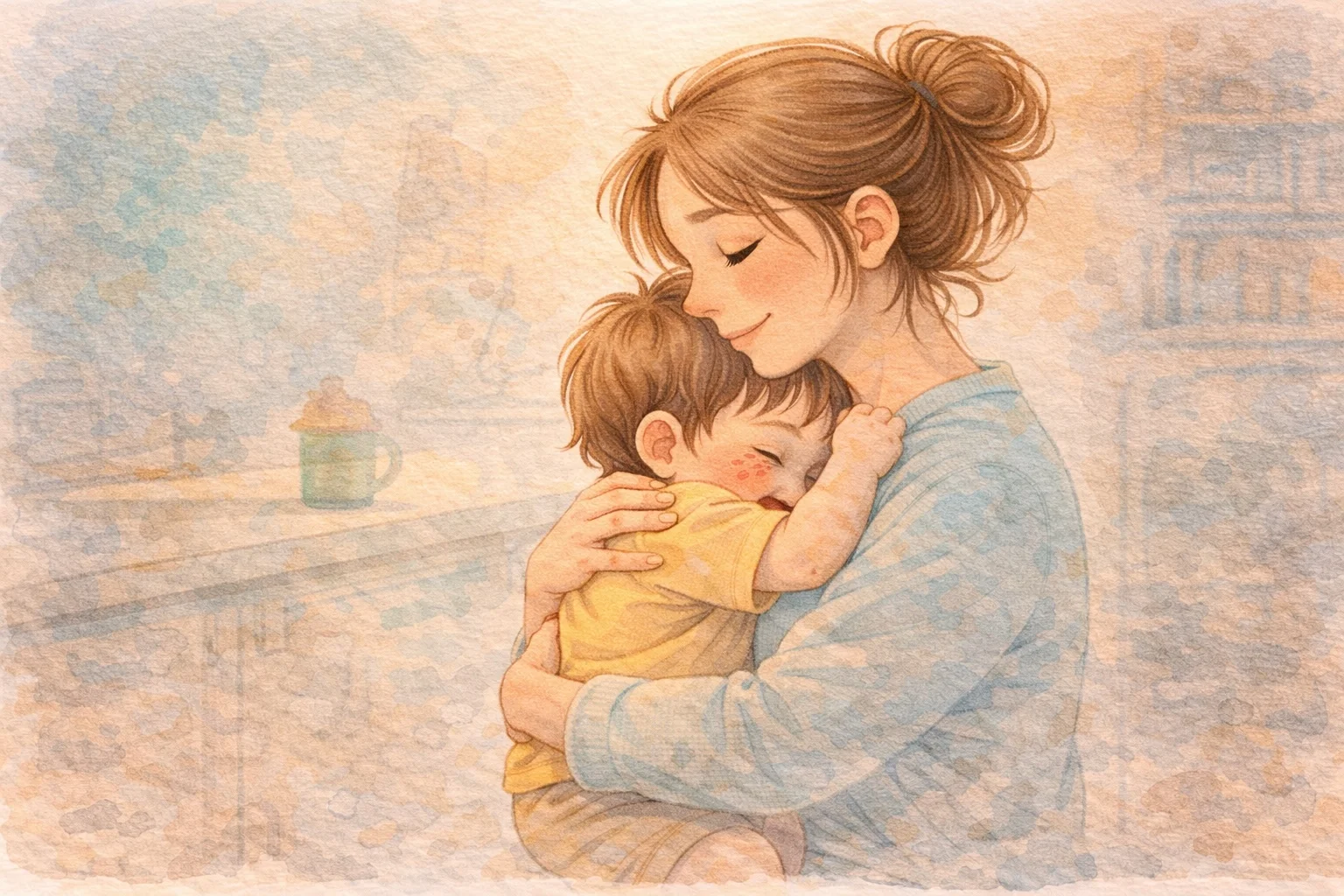
Every time you stay calm during a meltdown, you're teaching your child that big emotions are survivable. Every time you validate their feelings while holding a boundary, you're showing them that they can be upset AND still be loved. Every time you help them name what they're feeling, you're building the emotional vocabulary they'll use for the rest of their life.
The terrible twos aren't a phase to just get through. They're a phase to grow through — together.
Key Takeaways
- The terrible twos are a developmental milestone, not a behavior problem. Your child is learning independence, self-expression, and emotional awareness.
- They typically span 18 months to 3-4 years, peaking around age 2 to 2.5. The timeline varies for every child.
- Your child's brain literally can't regulate big emotions yet. The prefrontal cortex is still decades from full development.
- Validate first, redirect second. Naming emotions is the most powerful tool in your arsenal.
- Offer choices, maintain routines, and pick your battles. Give them autonomy where it's safe, hold firm where it matters.
- Your calm is contagious. When you regulate yourself, you help your child regulate too.
- Seek help if something feels off. Trust your instincts and consult your pediatrician when needed.
Remember: Your 2-year-old isn't giving you a hard time — they're having a hard time. And you are exactly the parent they need to get through it.
For a comprehensive look at tantrums across all toddler ages, explore our complete toddler tantrums guide.
This article is based on current child development research and expert parenting coaching methods. Individual results vary based on child temperament and consistency of implementation. Always consult your pediatrician with concerns.
24/7 AI Parenting Assistant
Get instant, personalized advice with expert-curated parenting knowledge. Chat with your AI coach anytime, anywhere.
Challenging Moments Support
Access step-by-step parenting strategies, quick tips, and age-specific guidance for difficult situations when you need it most.

Struggling with tantrums?
Get personalized coaching support available 24/7. Your parenting coach understands what you're going through.
Try RootWise Free →Free Tantrum Scripts
Help your toddler manage big emotions with these strategies and scripts.
Frequently Asked Questions
Download RootWise Today


Need personalized support?
RootWise's AI coach can provide tailored strategies for your specific situation, available 24/7 when you need it most.
Learn More About AI Coaching →