Why Does My Child Ignore Me? Understanding the Cooperation Gap (Ages 2-7)


Table of Contents
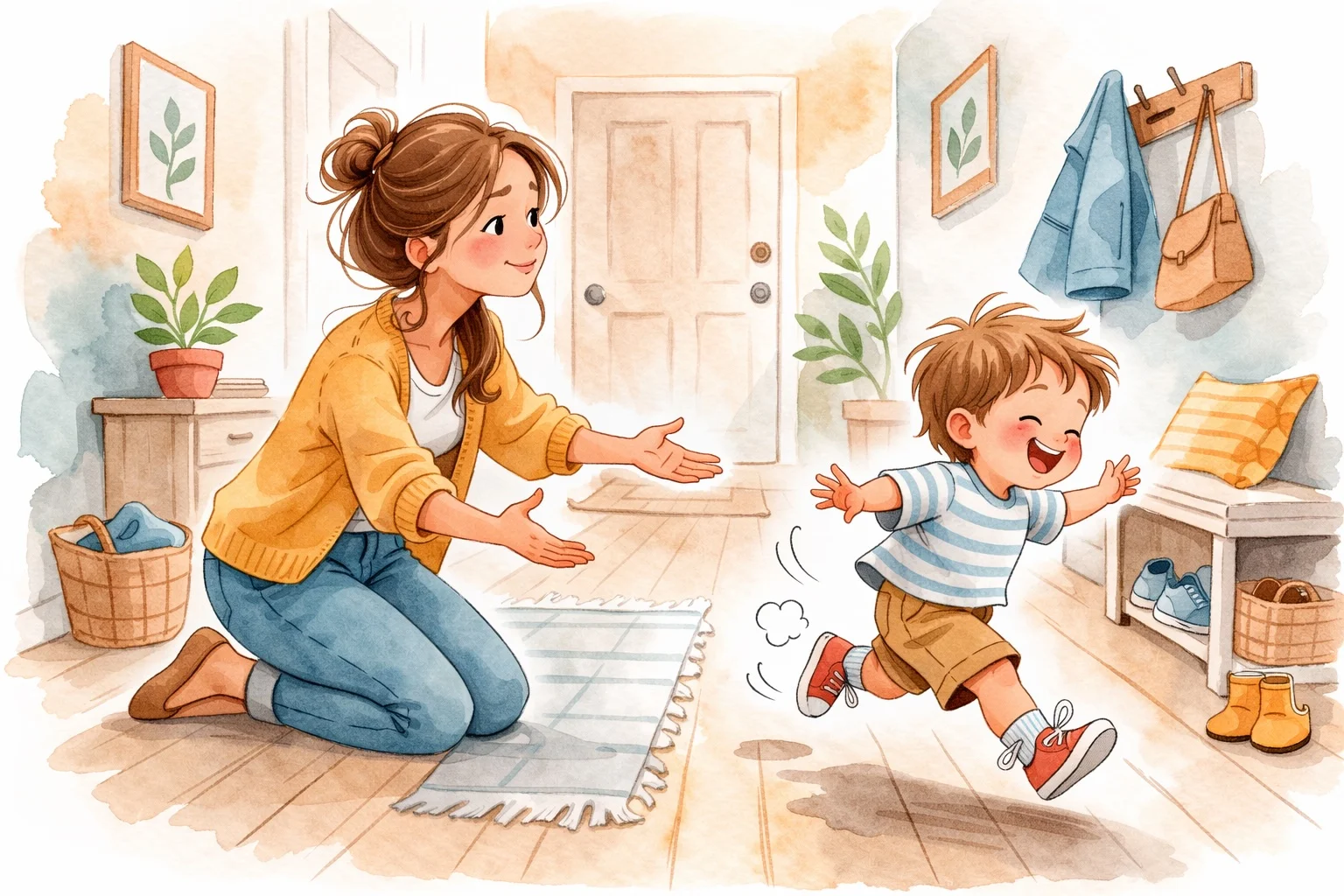
You're standing in the kitchen. You've said your child's name three times. You've asked them to come to dinner. You've made the request louder. You've made it firmer. And your child is sitting on the living room floor, fully absorbed in their Lego creation, acting as though you simply do not exist.
The feeling that washes over you in that moment is hard to name. It's not quite anger. It's something more personal — a deflating mix of frustration, hurt, and a quiet voice asking: Why does my child act like I'm invisible?
If you know this feeling, you're not alone. "Why does my child ignore me?" is one of the most common questions parents ask pediatricians, therapists, and each other. And the answer is both more reassuring and more nuanced than you might expect.
What looks like ignoring is almost never about disrespect. It's about something researchers call the "cooperation gap" — the space between what your child hears and what they're developmentally able to act on. Understanding this gap changes everything about how you communicate with your child, and it works across the entire early childhood span from ages 2 through 7.
- ✓What looks like ignoring is almost never intentional — it's developmental
- ✓Listening requires six separate brain processes, all still under construction in ages 2-7
- ✓Stop giving instructions from across the room — physical proximity changes everything
- ✓Connection is the foundation of cooperation, not consequences
- ✓Say it once, then calmly follow through with action — stop the repeat cycle
The Cooperation Gap: What It Is and Why It Matters
Defining the Gap
The cooperation gap is the distance between a parent's expectation of compliance and a child's developmental ability to deliver it. Every child has this gap. It narrows as they grow, but it never completely closes (adults have a version of it too — think of how many times you've ignored a notification you knew you should respond to).
At its core, the cooperation gap exists because listening and complying are not the same thing. Listening requires:
- Hearing the words (auditory processing)
- Comprehending the meaning (language processing)
- Shifting attention from the current activity (executive function)
- Overriding impulses to keep doing what they want (impulse control)
- Planning and executing the requested action (motor planning)
- Tolerating the emotions that come with stopping something enjoyable (emotional regulation)
That's six separate brain processes, all of which are under active construction in children ages 2-7. When your child "ignores" you, the breakdown can happen at any of these six points — and it's rarely at step one.
The Connection Bank Account
Dr. Gordon Neufeld, a developmental psychologist and author of Hold On to Your Kids, uses a powerful metaphor: your relationship with your child is like a bank account. Every warm interaction, moment of play, and experience of being understood is a deposit. Every correction, direction, and "no" is a withdrawal.
When the account balance is high, children cooperate willingly — not because they fear consequences, but because they want to maintain the connection. When the balance is low (after a stressful week, a lot of corrections, or insufficient one-on-one time), cooperation drops sharply.
This isn't a theory about permissiveness. It's a recognition that the quality of the relationship is the primary driver of cooperation. The child who feels deeply connected, understood, and valued will tolerate the frustration of stopping what they want to do in order to please the person they're connected to.
The child whose connection tank is empty simply won't.
Why Do Children Tune Out and Ignore Their Parents?
Ages 2-3: The Autonomy Explorers
At this age, "ignoring" is almost entirely developmental. Your 2-3 year old:
- Has a working memory that can hold one piece of information at a time
- Is in the peak of the autonomy stage, where saying "no" feels as important as breathing
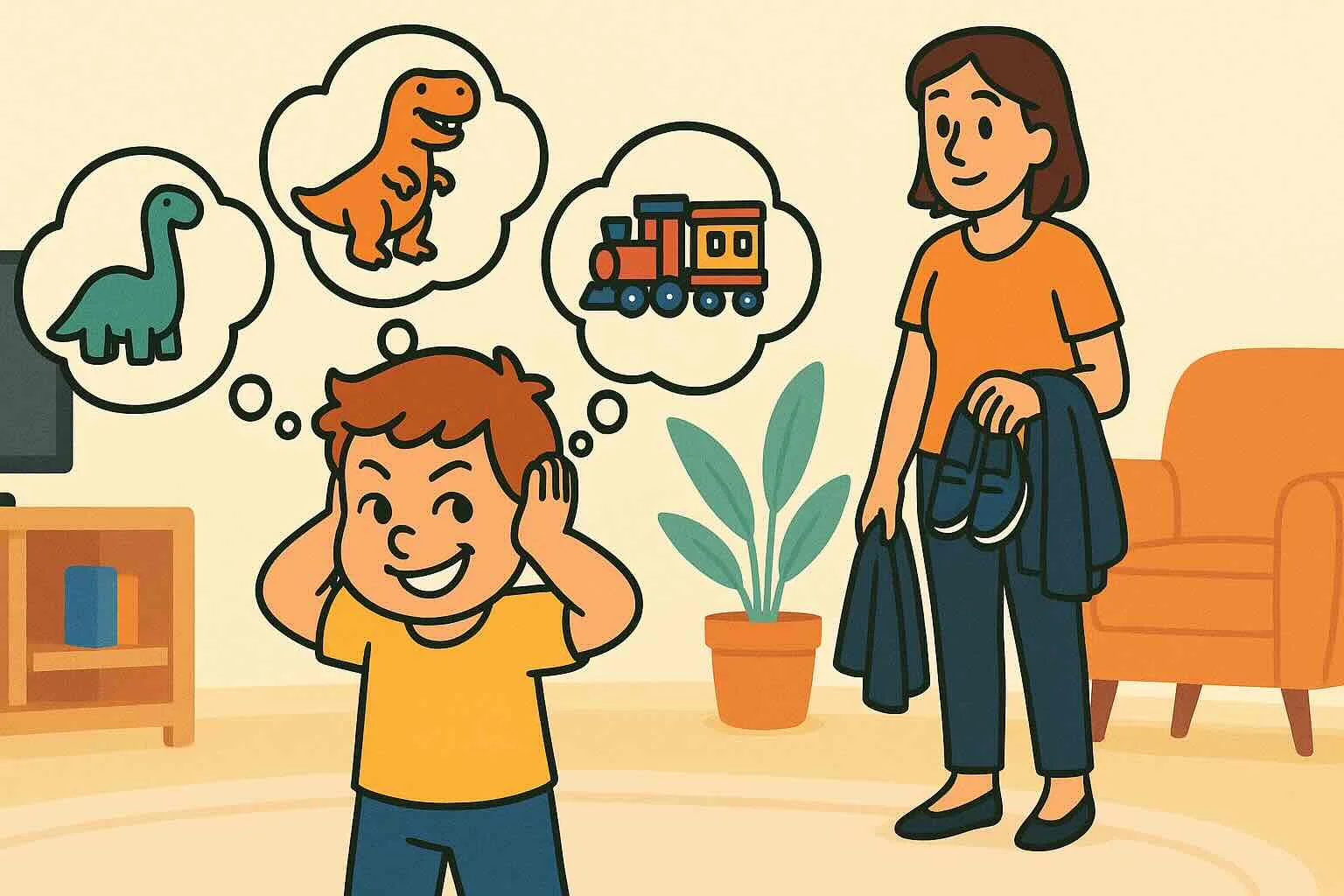
- Enters genuine flow states during play that filter out external sounds
- Cannot voluntarily shift attention from something engaging to something boring
- Experiences every transition as a small loss, triggering emotional flooding
What it looks like: You say "Come here" and they run the opposite direction, laughing. You say "Put your shoes on" and they act as if you're speaking a foreign language.
What it means: Their brain is working exactly as it should for this stage. For age-specific strategies, our 2-year-old not listening guide covers this developmental window in detail.
Ages 3-4: The Boundary Scientists
Three and four-year-olds have added a new layer: they're now actively testing what happens when they don't comply. This isn't manipulation — it's research.
- They're conducting experiments: "If I don't listen, will the rule still exist tomorrow?"
- Their emotional brain often overrides their thinking brain during transitions
- They're comparing your rules to what happens in other settings (daycare, grandparents)
- They crave routine and predictability but resist the routines you choose for them
What it looks like: They can recite the rules perfectly but break them constantly. They listen to teachers but not to you. They hear "cookie" from three rooms away but are deaf to "clean up."
What it means: They're building their understanding of how the social world works through trial and error. Our 3-year-old not listening guide and 4-year-old not listening guide address these specific dynamics.
Ages 5-7: The Negotiators
By 5, children have developed enough cognitive sophistication to engage in what feels like deliberate ignoring — but even here, it's rarely that simple.
- Their executive function is improving but still inconsistent, especially when tired or stressed
- They're acutely aware of fairness and will resist rules that feel arbitrary
- They've spent all day following rules at school and have compliance fatigue
- They're developing the ability to argue and negotiate, which they practice on you
- They're beginning to compare themselves to peers, adding social pressure to their resistance
What it looks like: They argue back, negotiate endlessly, do exactly the opposite of what you asked, or comply so slowly it barely counts.
What it means: They're developing critical thinking and self-advocacy — skills you want them to have — and they're practicing on their safest person. Our 5-year-old not listening guide covers the school-age cooperation challenge in depth.
The Universal Factor: Screen Absorption
Across all ages, one modern factor deserves special attention. Children who seem unable to hear you while watching a screen or playing a game are not being willfully defiant. Screens are specifically engineered to hijack attention using rapid stimulus changes, bright colors, and dopamine reward loops.
Your voice — asking them to do something boring — simply cannot compete with a system designed by teams of engineers to be maximally engaging. This is a design problem, not a behavior problem. The solution isn't louder requests; it's managing the screen environment so transitions are less abrupt.
How Do You Get Your Child to Stop Ignoring You? 6 Strategies That Work
1. The Proximity Principle: Close the Physical Distance First
The single most evidence-backed change you can make is to stop giving instructions from a distance. Research consistently shows that instructions delivered at close range with physical connection are dramatically more effective than those called from another room.
The protocol:
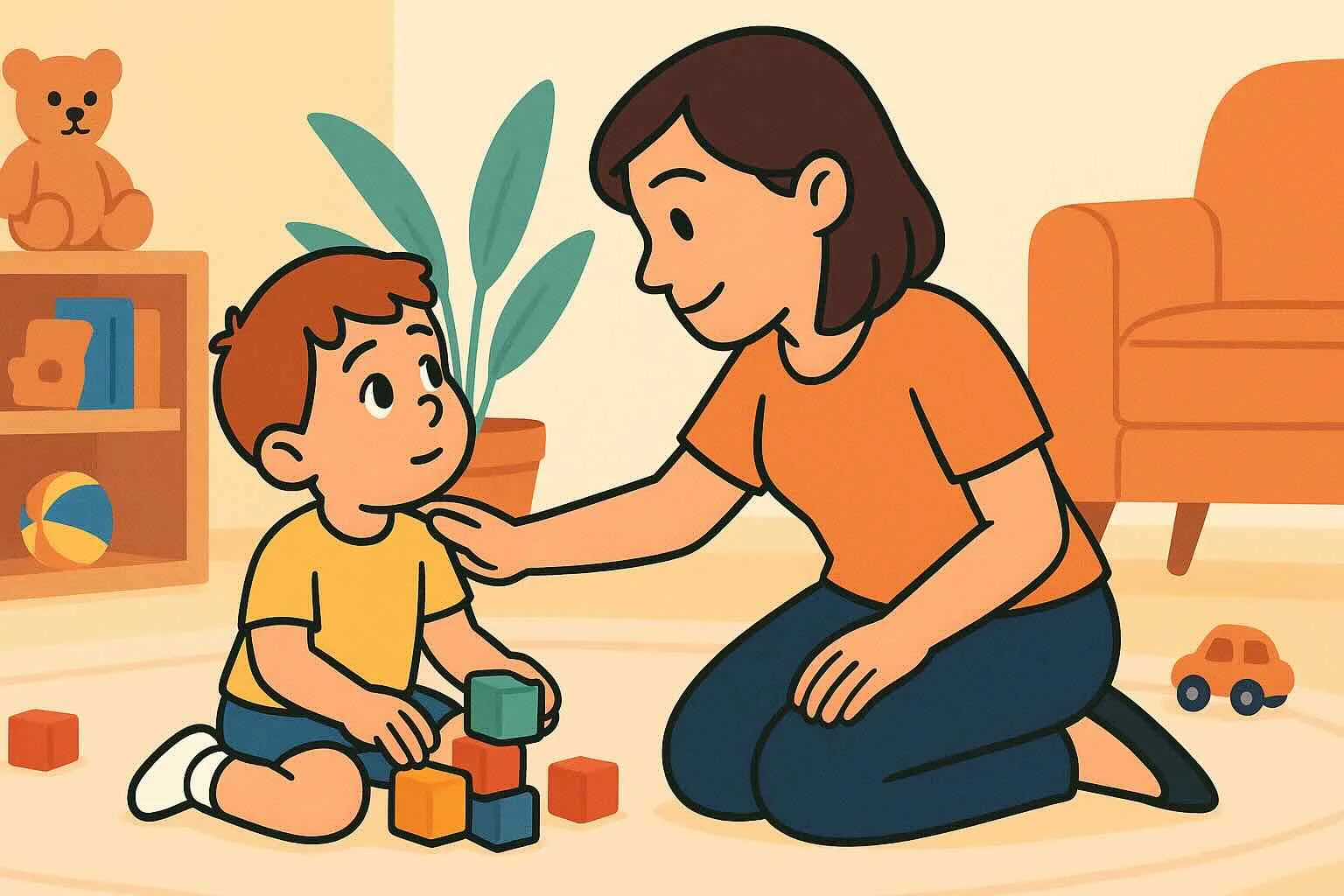
- Walk to your child (every time, no exceptions)
- Position yourself at their level
- Use gentle touch — a hand on the shoulder or arm
- Wait for eye contact before speaking
- Deliver one clear instruction
Parent story — Sarah's shift: "I used to stand in the kitchen doorway yelling instructions at my kids like some kind of traffic controller. When I started walking over and kneeling down every single time, I felt ridiculous at first — like, I shouldn't have to do this, they should just listen. But within a week, the change was undeniable. My 4-year-old went from ignoring 80% of my requests to responding to most of them. The secret was so simple it almost felt unfair."
2. Fill the Connection Tank Before Making Withdrawals
If you know you'll need your child's cooperation for something challenging — leaving the park, ending screen time, doing homework — invest in connection beforehand.
The 10-Minute Deposit: Before your day's hardest transition, spend 10 minutes in fully present, child-led play. No phone. No agenda. No teaching. Let them lead and you follow. Narrate with genuine interest: "You're building a bridge for the dinosaurs! Where does it go?"
The Transition Warmup: Instead of an abrupt "Time to go," start with connection: "I loved playing with you at the park today. Your climbing was amazing. Let's do one more thing together, and then we'll head home."
The Repair Deposit: If you've had a hard day with lots of corrections, make a deliberate deposit before bed: "I know today was tough. I want you to know that even on hard days, I love being your mom/dad. What was one good thing about today?"
Why it matters: Research from the Circle of Security model shows that children's willingness to cooperate is directly proportional to their sense of felt security with the adult making the request. Connection isn't a reward for good behavior — it's the foundation that makes good behavior possible.
3. Match Your Communication to Their Developmental Stage
The same message needs entirely different delivery depending on your child's age.
For ages 2-3:
- One-step instructions only: "Shoes on." (Not "Get your shoes, put them on, and meet me at the door.")
- Use body language more than words: Point, gesture, demonstrate
- Offer two choices: "Red shirt or blue shirt?"
- Make it playful: "Can you hop to the bathtub like a bunny?"
For ages 4-5:
- Two-step instructions maximum: "Put your plate in the sink, then come to the living room."
- Use "When...Then" framing: "When your toys are put away, then we can read stories."
- Acknowledge their perspective first: "I know you're right in the middle of your game."
- Explain the reason briefly: "We need to leave now because the store closes soon."
For ages 6-7:
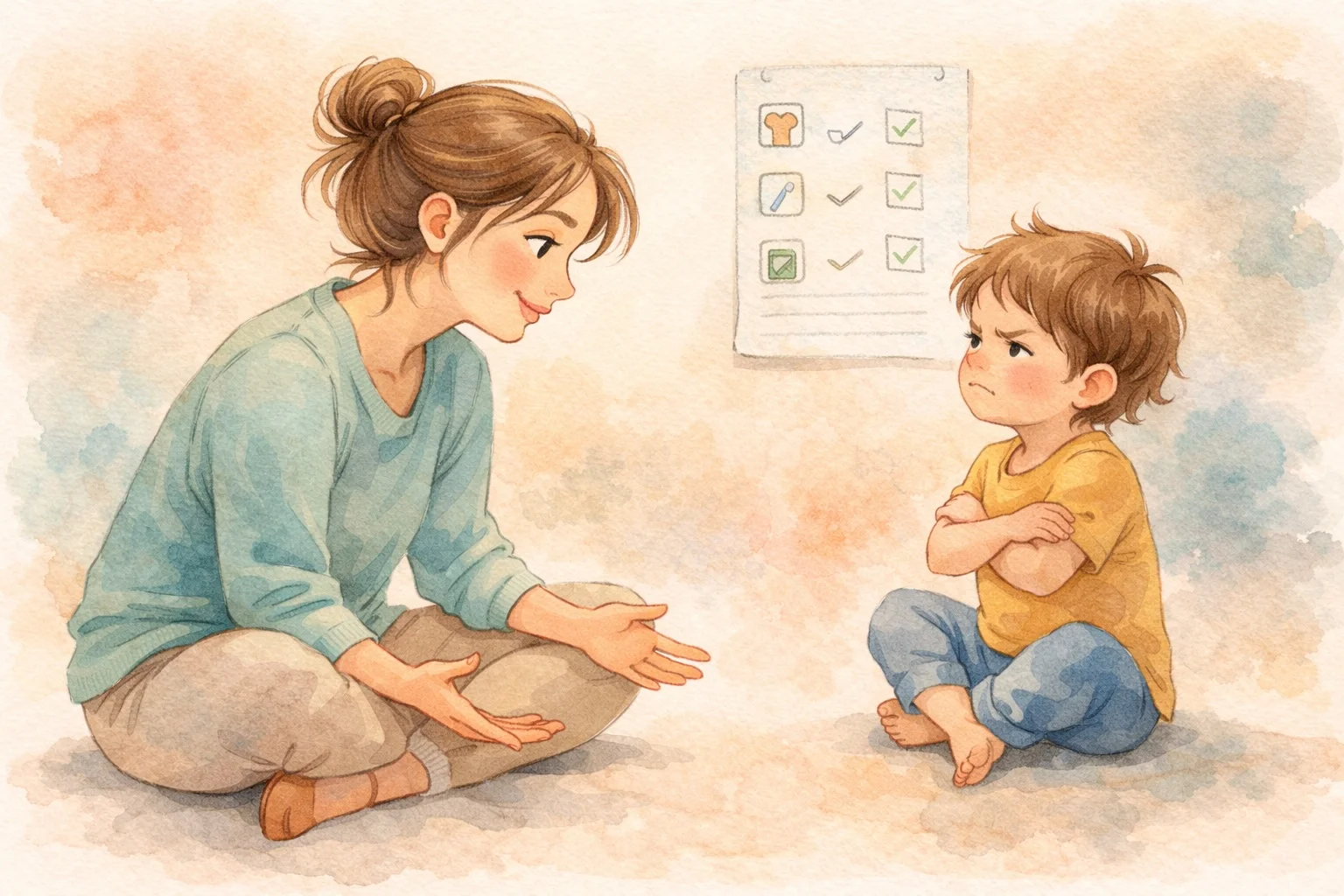
- Collaborative problem-solving: "Mornings have been hard. What could we do differently?"
- Visual checklists they helped create
- Natural consequences with empathetic narration: "You chose not to bring your jacket, so you might feel cold. I have it in my bag for when you're ready."
- Advance notice with specific time: "You have 15 minutes left, and I'll give you a 5-minute warning."
From the app
Ask about your own situation
Noah (4) ignores everything I say until I raise my voice. How do I get him to listen without yelling?
Summary
Noah is probably not ignoring you on purpose: at four, an instruction called across the room rarely reaches a child who is deep in something else. Go over to him, get his attention first, and then say it once.
What to do
- Get close first: Walk over, crouch to his level and wait until he looks at you. "Noah, I need your eyes for a second."
- One instruction, once: Say what happens, not what has to stop. "Shoes on, then we go." No repeating and no counting down.
- Follow through calmly: If nothing moves, help him do it. "I said shoes on. I am going to help you now." Same voice as the first time.
Answers for your own situation are part of Premium, with a free trial. The scripts stay free.
4. Stop Repeating, Start Acting
One of the most common patterns parents fall into is the "repeat cycle": you ask, they ignore, you ask louder, they ignore, you ask with frustration, they finally respond to your tone (not your words). This cycle teaches your child one very clear lesson: I don't need to respond until Mom or Dad is upset.
Break the cycle with the "Say It Once" approach:
- Deliver the instruction once, clearly, at close range
- Wait 5-10 seconds (this feels longer than you think — count silently)
- If no response, follow through with calm, physical action
- No lecturing. No repeating. No counting.
What follow-through looks like by age:
Age 2-3: Gently take their hand and walk together to where they need to go. "I'm going to help your body get to the table."
Age 4-5: Move to their level and say, "I can see you're still playing. And it's time to eat. I'll wait right here for 10 more seconds, and then I'm going to help you transition."
Age 6-7: "I said it once and I meant it. I'm going to start serving dinner now. Your spot is ready when you are." (Allow the natural consequence to teach.)
Parent story — Tom's revelation: "I realized I was saying 'Come eat dinner' an average of seven times every night. Seven. When I committed to saying it once, walking over, and then calmly acting, it was uncomfortable for about three days. My 6-year-old tested me hard. But by day four, she came the first time. She said, 'I know you mean it now, Dad.' That sentence hit me like a truck — she'd been waiting all along for me to mean it."
5. Regulate Yourself Before Regulating Your Child
Here's an uncomfortable truth: the way you feel when your child ignores you directly affects how effective your response will be. When you're calm, you make better choices. When you're triggered — feeling disrespected, invisible, or out of control — you default to escalation.
The Parent Pause Protocol: When you feel the heat rising:
- Notice the feeling: "I'm getting frustrated because I feel ignored."
- Name the story: "The story I'm telling myself is that my child doesn't respect me."
- Challenge the story: "The reality is that my 4-year-old is deeply absorbed in play and struggles with transitions. This is developmental, not personal."
- Choose your response: "I'm going to walk over, connect, and make one calm request."
The repair when you do yell: Every parent yells sometimes. What matters is what you do afterward.
"I yelled at you just now, and that wasn't OK. You didn't deserve that. I was feeling really frustrated, and I lost my calm. I'm sorry. Can we start over?"
Parent story — Priya's transformation: "I used to take it so personally when my kids ignored me. Like they were rejecting me as a person. Once I started seeing it as 'their brain is busy, not their heart,' everything changed. I stopped escalating and started connecting. The irony is that now they listen more, because I yell less. And on the days I do lose it, I repair. My 7-year-old recently said, 'It's OK, Mom, everyone has big feelings sometimes.' She was quoting what I'd taught her. That moment made every hard day worth it."
6. Create Rituals That Make Cooperation Automatic
The most powerful long-term strategy is to build cooperation into the rhythm of your day so that it becomes automatic rather than requiring negotiation every single time.
Transition rituals:
- A specific cleanup song that signals "playtime is ending" (same song every time)
- A "hand on the door" countdown where you place your hand on the front door and count to 10 slowly before leaving
- A goodbye ritual for leaving the park: "Say goodbye to the swings, goodbye to the slide, goodbye to the sandbox"
Connection rituals:
- A special handshake or silly greeting when you reunite after being apart
- "Rose and thorn" at dinner where everyone shares the best and hardest part of their day
- A 2-minute morning snuggle before the rush begins
Cooperation rituals:
- Family meeting every Sunday to plan the week together (even a 5-minute one works)
- "Helper of the day" where one child gets a special responsibility
- A visual "cooperation jar" where the whole family adds a marble when cooperation happens (not individual rewards, but a family celebration when it fills up)
For more strategies on building cooperation into your daily life without relying on rewards or punishment, our positive discipline examples offer concrete scripts and scenarios.
When Ignoring Might Be Something More
Red Flags to Watch For
For most families, the cooperation gap is a normal developmental challenge that improves with the right strategies and the passage of time. However, certain patterns warrant professional evaluation.
Consult your pediatrician if your child:
- Never responds to their name, even in quiet one-on-one settings
- Cannot follow any single-step instruction by age 2, or any two-step instruction by age 4
- Shows no improvement in listening despite several months of consistent, connection-based strategies
- Has speech or language delays that make communication difficult
- Seems genuinely unable — not unwilling — to process or remember instructions
- Is significantly more distracted or impulsive than peers across all settings
- Has hearing difficulties (frequent ear infections, speaks louder than necessary, needs visual cues for all communication)
- Shows extreme anxiety or distress around normal expectations
Important distinction: A child who ignores you selectively (responds to "Want ice cream?" but not "Clean up your room") is showing normal developmental behavior. A child who cannot respond to any instruction, even one they want to follow, may benefit from professional support.
Early intervention for hearing, language processing, or attention difficulties makes a significant difference. If you suspect your child's struggles go beyond typical development, trust your instincts and ask for an evaluation.
From the app
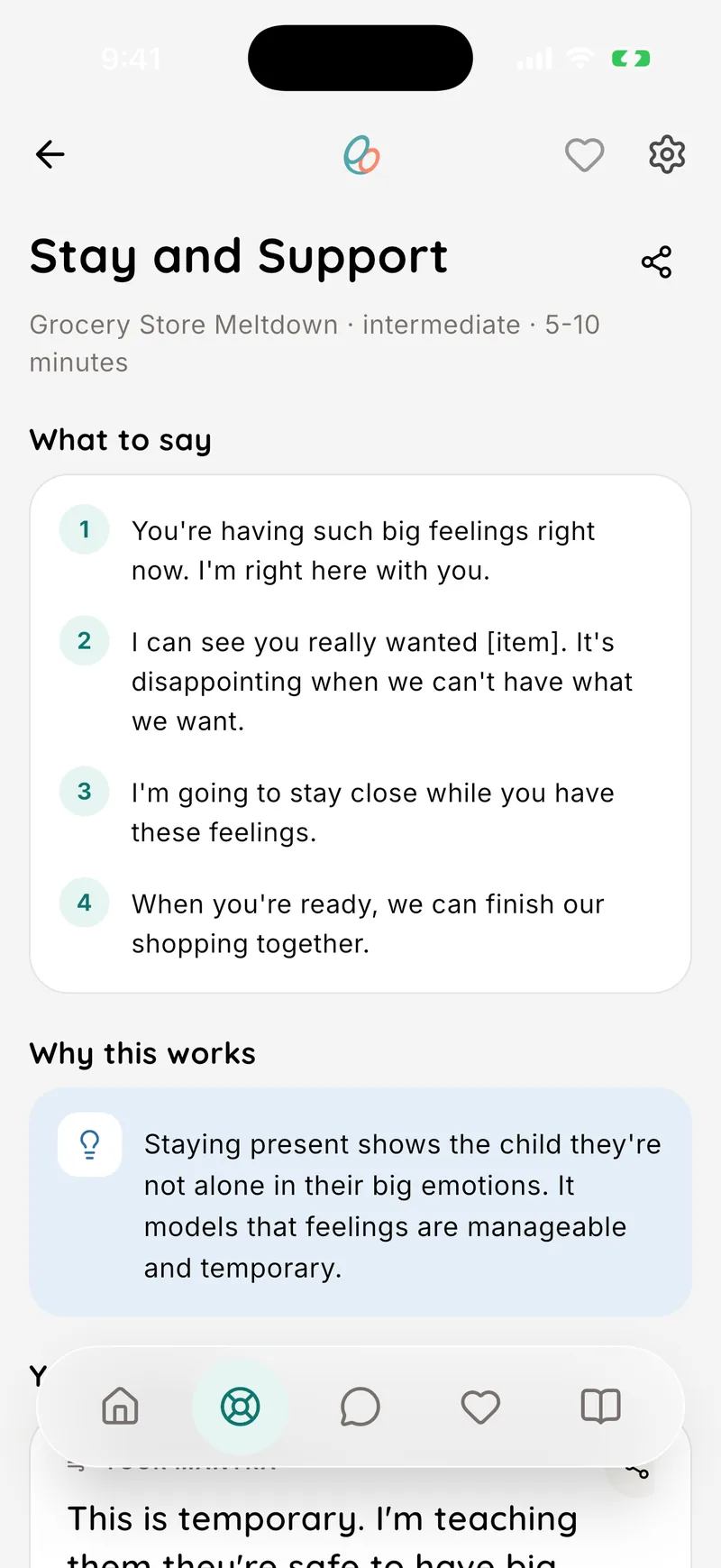
What to say when it happens
Child sasses, refuses, or talks back defiantly in front of other people - other parents, family, a checkout line - and you feel the stares
Ages 3-7 years
Say this
- 1You really don't want to. Tell me the worst part.
- 2You wish this didn't have to happen right now. I get it.
- 3That part's still happening. You pick - do we walk to the car, or do I carry you like a sack of potatoes?
- 4That was a big feeling, and it came out unkind. Try it again - I'm listening.
Why it works
All 36 scripts are free in the app, no account needed.
Your Week-by-Week Action Plan
Week 1: Observe and Connect
- Track when your child "ignores" you most — what time of day, what activity, what was the request? Look for patterns.
- Commit to the Proximity Principle: no more shouting instructions from other rooms
- Add one 10-minute connection deposit per day (child-led play, no phone)
- Goal: Understand your child's cooperation gap, not fix it yet
Week 2: Change Your Communication
- Match your instructions to your child's developmental stage (see guidelines above)
- Practice the "Say It Once" approach — one clear instruction, pause, then calm action
- Replace one repeated nagging phrase with a visual cue or ritual
- Goal: Break the repeat cycle for one daily transition
Week 3: Regulate and Repair
- Practice the Parent Pause Protocol when you feel triggered
- Make one repair per day if you yelled or escalated (even for small moments)
- Notice how your emotional state affects your child's cooperation
- Goal: Reduce yelling by 50% (progress, not perfection)
Week 4: Build Rituals and Celebrate
- Establish one transition ritual (cleanup song, goodbye ritual, countdown)
- Hold a short family meeting about one problem area
- Celebrate your family's progress: "We've been having so many better mornings. I'm proud of all of us."
- Goal: Feel a genuine shift in the household dynamic
What Real Progress Looks Like
Progress with the cooperation gap is not linear. You'll have breakthrough days followed by days that feel like you're starting from scratch. This is normal.
Week 1-2: You notice patterns. You realize your child ignores you most when they're tired, hungry, or absorbed in play — not when they're being "bad." This shift in perspective alone changes your emotional response.
Week 3-4: Your child starts responding to the new approach. Mornings get a little smoother. You yell a little less. The connection deposits start to pay dividends.
Month 2: You catch yourself about to repeat an instruction for the fifth time and instead walk over and connect. Your child cooperates. You realize the old pattern is fading.
Month 3 and beyond: Cooperation becomes more natural. Your child starts anticipating transitions. They may even remind you of the routines. The hard days still come, but the baseline has shifted dramatically.
Your Next Steps
The cooperation gap is not a problem to solve overnight. It's a developmental reality to understand, work with, and gradually close through connection, patience, and strategies matched to your child's age and needs.
If your child is at a specific age, dive deeper with our age-targeted guides: 2-year-old not listening, 3-year-old not listening, 4-year-old not listening, or 5-year-old not listening. Each one offers strategies fine-tuned to that developmental window.
For the days when non-compliance escalates into bigger battles, our managing power struggles guide will help you navigate the control dynamics without damaging the relationship. And if your child's resistance is paired with hitting, biting, or other physical behaviors, our guides on child hitting and toddler biting address those specific challenges.
Above all, remember this: your child is not ignoring you because they don't care about you. In most cases, they ignore you because they feel safe enough with you to be their most unfiltered self. That's not a problem — that's proof that you've built something worth protecting. Now you just need the right strategies to work with it.
Frequently Asked Questions
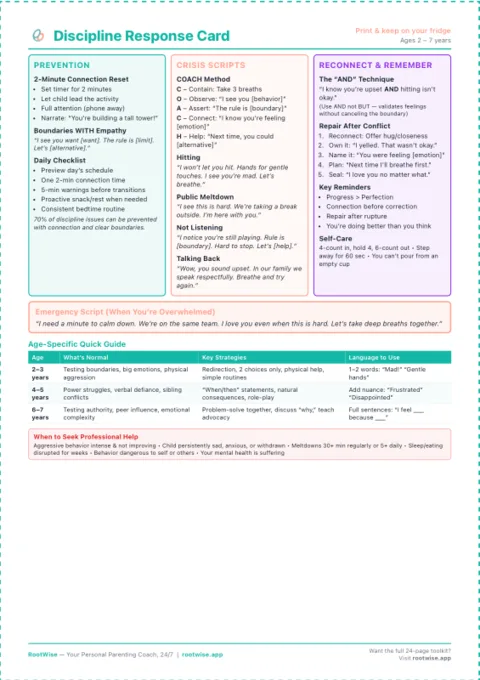
Boundary Setting Scripts
No spam, ever. Unsubscribe in one click.
Need personalized support?
Ask RootWise about your own situation and get an answer for your child's age, 24/7, when you need it most.
Get the app