2 Year Old Milestones: Complete Developmental Guide for Parents

Your 2-year-old is changing in ways that might amaze you every single day. One week they're pointing at everything demanding to know its name, the next they're running circles around you at the park. The period between 24 and 36 months is one of the most dramatic periods of growth in your child's life, with rapid advances in language, movement, thinking, and social connection.
If you've found yourself wondering whether your child is developing "on track," you're in good company. This guide walks you through all the key 2 year old milestones based on CDC and AAP guidelines, so you can celebrate your child's progress and know when it might be worth seeking extra support.
- ✓Milestones are benchmarks, not rigid deadlines — every child has their own timeline
- ✓The biggest leaps happen in language, motor skills, cognition, and social-emotional development
- ✓"Terrible twos" behavior is actually a sign of healthy independence
- ✓Talk to your pediatrician if you notice patterns of delay across multiple areas
Understanding Development at Age 2
Developmental milestones are skills and behaviors that about 75% of children can demonstrate by a certain age. They're helpful benchmarks, but they're not rigid deadlines. Your child has their own unique timeline, and it's perfectly normal to be ahead in some areas while still working on others.
What makes the second year so remarkable is the sheer speed of change. Your child is transitioning from a baby who communicated mostly through cries and gestures to a little person with opinions, preferences, and an expanding vocabulary. This is also the year many families experience what's affectionately (and sometimes desperately) called the terrible twos—a stage driven by your child's growing independence and still-developing emotional regulation.
Understanding what's typical at this age helps you respond to your child's needs with confidence and patience.
Physical and Motor Development Milestones
Gross Motor Skills
Your 2-year-old is becoming more mobile and coordinated every week. Physical milestones at this age reflect their growing confidence in their body.
By 24 months, most children can:
- Walk steadily and begin to run
- Kick a ball forward
- Walk up and down stairs while holding onto a railing or your hand
- Stand on tiptoes
- Throw a ball overhand
- Carry a large toy or several small toys while walking
- Pull a toy behind them while walking
- Begin to jump with both feet leaving the ground
By 30-36 months, many children can also:
- Run with better coordination and fewer falls
- Jump with both feet clearing the ground
- Climb on furniture and playground equipment
- Walk up stairs alternating feet (with support)
- Ride a tricycle (emerging skill toward age 3)
- Balance briefly on one foot
Watching your child go from a cautious walker to a confident runner over the course of this year is one of the great joys of parenting a 2-year-old. These physical skills also build the confidence and body awareness they'll need for more complex activities in the preschool years.
Fine Motor Skills
Small muscle control improves significantly during the second year, opening up new possibilities for play and self-care.
By 24 months, most children can:
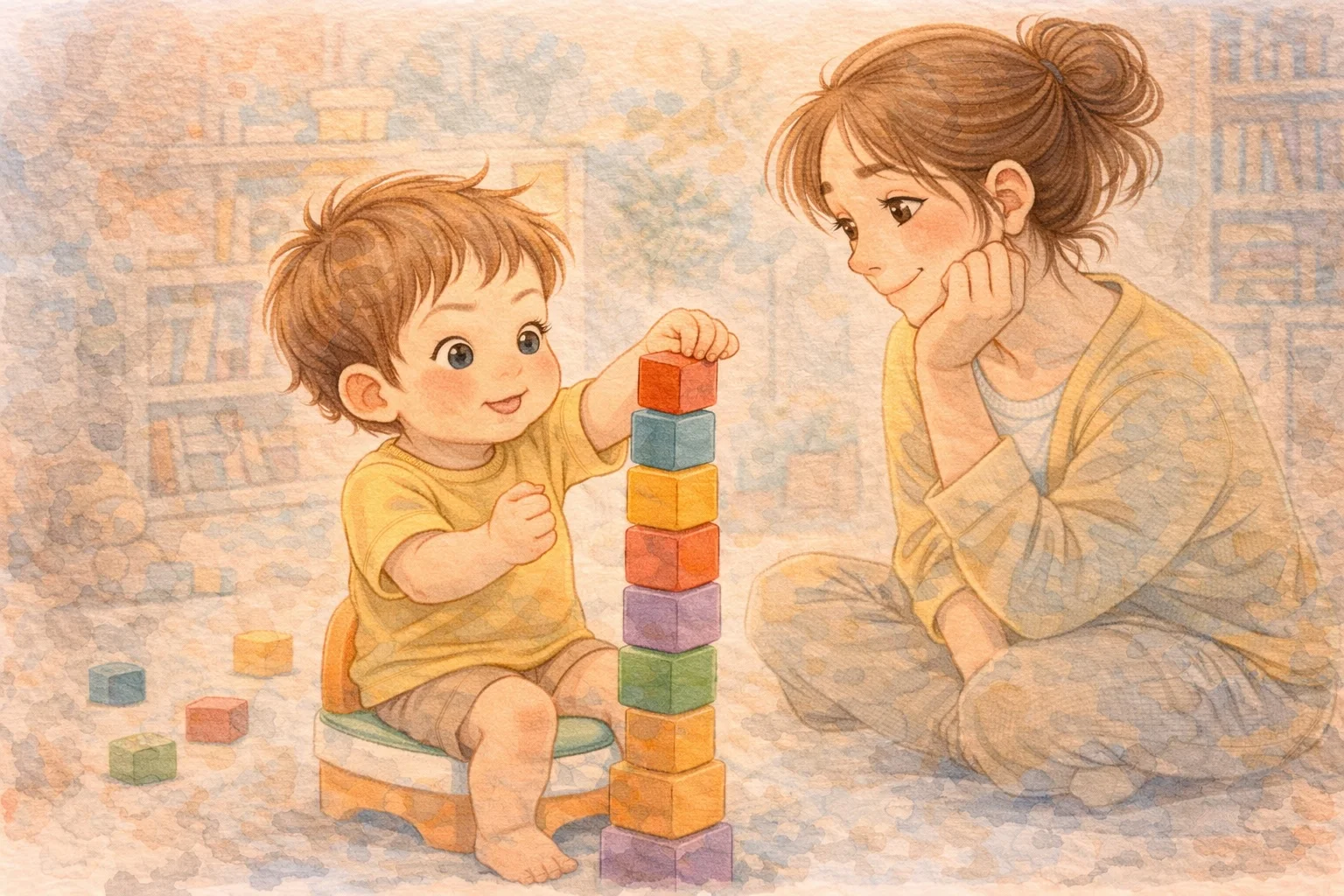
- Stack 4-6 blocks into a tower
- Turn book pages one at a time
- Scribble with a crayon or thick marker
- Turn door handles
- Begin using a spoon and fork (with some mess)
- Put lids on and off containers
By 30-36 months, many children can also:
- Stack 8 or more blocks
- String large beads
- Hold a crayon with fingers rather than a fist (emerging)
- Make vertical and horizontal lines
- Work simple puzzles with 3-4 pieces
- Pour from a small container with some spilling
- Undress themselves (pulling off socks, unzipping)
If your child still uses a fist grip for crayons, that's completely normal at this age. The transition to a more mature grip happens gradually between ages 2 and 4.
Learn about managing frustration during skill-building →
Language and Communication Milestones
Language development is often the area parents pay closest attention to, and for good reason. The progress between 24 and 36 months is extraordinary.
Vocabulary and Speech
By 24 months, most children can:
- Say at least 50 words
- Combine two words into phrases ("more juice," "daddy go," "big truck")
- Name familiar objects and pictures
- Point to body parts when asked
- Follow simple 2-step instructions ("Pick up the ball and bring it to me")
- Use simple pronouns (me, my, you)
By 30 months, many children can:
- Use 200 or more words
- Speak in 2-3 word sentences regularly
- Be understood by familiar adults about 50-75% of the time
- Name pictures in books
- Ask simple questions ("What's that?" "Where go?")
- Use some action words (run, eat, play)
By 36 months, many children can:
- Use 3-4 word sentences
- Be understood by strangers about 50-75% of the time
- Use plurals and some past tense
- Know their first name and age
- Have a vocabulary of several hundred words
Communication Patterns
Beyond vocabulary, watch for these communication behaviors that show healthy development:
- Points to things to show you or get your attention
- Uses words and gestures to communicate needs
- Listens to simple stories and songs
- Follows along with familiar routines ("Time to brush teeth!")
- Tries to say new words after hearing them
- Begins to use words instead of just crying or pointing
The language explosion that happens around age 2 is one of the most exciting milestones to witness. But remember, there's a wide range of normal. Some children talk early and constantly, while others take longer to warm up but catch up quickly.
Cognitive Development Milestones
Your 2-year-old's brain is making connections at an astonishing rate. Their thinking and problem-solving abilities are advancing rapidly, even if it doesn't always look like traditional "learning."
Problem-Solving and Thinking
By 24 months, most children can:
- Sort shapes and colors (basic shape sorters)
- Find objects hidden under 2-3 layers
- Complete sentences in familiar books
- Begin simple pretend play (feeding a doll, talking on a toy phone)
- Follow simple 2-step instructions
- Know what common objects are used for (phone, brush, spoon)
- Point to things in a book when named
By 30-36 months, many children can also:
- Play simple make-believe games with actions and sequences
- Complete 3-4 piece puzzles
- Sort objects by shape and color more accurately
- Understand the concept of "two"
- Begin to count (may count to 3 or higher)
- Understand "in," "on," and "under"
- Match an object to its picture
- Remember and retell parts of familiar stories
The Power of Pretend Play
One of the most significant cognitive milestones at age 2 is the emergence of pretend play. When your child feeds a stuffed animal or puts a doll to bed, they're demonstrating symbolic thinking—the ability to make one thing stand for another. This is the same cognitive skill that underlies language, reading, and math later on.
Encourage pretend play by providing simple props: toy kitchens, dolls, play phones, and dress-up items. Join in when invited, but let your child lead the play. Their scenarios will become more complex and creative over the coming months.
Social and Emotional Development Milestones
The social-emotional growth at age 2 is intense—for both you and your child. This is the age where big emotions meet limited self-regulation, and that combination creates some of the most challenging (and most important) moments of early childhood.
Emotional Development
By 24 months, most children:
- Show a wide range of emotions (joy, frustration, sadness, anger, excitement)
- Have tantrums when frustrated or overwhelmed (this is normal and expected)
- Begin to show defiance and assert independence ("No!" "Mine!")
- Look at your face to see how you react to new situations (social referencing)
- Show affection to familiar people
- Express comfort with familiar routines
By 30-36 months, many children can also:
- Begin to show concern when someone is upset
- Name some emotions ("I'm mad," "I'm happy")
- Calm down from tantrums more quickly (with your support)
- Show increasing interest in other children
- Express preferences and make choices
- Show pride in accomplishments ("I did it!")
For strategies on navigating this stage, see our complete guide to the terrible twos.
Social Skills
By 24 months, most children:
- Play alongside other children (parallel play)
- Imitate other children and adults
- Show interest in other children but may not interact directly
- Demonstrate possessiveness ("Mine!")
- Seek comfort from familiar caregivers
By 30-36 months, many children can also:
- Show simple acts of affection toward other children
- Take turns with support and prompting
- Begin to engage in simple cooperative play
- Show preference for certain playmates
- Imitate more complex adult activities (cooking, cleaning, working)
Don't worry if your 2-year-old doesn't share or play cooperatively with peers. True sharing and cooperative play develop more fully between ages 3 and 4. Parallel play—playing side by side with similar toys—is the normal and healthy social pattern for this age.
Understand why power struggles happen at this age →
How to Support Your 2 Year Old's Development
You don't need expensive toys or structured programs to support your child's development. The most powerful tool is your engaged, responsive presence. Here are practical activities for each area of development.
Physical Development Activities
- Visit playgrounds regularly for climbing, running, and sliding
- Play ball games (kicking, throwing, rolling back and forth)
- Dance together to music
- Provide crayons, markers, and large paper for scribbling
- Offer stacking toys, blocks, and simple puzzles
- Let them practice self-feeding (even when it's messy)
- Play in sand or water with scooping and pouring
Language Development Support
- Read together every day—point to pictures and name them
- Narrate your daily activities ("Now we're putting on your shoes")
- Expand on what your child says ("Truck!" → "Yes, a big red truck!")
- Sing songs and nursery rhymes with hand motions
- Ask simple questions and wait for responses
- Avoid correcting pronunciation—just model the correct version
- Have conversations during mealtimes and daily routines
Cognitive Development Activities
- Play with shape sorters and simple puzzles
- Count things during everyday routines (stairs, crackers, toes)
- Sort objects by color or size
- Read books with repetitive phrases and let your child fill in words
- Hide objects and let your child find them
- Name colors, shapes, and body parts throughout the day
- Encourage pretend play with dolls, toy animals, and play kitchens
Social-Emotional Development Support
- Name emotions as they happen ("You're feeling frustrated because the tower fell")
- Arrange time around other children, even if parallel play is all that happens
- Model sharing, taking turns, and gentle touch
- Validate big feelings before redirecting behavior
- Maintain consistent routines for security and predictability
- Praise effort rather than outcomes ("You worked so hard on that!")
- Offer simple choices to support growing independence ("Red cup or blue cup?")
How routine changes affect toddlers →
When to Talk to Your Pediatrician
While every child develops at their own pace, certain patterns warrant professional evaluation. The CDC recommends developmental screenings at 9, 18, and 30 months, with an additional autism-specific screening at 18 and 24 months.
Red Flags at 24 Months
Talk to your pediatrician if your child:
Physical Concerns:
- Doesn't walk steadily
- Doesn't know what to do with common objects (cup, spoon, phone)
- Loses skills they once had
Language Concerns:
- Doesn't use at least 25 words
- Doesn't use 2-word phrases (not including imitation or repetition)
- Doesn't point to things in a book when asked
- Doesn't copy actions or words
Social-Emotional Concerns:
- Doesn't notice when a caregiver leaves or returns
- Doesn't show interest in other children
- Shows extreme difficulty with transitions or changes in routine
Red Flags at 30-36 Months
Consult your pediatrician if your child:
- Speech is very unclear, even to familiar people
- Doesn't engage in simple pretend play
- Can't follow simple instructions
- Shows no interest in other children
- Has extreme or frequent tantrums that don't improve over time
- Loses previously acquired skills
Remember that these red flags are guidelines, not diagnoses. Many children who show one or two of these signs are developing perfectly normally. The purpose of screening is to identify children who might benefit from early intervention, which is most effective when started early.
Month-by-Month Snapshot: 24 to 36 Months
Development doesn't happen all at once—it unfolds gradually over the year. Here's a general progression of what you might see.
24 Months
- Running with increasing steadiness
- 50+ words, beginning 2-word phrases
- Simple pretend play
- Parallel play alongside other children
- Strong attachment to routines
- "No!" becomes a favorite word
27 Months
- Improved jumping and climbing
- Vocabulary expanding rapidly
- More complex pretend play sequences
- Beginning to name emotions
- Growing interest in other children
- Better at using a spoon and fork
30 Months
- Jumping with both feet
- 200+ words, using short sentences
- Simple puzzles and shape sorting
- Starting to take turns (with lots of support)
- Increasing independence in self-care
- Tantrums may peak around this time
33 Months
- More coordinated running and climbing
- 3-word sentences becoming common
- Counting to 2 or 3
- Beginning to show empathy
- More interest in cooperative play
- Improved emotional regulation
36 Months (Approaching Age 3)
- Walking up stairs alternating feet
- Conversations with 3-4 word sentences
- Understanding of colors, shapes, and simple concepts
- Taking turns with less prompting
- Beginning to manage some emotions independently
- Ready for more structured social settings
This timeline is approximate. Your child may reach some milestones earlier and others later, and that's perfectly fine. What matters is steady forward progress over time.
See what comes next: 3 year old milestones →
Creating a Supportive Environment
Your 2-year-old thrives in an environment that balances safety with opportunities to explore. Here's how to create the right conditions for development.
Daily Routines
- Maintain consistent sleep, meal, and play schedules
- Build in plenty of time for free, unstructured play
- Limit screen time to minimal high-quality content (AAP recommends avoiding screens under 2, limited use from 2-5)
- Include outdoor time every day
- Create predictable transitions between activities
Learning Opportunities
- Turn everyday moments into learning experiences
- Let your child "help" with household tasks (stirring, wiping, sorting laundry)
- Visit libraries, parks, and new environments
- Follow your child's curiosity and interests
- Resist the urge to over-schedule—free play is where some of the deepest learning happens
Emotional Support
- Stay calm during tantrums (easier said than done, but your calm is their anchor)
- Acknowledge feelings before correcting behavior
- Provide comfort and security during transitions
- Celebrate effort and progress, not perfection
- Maintain realistic expectations for this age
Explore our complete guide to toddler tantrums →
Looking Ahead with Confidence
The year between 2 and 3 is full of remarkable growth. Your child is transforming from a toddler who depends on you for almost everything into a small person with their own ideas, opinions, and emerging skills. Some days will test your patience in ways you never imagined, while others will fill you with pride and wonder at how much your child has learned.
Remember that development isn't always a straight line. Your child might surge ahead in language and seem to slow down in motor skills, or vice versa. They might master a skill and then seem to forget it during times of stress, illness, or transition. This is all normal.
Focus on:
- Celebrating your child's individual progress
- Providing varied experiences and opportunities for exploration
- Maintaining regular pediatric check-ups and developmental screenings
- Trusting your parental instincts—you know your child best
- Seeking help when you're genuinely concerned, without comparing to other children
- Enjoying this challenging, exhausting, beautiful phase of development
Your 2-year-old is on an incredible journey. With your love, patience, and support, they have everything they need to thrive. Embrace the "no's," the messes, the tantrums, and the bedtime negotiations—they're all signs that your child is growing exactly as they should.
Resources for Further Support
If you have concerns about your child's development:
- Contact your pediatrician for developmental screening
- Reach out to your local early intervention program (free for children under 3 in the US)
- Use the CDC's free Milestone Tracker app
- Connect with other parents for support and perspective
- Ask about speech or occupational therapy evaluation if specific concerns arise
Seeking support isn't a sign of something going wrong—it's proactive, caring parenting. Early intervention, when needed, is most effective during the first three years of life. Trust yourself, trust the process, and know that by paying attention to your child's development, you're already doing something right.
24/7 AI Parenting Assistant
Get instant, personalized advice with expert-curated parenting knowledge. Chat with your AI coach anytime, anywhere.
Connection Before Correction Toolkit
Daily practices and scripts to build strong parent-child relationships that make behavior guidance more effective.
Frequently Asked Questions
Download RootWise Today


Need personalized support?
RootWise's AI coach can provide tailored strategies for your specific situation, available 24/7 when you need it most.
Learn More About AI Coaching →