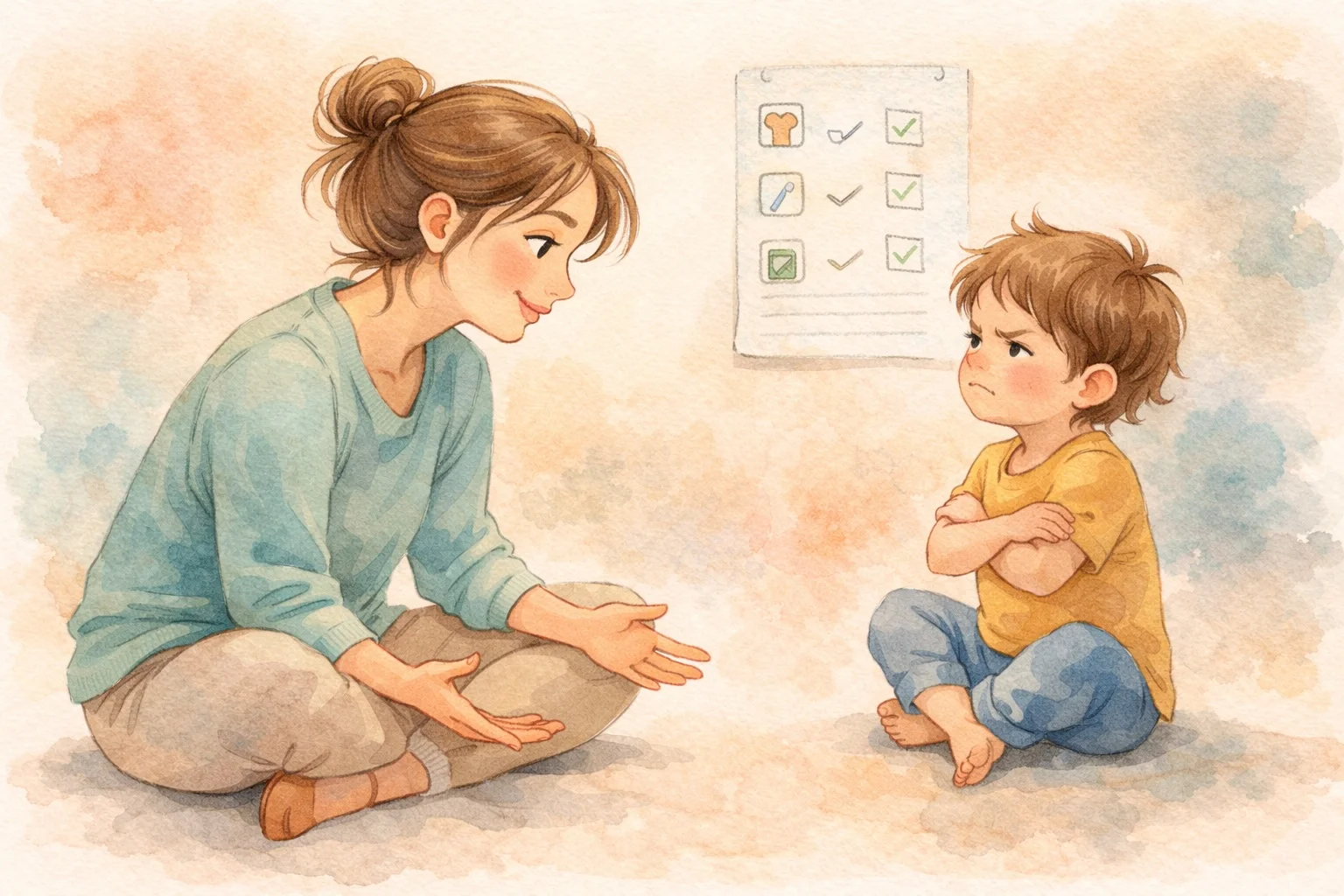
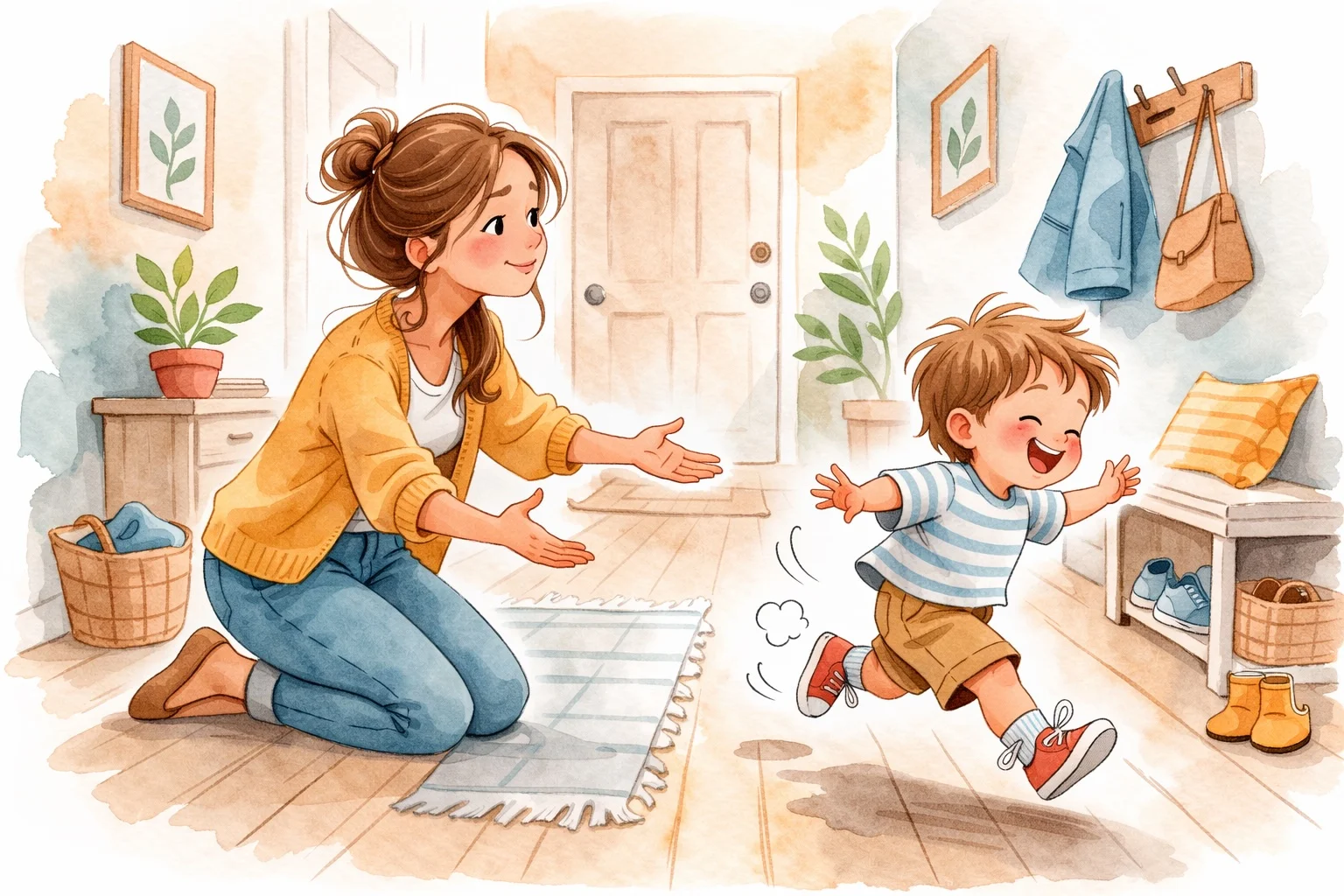
How to Get Kids to Listen Without Repeating Yourself: Breaking the Yell Cycle

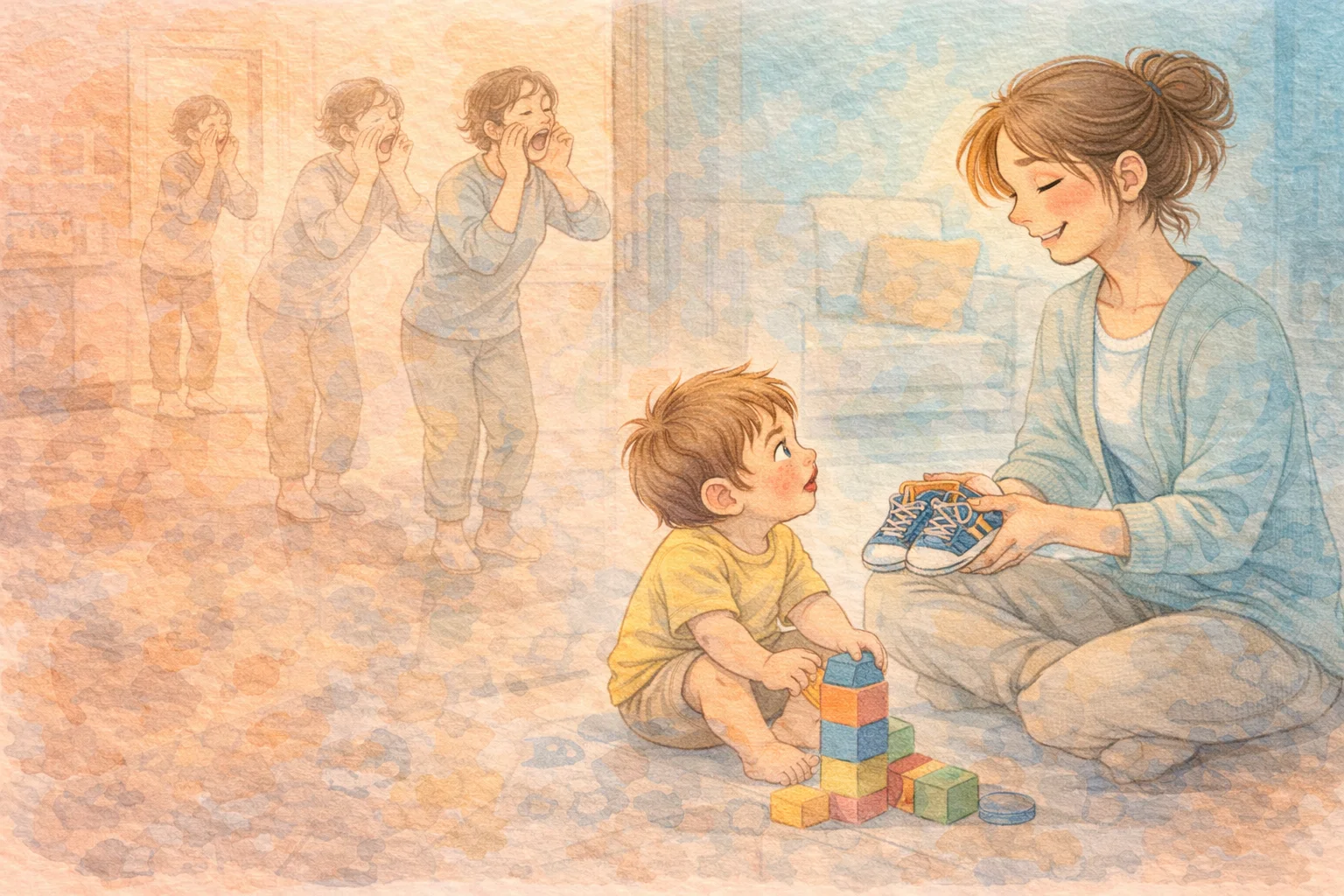
You said "put your shoes on" at 7:42. Then again at 7:44. By 7:47, you were saying it through gritted teeth. At 7:49, you yelled. And your child — who had seemingly been deaf for seven full minutes — finally moved. Sound familiar?
Here's the uncomfortable truth most parenting advice won't tell you: every time this cycle plays out, you're accidentally teaching your child that your calm voice doesn't count. They're not ignoring you because they're defiant or disrespectful. They've simply learned, through hundreds of repetitions, exactly when you actually mean it — and it's not when you ask nicely the first time.
This isn't a child problem. It's a pattern problem. And the good news is that patterns can be broken — starting today.
- ✓The repeat-escalate-yell cycle accidentally trains children to ignore your calm voice
- ✓Children aren't being defiant — they've learned exactly when you actually mean it
- ✓Stop asking from across the room and physically bridge the gap first
- ✓Say it once, then move your body instead of repeating yourself
- ✓Regulate your own nervous system before making requests — your calm is contagious
The Listening Trap: How You're Accidentally Training Your Child to Ignore You
What the Cycle Actually Looks Like
Almost every parent falls into the same five-stage pattern without realizing it:
- The Calm Ask — "Hey sweetie, time to put your shoes on." (Said from the kitchen while you're packing lunches.)
- The Wait — Silence. No movement. You assume they heard you and are processing.
- The Repeat — "Did you hear me? Shoes, please." Then again. And again. Each time a little louder, a little sharper.
- The Escalation — "I'm NOT going to say it again!" (You've already said it four times.)
- The Explosion — You yell, threaten, or physically intervene in frustration. The child finally acts.
This cycle looks like a child problem. But look closer: your child responded perfectly — at stage 5. They've learned through experience that stages 1 through 4 are just background noise. The real signal to move is when your voice changes.
Why This Is a Parent Pattern, Not a Child Problem
This reframe might sting, but it's also freeing: if the pattern lives in your behavior, you have the power to change it. You don't need to fix your child. You need to change what you do after you speak.
Your child isn't broken. They're brilliantly adaptive. They've figured out the precise moment when action is required and they've learned to conserve energy until that moment arrives. In a strange way, they're showing you exactly how smart they are.
The question isn't "why won't my child listen?" It's "what am I doing that teaches my child when to listen?"
Why won't you EVER listen to me?! I've asked you five times!
I notice I've been repeating myself a lot. I'm going to change what I do after I ask.
If you've been wondering why your child seems to ignore you, this cycle is often the hidden answer.
The First Shift — Stop Asking from Another Planet
The "Different Planets" Problem
Picture this: you're in the kitchen. Your child is in the living room, deeply absorbed in building a block tower. You call out, "Time to get dressed!" From your child's perspective, a disembodied voice just interrupted the most important engineering project of their life. Of course they don't respond.
When you speak to your child from another room — or even from across the same room while looking at your phone — you're essentially asking them to do all the work of connecting. You're asking a 3-year-old to stop what they're doing, locate the source of the sound, mentally shift from their activity to your request, and then act on it. That's four cognitive steps before they even start putting on shoes.
How to Build the Bridge
Instead of calling from another planet, walk over. This isn't about being a servant to your child. It's about setting yourself up for success.
The 4-Step Bridge:
- Walk over — Physically go to where your child is.
- Notice what they're doing — "Wow, that tower is getting really tall."
- Wait for eye contact — Pause. Let them look up. Don't rush.
- Make your request — "It's time to put shoes on. Let's go together."
This takes 30 extra seconds. It saves you 10 minutes of repeating and yelling.
This bridge-building approach is at the heart of connecting before correcting — the single most effective shift you can make as a parent.
The Second Shift — Say It Once, Then Move Your Body
Why One Calm Statement Beats Ten Loud Ones
Here's the rule that changes everything: say it once, then act. No second reminder. No countdown. No "I'm going to count to three." Just one clear, calm statement followed by physical follow-through.
This doesn't mean you become cold or robotic. It means you trust your own words enough to back them up immediately. When you repeat yourself five times, you're telling your child: "My words don't really matter until I get upset." When you say it once and move, you're telling them: "When I speak, I mean it."
The One-and-Done Protocol:
- Bridge the gap (walk over, connect).
- State your request once, clearly. "It's time to put shoes on."
- Pause for 5-10 seconds. (This is harder than it sounds.)
- If no movement, move your body. Pick up the shoes, bring them over, sit on the floor next to your child and start helping.
What "Moving Your Body" Looks Like at Every Age
Ages 2-3: Physical assistance is expected at this age. Walk over, gently take their hand, guide them. "Let's do it together." Most 2-year-olds who seem not to listen genuinely need your physical presence to transition.
Ages 4-5: You can offer a choice with one assist. "Do you want to put on the red shoes or the blue ones? I'll sit right here while you decide." Then stay present. For a 4-year-old who won't listen, your calm physical proximity is the key.
Ages 6-7: At this age, follow-through might mean standing calmly near the door. "I've asked once. I'll wait here. We leave when shoes are on." No lectures. No reminders. Just presence. A 5-year-old who doesn't listen typically responds well to this calm-but-firm presence.
Understanding your child's specific developmental stage helps you calibrate your response — our 3-year-old not listening guide covers this in depth.
The Third Shift — Use Physical Boundaries, Not More Words
When Words Have Already Failed
Sometimes, even one calm request plus follow-through isn't enough. Your child is running toward the parking lot. They're reaching for something dangerous. They're hitting their sibling. In these moments, more words won't help. Your body needs to become the boundary.
Physical boundaries aren't punishments. They're acts of leadership. Just as you'd catch a child who's about to fall, you can use your body to create safety and structure when words aren't landing.
What this looks like in practice:
- Running in a parking lot: Calmly take their hand. "I'll hold your hand to keep you safe."
- Grabbing a sibling's toy: Gently place your hand between them. "I won't let you grab. Let's figure out a turn."
- Refusing to leave the playground: Sit beside them. "Our time is done. I'll carry you to the car or you can walk. Which do you choose?"
- Reaching for something off-limits: Move the object or move your child. No long explanation needed.
The Difference Between a Physical Boundary and Control
The line is in your emotional state, not your actions. Calmly carrying a screaming child to the car because it's time to go is a boundary. Angrily yanking them because you're embarrassed is control.
Ask yourself: Am I acting from leadership or from frustration? If you're regulated, your physical follow-through will feel firm but safe. If you're dysregulated, pause — because that's when a boundary becomes something else.
For more on this distinction, read about setting boundaries without punishment.
The Fourth Shift — Regulate Yourself Before Making Requests
The Real Reason You Yell
Here's something no one tells you in parenting books: the reason you yell usually has nothing to do with the shoes. It's not about the request. It's about your nervous system.
By the time you've asked for the fifth time, your body has been building stress hormones for minutes. Your jaw is tight. Your breathing is shallow. You're not thinking clearly — you're reacting from your stress response. And your child, who is exquisitely tuned to your emotional state, picks up on every bit of that tension.
Children don't just hear your words. They read your nervous system. When you approach them already activated, they brace — even if your words are calm. And a child who is braced doesn't cooperate. They defend.
The 10-Second Reset
Before you make a request — especially one you know might not be followed immediately — try this:
- Pause. Don't speak yet.
- Feel your feet on the ground. This activates your body's grounding response.
- Take one slow breath. In through the nose, out through the mouth.
- Check your shoulders. Drop them.
- Now speak. From this grounded place, your voice will be calmer, clearer, and more authoritative — without raising it.
This isn't about being perfect. It's about giving yourself 10 seconds to shift from reactive to intentional. That's the difference between the version of you that asks calmly and follows through, and the version that repeats, escalates, and explodes.
If you've already lost your cool, it's not too late. Repairing after you've been too harsh is one of the most important things you can model for your child.
The Fifth Shift — Be a Sturdy Leader, Not a Strict Boss
What "Sturdiness" Means
There's a middle path between being a pushover and being an authoritarian. Think of it as being a sturdy leader — someone who holds boundaries firmly while remaining warm and connected.
A strict boss says: "Because I said so. Do it now." A pushover says: "Okay fine, five more minutes" (for the fourth time). A sturdy leader says: "I know you don't want to leave. It's still time to go. I'll help you."
Sturdiness means your child can push against you and find that you don't crumble — but you also don't hit back. You're a wall that's warm. You hold the line without losing the relationship.
Sturdiness in Action: 3 Real Scenarios
Scenario 1: Leaving the Park
- The situation: Your child is playing and you need to leave.
- Strict boss: "We're leaving NOW. I'm counting to three."
- Pushover: "Okay, five more minutes." (Repeat for 20 minutes.)
- Sturdy leader: "Two more trips down the slide, then we go. I'll stand right here." After two slides: "That was fun. Time to go." Take their hand gently and walk.
Scenario 2: Morning Rush
- The situation: You need to leave for school and your child is watching a show.
- Strict boss: Turns off TV. "I've told you a hundred times."
- Pushover: Lets the show finish, is late again.
- Sturdy leader: "The show is pausing now. We can watch more after school." Turns it off. Stays calm during the protest. "I know you're disappointed. Let's get your bag."
Scenario 3: Bedtime Negotiation
- The situation: "One more story! One more story!"
- Strict boss: "No. Lights off. Now."
- Pushover: Reads three more stories, child is up past bedtime.
- Sturdy leader: "We read our two stories and they were great. Now it's time for sleep. I'll stay for one more minute of cuddles." Follows through.
Learning to be firm without being harsh is at the heart of managing power struggles effectively.
What Real Change Looks Like
Changing a pattern that's been running for months or years doesn't happen overnight. Here's what to realistically expect:
Days 1-3: The Pushback When you stop repeating and start following through, your child will likely push harder. They've been trained to expect five reminders — and suddenly there's only one. This increased resistance is a sign that they've noticed the change. It's working.
Week 1-2: Testing the New Pattern Your child will test whether this new approach is consistent. Some days they'll cooperate quickly. Other days they'll resist harder than ever. Stay the course. They're gathering data on whether you really mean it this time.
Week 3-4: The New Normal Begins You'll notice moments — sometimes just glimpses — where your child responds to the first ask. Not every time. But enough to feel like something has shifted. These moments will grow.
Month 2+: The Pattern Sticks With consistent follow-through, your child's baseline changes. They start responding to your calm voice because they've learned, through experience, that it carries weight. The yelling fades because you've removed the conditions that made it necessary.
You Don't Have to Be Perfect — You Have to Be Consistent
None of these shifts require you to become a different person. They don't require you to never lose your temper or always respond perfectly. They require one thing: that more often than not, you say it once and follow through.
Your child doesn't need a perfect parent. They need a parent who is working on their own patterns with the same compassion they offer their child. Every time you catch yourself repeating and choose to act instead, you're rewriting the cycle — for both of you.
Looking for more ways to build cooperation without rewards or punishments? Our guide on building cooperation without rewards offers additional strategies that pair well with the shifts above.
24/7 AI Parenting Assistant
Get instant, personalized advice with expert-curated parenting knowledge. Chat with your AI coach anytime, anywhere.

Challenging Moments Support
Access step-by-step parenting strategies, quick tips, and age-specific guidance for difficult situations when you need it most.

Boundary Setting Scripts
Set firm, loving boundaries without punishment using evidence-based scripts and strategies that build cooperation and respect.
Frequently Asked Questions
Download RootWise Today


Need personalized support?
RootWise's AI coach can provide tailored strategies for your specific situation, available 24/7 when you need it most.
Learn More About AI Coaching →