Age Appropriate Chores: What Kids Can Actually Do

Table of Contents
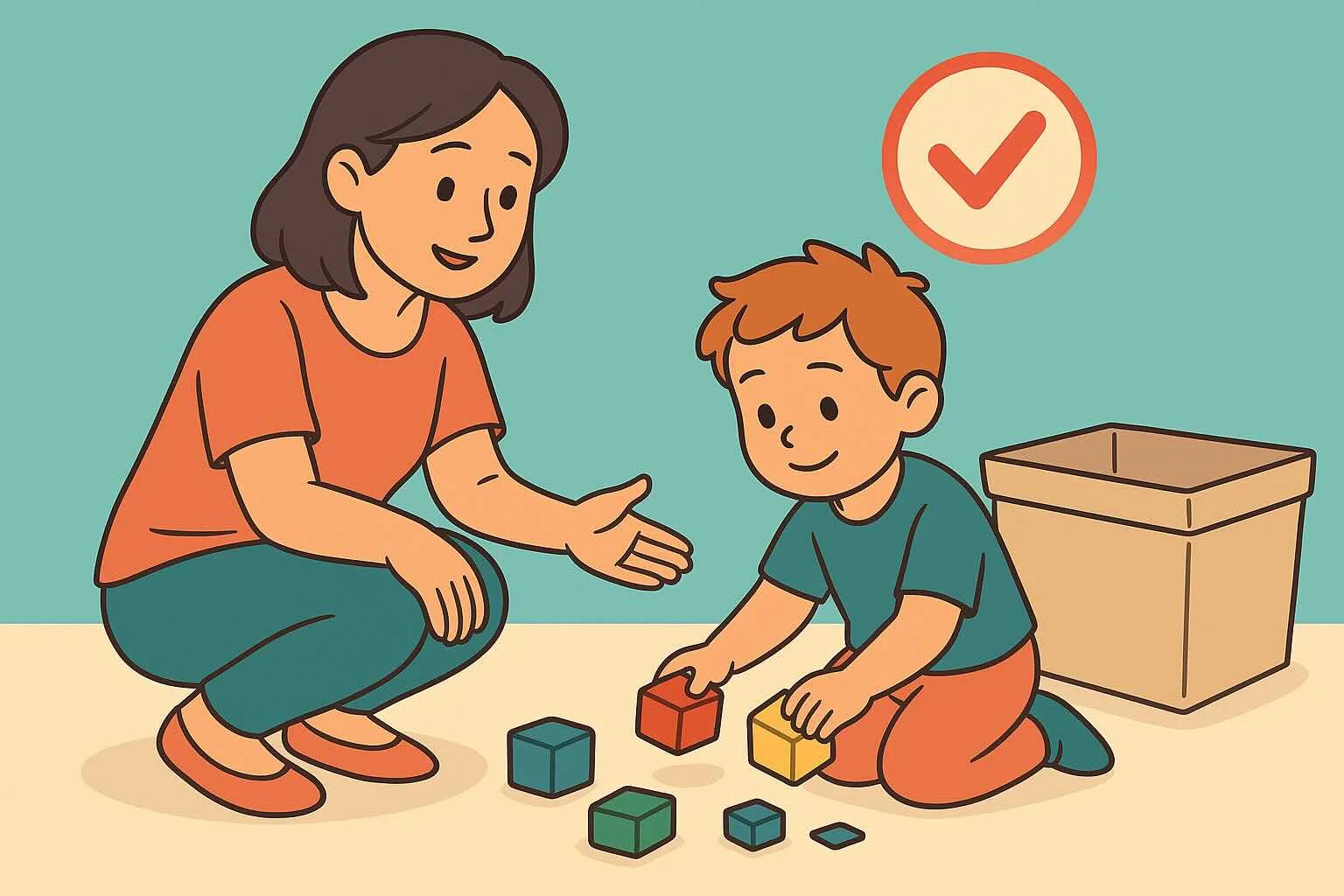
Every list of age appropriate chores tells you roughly the same thing. A four year old can feed the cat. A seven year old can load the dishwasher. That part is not hard to find.
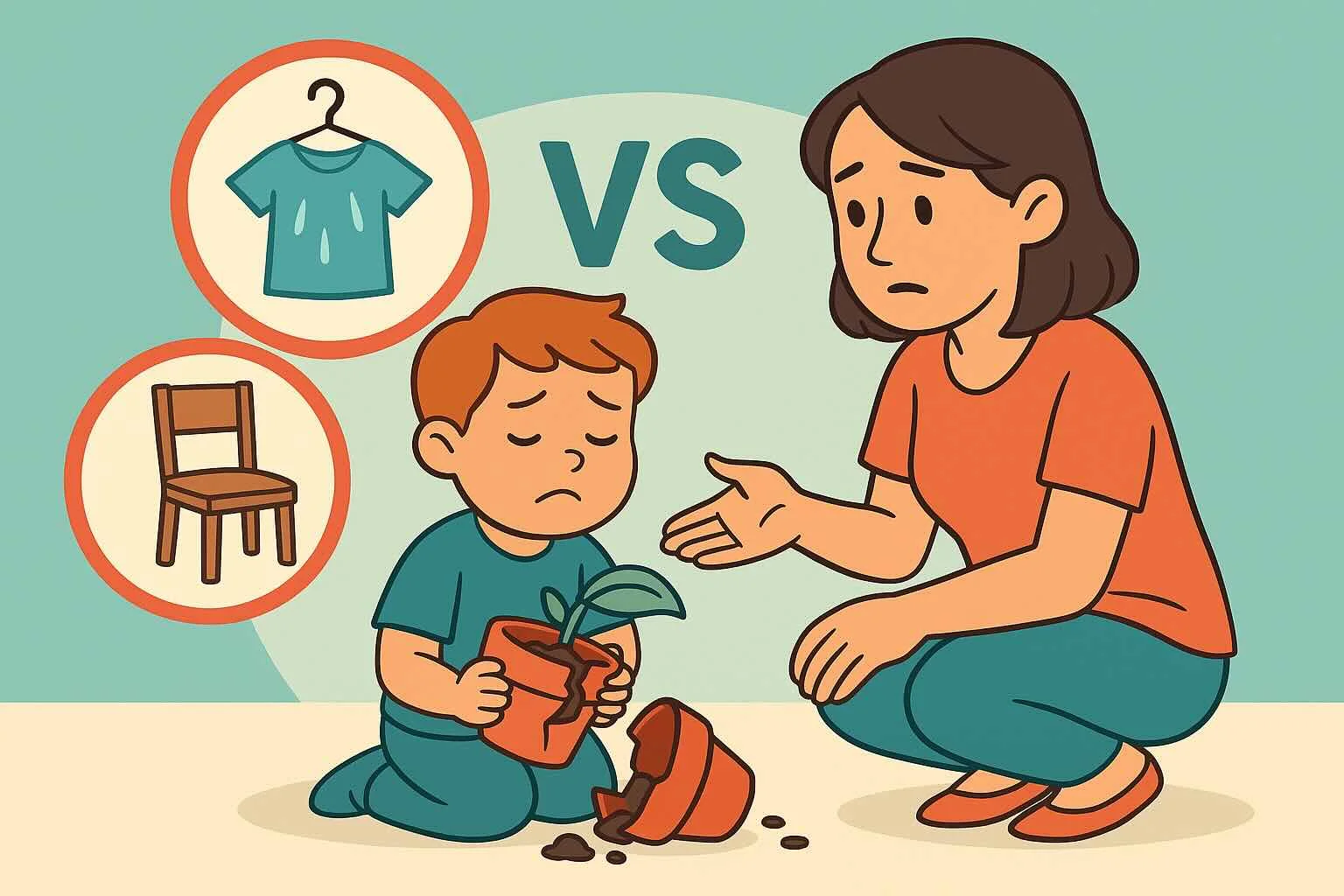
What the lists leave out is the bit that actually decides whether chores happen in your house: the Tuesday evening when your child, who has fed the cat every day for a month, plants themselves on the floor and says no.
This covers both. What children can genuinely manage at each age, and what to say when it does not happen.
- ✓Start around two, when a child can carry something and follow a one-step instruction
- ✓One or two jobs that never change beat a long rotating chart
- ✓Expect the job to be done badly for a long time; correcting it is how you teach it is not really theirs
- ✓The refusal is normal and predictable, and it is worth having words ready for it
What children can actually do, by age
The ages below are where most children can manage the job with an adult nearby, not where they will do it well or without being asked. Both of those come later, and they come faster if the job stayed the same for months.
| Age | What they can genuinely do | What still needs you |
|---|---|---|
| 2 to 3 | Put toys in a basket, clothes in the hamper, carry their plate to the counter, help feed a pet | Every step, alongside them. The job takes three times as long |
| 4 to 5 | Make their bed roughly, set the table, water plants, sort laundry by colour, tidy their own room with a prompt | Starting it, and staying nearby. They will drift off halfway |
| 6 to 7 | Load and unload the dishwasher, take out rubbish, make a simple breakfast, fold basic laundry, pack their own bag | The reminder. Most 6 year olds still cannot hold a routine without a cue |
| 8 to 10 | Run a load of laundry start to finish, hoover, help cook a meal, clean the bathroom sink, look after a pet properly | Checking, occasionally. This is where jobs can become genuinely theirs |
Two things about this table are worth saying plainly.
Useful and tidy are not the same thing. A two year old putting toys in a basket is doing a real job badly. If you go behind them and redo it where they can see, you have taught them the job is not actually theirs. That lesson sticks longer than the mess does.
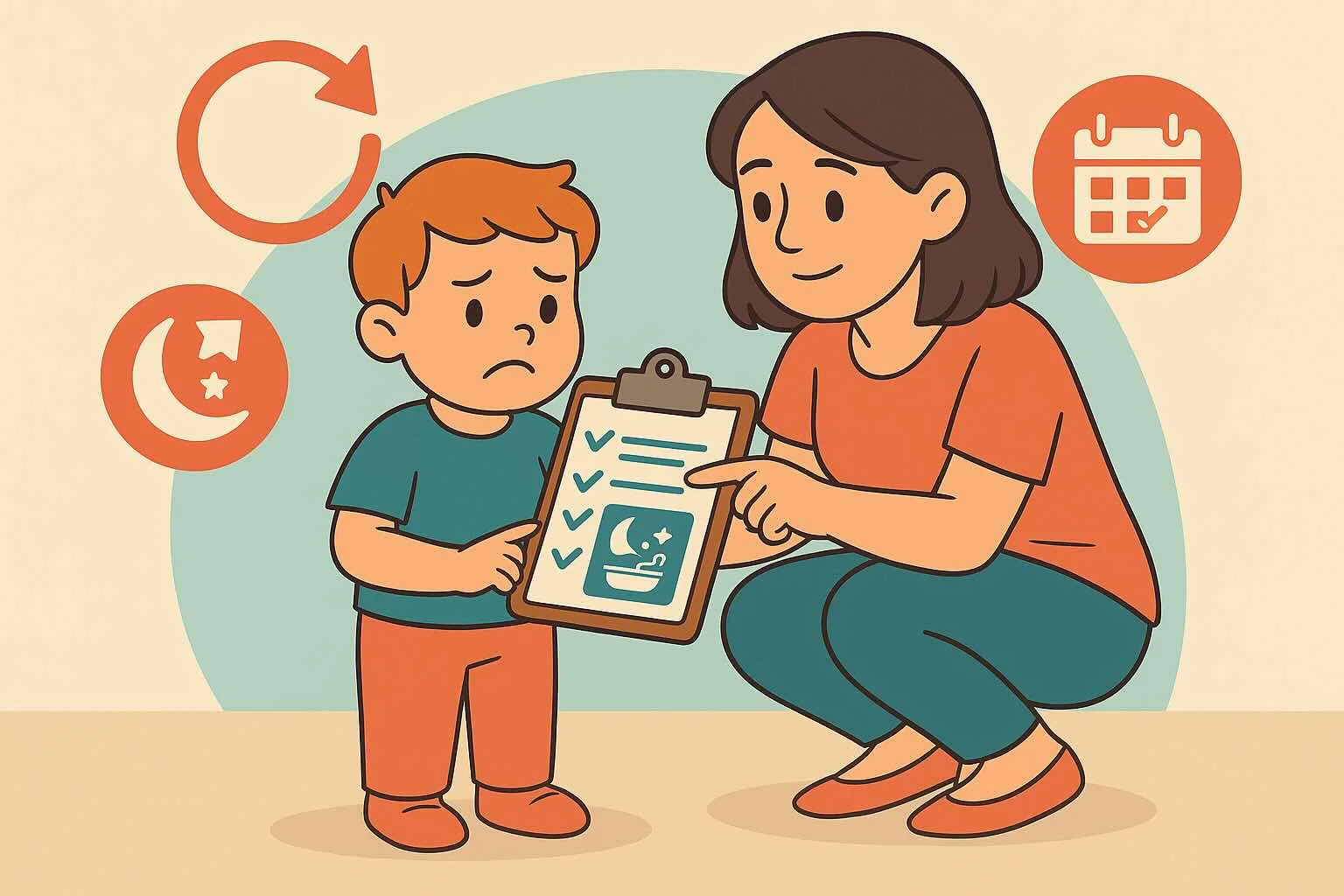
Fewer jobs, never changing, beats a chart. A rotating weekly chart puts the remembering on you. One or two jobs that are the same every single day put the remembering on the routine, which is the only version that survives a busy week.
Why chores are worth the friction
Not because the house needs it. At these ages the child costs you more time than they save.
The reason is that a child who contributes to a household develops a different sense of their place in it than a child who is served by one. It is the difference between living somewhere and being a guest. That shows up years later in ways that have nothing to do with dishwashers.
There is also a smaller, more immediate benefit: a child with a real job has somewhere to put the need for control that otherwise comes out as an argument about shoes.
What to say when the chore does not happen
This is the part the lists skip, and it is where chore systems actually fail.
The instinct is to repeat yourself, louder, more often. That teaches a specific and unhelpful lesson: nothing needs doing until the fourth ask, in the annoyed voice.
Instead:
I have asked you three times to feed the cat. Why do I have to keep asking?
The cat still needs feeding. Do you want to do it now or right after this episode ends?
The change is small and it matters. The first version is about you and how many times you have asked. The second leaves the job where it is, and hands back a small piece of control over how it gets done.
When it turns into a flat refusal, stop selling it. Go over, get down to their level, and say the thing once:
- "You do not feel like it. That part is allowed."
- "The job is still yours. I will stay here while you start."
- "You can do the first bit and I will do the rest, or you can do all of it after dinner."
Then stop talking. Standing there quietly is more effective than another sentence, because the silence puts the decision back with them.
If you want the same approach for the other daily standoffs, the what to say when your child will not brush their teeth script covers the identical pattern in a routine that has less room for negotiation.
Common mistakes that quietly kill a chore routine
Redoing the job in front of them. The fastest way to teach a child their contribution is decorative.
Paying for everything. If every job earns money, every job becomes optional the day your child has enough money. Keep most jobs as simply part of living here.
Adding jobs when things are going well. A child who has finally settled into two reliable jobs does not experience a third as progress. Wait longer than feels necessary.
Rotating the chart. Novelty is not the problem chore routines have. Forgetting is.
When to expect this to actually work
Slower than you want. A job usually needs several weeks of the same slot, the same words and the same follow-through before it stops requiring a prompt, and it will fall apart during illness, holidays and any big change at home. That is not failure, it is what routines do.
The thing to watch is not whether the chore gets done today. It is whether the argument about it is getting shorter.
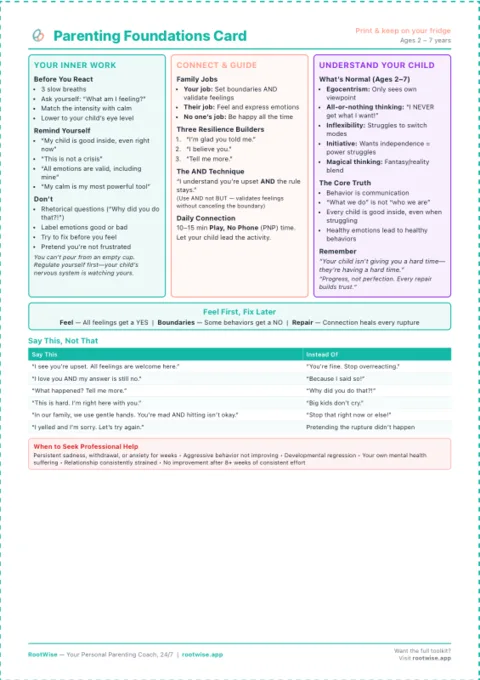
Connection Before Correction Toolkit
Daily practices and scripts to build strong parent-child relationships that make behavior guidance more effective.
- What to do in the seconds before you react
- Three resilience lines and the AND technique
- A say this, not that table for daily friction
Frequently Asked Questions
Need personalized support?
Ask RootWise about your own situation and get an answer for your child's age, 24/7, when you need it most.
Get the app