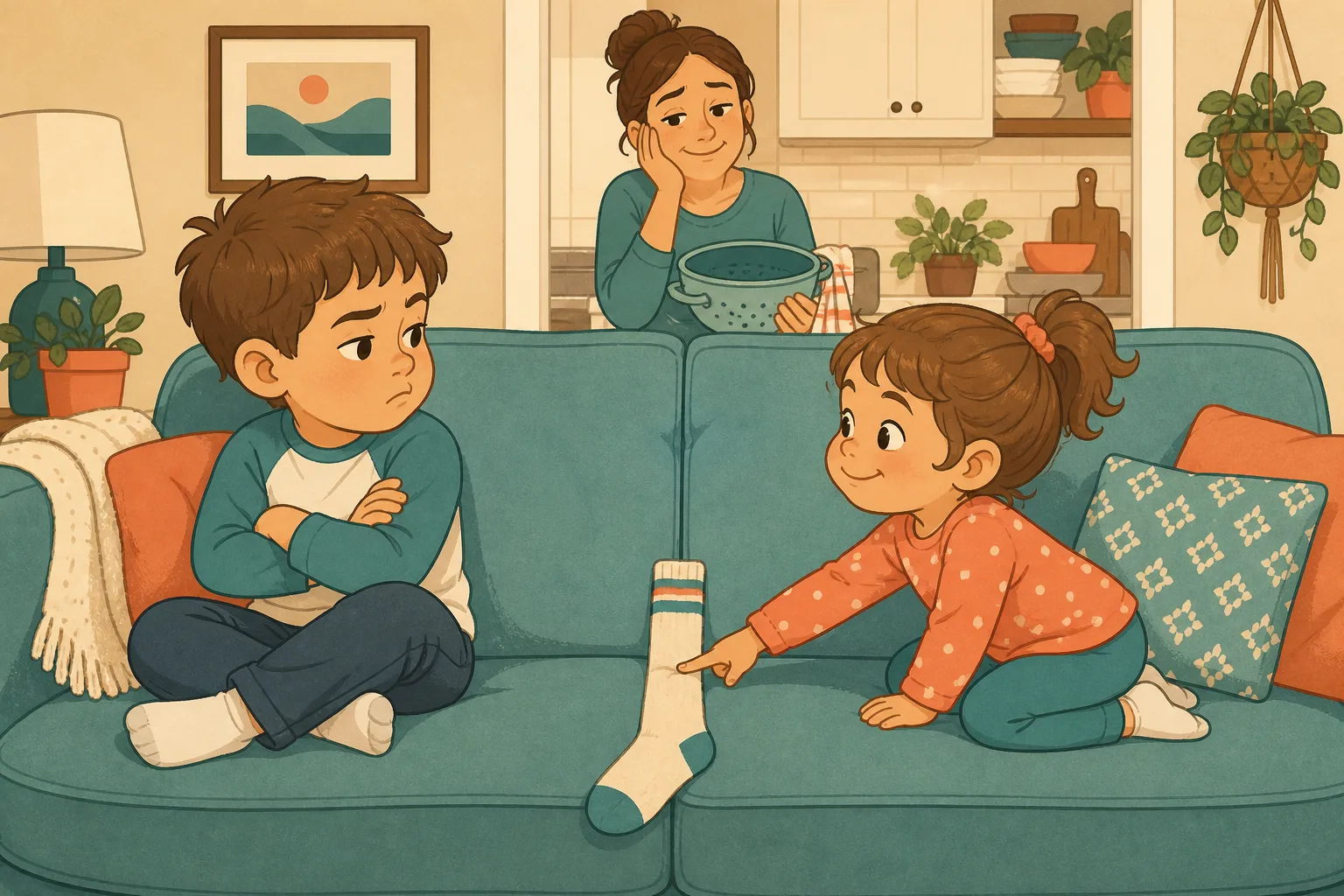
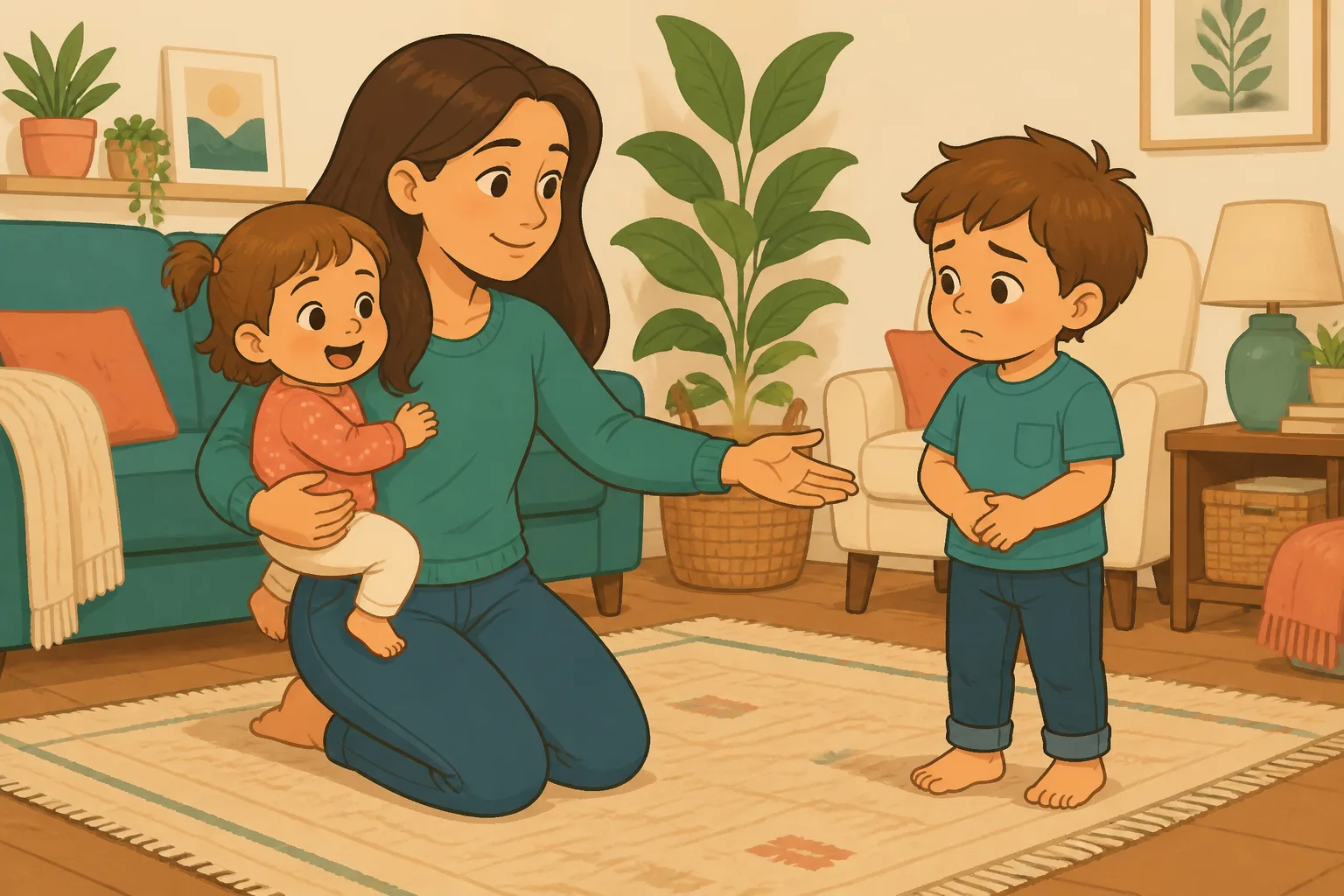
Sibling Jealousy: Why It Happens and What to Say

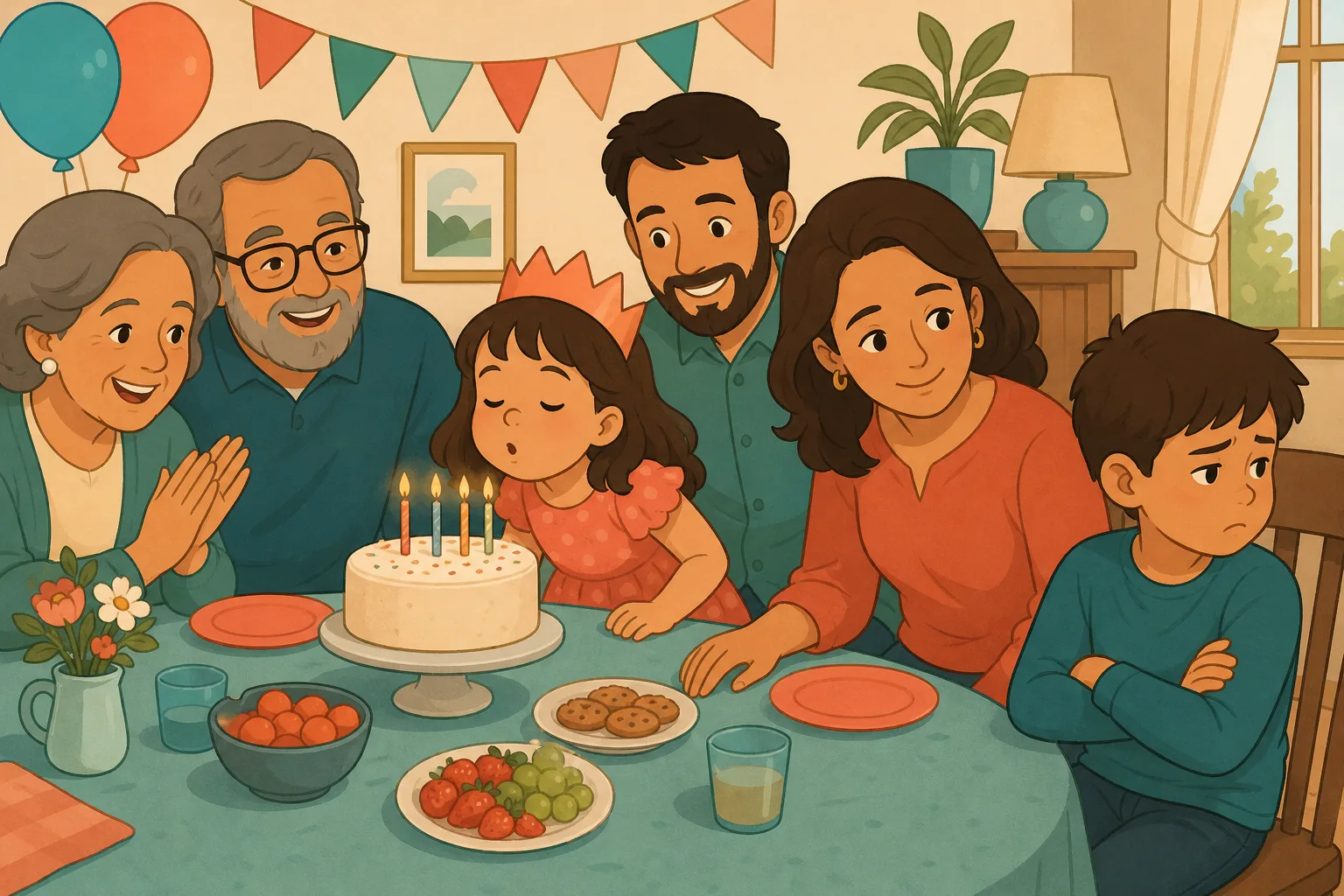
Table of Contents
The candles are barely out when Leo, seven, pushes his plate away. His sister Nora turns four today. There is a pile of presents on the couch, a balloon tied to her chair, and a grandmother who keeps saying how big she is getting. Leo has been quiet all afternoon. Now he says it, loud enough for the whole table: "This is the worst day ever. She gets everything."
His mother, Dana, feels two things at once. Embarrassment, because everyone heard it. And a small ache, because she knows exactly what he means. It is not really about the presents. It is about who everybody is looking at.
Sibling jealousy is one of the hardest feelings to watch in a child you love, partly because it can look so unkind. But it is also one of the most ordinary feelings of family life, and it is not limited to the weeks after a new baby comes home. This guide explains where jealousy between siblings comes from, the many forms it takes, what to say when you hear "That's not fair!", how comparisons and favorites feed it, and when it needs more than patience. For the bigger picture of why siblings compete, see our guide to sibling rivalry.
- ✓Jealousy between siblings is normal: underneath it is the fear of losing your place, or your parent's love, to someone else
- ✓It does not stop with the new baby stage. Birthdays, report cards, friends, a sibling's illness and a parent's busy month can all set it off
- ✓It often looks like something else: clinginess, acting younger, tummy aches, teasing, or a sudden "I hate her"
- ✓"That's not fair!" is rarely about the object. Explaining why children get different things helps more than making everything equal
- ✓Comparisons and labels feed jealousy, even the nice ones, and so does favoritism that parents often do not notice in themselves
What is sibling jealousy, and is it normal?
Jealousy is the feeling that someone else is getting the love, attention or place that should be yours. Envy is close to it: wanting what another person has, like the bigger bike or the later bedtime. Between siblings the two are usually tangled together, because the thing children most want to keep is their place with you.
That is why jealousy is so common between brothers and sisters. They share the same parents, the same house and often the same table, so there is no shortage of moments to measure themselves against each other. South Australia's government parenting service puts it plainly: children can feel jealous if you seem to have more time for one child or treat one child differently to another, and if children feel they are not treated fairly by their parents, they can sometimes become aggressive toward their siblings (Parenting SA).
Seeing jealousy this way takes some pressure off. Your job is not to make your child stop feeling jealous. It is to help them feel safe enough with the feeling that they do not need to act it out on their sibling.
How sibling jealousy shows up (it is not only about the new baby)
When a new baby arrives
The new baby is the classic trigger, and for good reason: overnight, a child who had you to themselves has to share. Many children go back to younger behavior for a while, ask to be carried or fed, or have more tantrums, especially while you are feeding the baby. Parenting SA suggests letting a child act younger for a while without comment, because it helps them feel better sooner (Parenting SA). Our guide on preparing your child for a new sibling covers this stage in detail, and here is what to say when your child is jealous of the new baby.
But many parents are surprised when jealousy comes back years later, in a completely different shape.
When one child needs more of you
Homework help for one child, a hard phase with sleep for another, a long run of doctor's appointments. To you, it is simply where your time has to go this month. To the other child, it can look like proof of who matters more. Children rarely say "I feel less important." They show it: more whining, more clinging, more trouble at exactly the moment you sit down with the sibling.
When a sibling succeeds
A report card, a swimming badge, the sibling who learned to read faster. Children notice whose drawing goes on the fridge and whose news gets told to grandma on the phone. Parenting SA suggests reducing jealousy by commenting equally on children's achievements, such as a piece of artwork or a report card (Parenting SA). Equally does not mean identically. It means each child's progress gets noticed for what it is.
Birthdays, presents and holidays
Days that are all about one child are hard for the others, as Leo showed. The trouble is not the presents themselves but the spotlight. A child who has a job on their sibling's birthday, like handing out plates or lighting the candles with you, has a place in the day without needing a present of their own.
When a friend comes over
Older siblings often want their friends to themselves, and younger ones desperately want to join in. Both wishes are fair. Parenting SA suggests finding a balance: making sure the younger child is not always left out, and also giving the older child time alone with their friend (Parenting SA).
When one child is ill or has a disability
When a child lives with a disability or a chronic illness, brothers and sisters often miss out on time with their parents and feel jealous, and some fight with each other because they know they cannot fight with their sibling (Parenting SA). Many of these children feel they are not allowed to complain, which makes it more important to ask. The same guide suggests special time with each child, celebrating every child's achievements however small, and not making unfair exceptions for anyone's behavior, while still expecting from each child only what they are capable of.
When the family changes
A move, a separation, a new partner or new stepsiblings all shake up who gets time with whom. Jealousy often flares in those months, sometimes aimed at a sibling when the real worry is about the change itself. Extra predictability helps: the same bedtime ritual, the same Saturday pancakes, the same ten minutes with you.
"That's not fair!": what fairness means to children
Few sentences are heard as often in families with more than one child. And few are as tempting to answer by fixing the numbers: cutting the cake with a ruler, counting the chips, buying two of everything.
Children notice getting less long before they notice getting more
Research helps explain why "That's not fair!" almost always comes from the child who got less. In a study of 866 pairs of children aged 4 to 15 in seven very different societies, children everywhere came to object to a peer getting more than themselves by middle childhood. Objecting to getting more than a peer was much less consistent: it showed up only in three of the seven societies, and only later in childhood (Blake et al., 2015). In other words, your child's alarm about getting less is a normal stage of development, not selfishness. A sense of fairness that also notices when you got more grows slowly, and partly through how adults talk about it.
Fair does not have to mean the same, but it helps to say why
Treating children equally does not necessarily mean treating them the same. Parenting SA gives the example of an older child who is allowed to walk to school with friends or go to bed later, and adds one important step: explain the reason for any differences (Parenting SA).
Research backs that step. In a study of 197 families with two teenage siblings, being treated differently by parents was linked to more sibling jealousy, and through it to more depressive symptoms, lower self-worth and more risky behavior. But that link disappeared for teenagers who saw the different treatment as fair. The authors concluded that families would benefit from talking clearly about the reasons behind differences (Loeser et al., 2016). The study was with teenagers, but the principle is easy to start with much younger children: a difference that comes with a reason feels less like a verdict on who is loved more.
Fine, here, now you have exactly the same. Happy?
You noticed Nora got more help tonight. She's learning to do her buttons, so she needs me for that. You needed me for your Lego plan yesterday. When you need help, you get it too.
What to do about the scorekeeping
Some children turn into accountants: who sat in the front seat last, who got the bigger slice, whose turn it is to choose. A few practical habits take the heat out of it:
- Answer the need, not the number. "You want to make sure you get enough. Are you still hungry?" is often what the protest is really about.
- Use systems instead of rulings. One child cuts the cake, the other chooses the first piece. Turns for the front seat go by the calendar, not by who shouts first.
- Let some things be unequal without apology. A sibling's birthday, a doctor's visit, a new pair of school shoes. Not everything needs a matching item.
- Name the feeling, then move on. "It feels unfair to you. I understand." You do not need to win the argument.
Comparisons and labels, including the nice ones
Few things feed sibling jealousy as reliably as comparison. "Why can't you be as patient as your brother?" makes the brother a rival and the child a loser in one sentence. Parenting SA's advice is short: do not compare children, focus on each child's strengths and skills (Parenting SA).
The tricky part is that positive labels work the same way. "She's the sporty one." "He's our little scientist." Said with love, they can still sound to a sibling like a place that is already taken. A child who hears that his sister is "the artistic one" may quietly stop drawing, because why try for second place? Labels also box in the child who gets them: the "easy one" may feel she is not allowed to have a bad day.
Comparisons also come from outside the family: a teacher who taught the older sibling, a grandparent who remembers who walked first. You cannot control every comment, but you can respond in front of your child and give them words for next time.
Look how nicely your sister practices piano. You could learn something from her.
You stuck with that tricky part for ten minutes. I could hear it getting smoother.
What about favorites?
Most parents would say they love their children equally, and most mean it. But loving equally and treating identically are different things, and many parents notice, if they are honest, that one child is easier to be close to at certain times.
Research suggests this is common. A 2025 meta-analysis pooling data from more than 19,000 participants found that parents tended to slightly favor daughters, and children who are conscientious and agreeable. Older siblings tended to be given more freedom and autonomy (Jensen & Jorgensen-Wells, 2025). The authors' point is not that parents are bad, but that it helps to know which children tend to be favored, so the pattern can be noticed.
Why it matters: a meta-analysis of 34 studies with more than 12,000 children and adolescents found that less differential treatment by parents went along with fewer emotional and behavior problems (Buist et al., 2013).
If you recognize yourself here, you are not alone, and it is not a reason for guilt. It is a reason to look closely at the child who is harder for you right now, and to find one thing each day you genuinely enjoy about them. Our guide to having a favorite child goes into what the research says and what helps.
What to say when jealousy shows up
The goal in the moment is the same every time: let the feeling be there, keep everyone safe, and show the jealous child they still have their place.
"I hate her! Send the baby back!"
Strong words are usually a sign that a child feels safe enough to say them to you. Do not punish the feeling. Hold the line on actions only. If a child hits the baby, Parenting SA advises moving the baby out of reach first and then acknowledging the anger while making clear that hitting is not allowed (Parenting SA).
Don't you ever say that! You love your sister.
You're really mad at the baby today. It's hard when she needs me so much. You can be mad. I won't let you hurt her.
For the moment itself, here is what to say when your toddler hits the baby.
"You love him more!"
Do not argue with the evidence ("I spent an hour with you yesterday!"). Your child is not making a factual claim. They are telling you how it feels. Acknowledge it, and then make sure the next few days contain something only for them.
After a sibling's big moment
When one child wins the race or brings home the award, celebrate with that child fully. Do not ask the other one to pretend they are happy. Later, when you are alone with the child who struggled, name it: "It's hard to watch someone else get all the clapping. I saw you clap anyway." That is how children learn that both feelings, being proud of a sibling and being jealous of them, can live in the same heart.
When jealousy turns into teasing
Jealousy often leaks out as mean comments, especially from older children. If teasing has become your family's main battleground, our guide to why siblings tease each other goes into it.
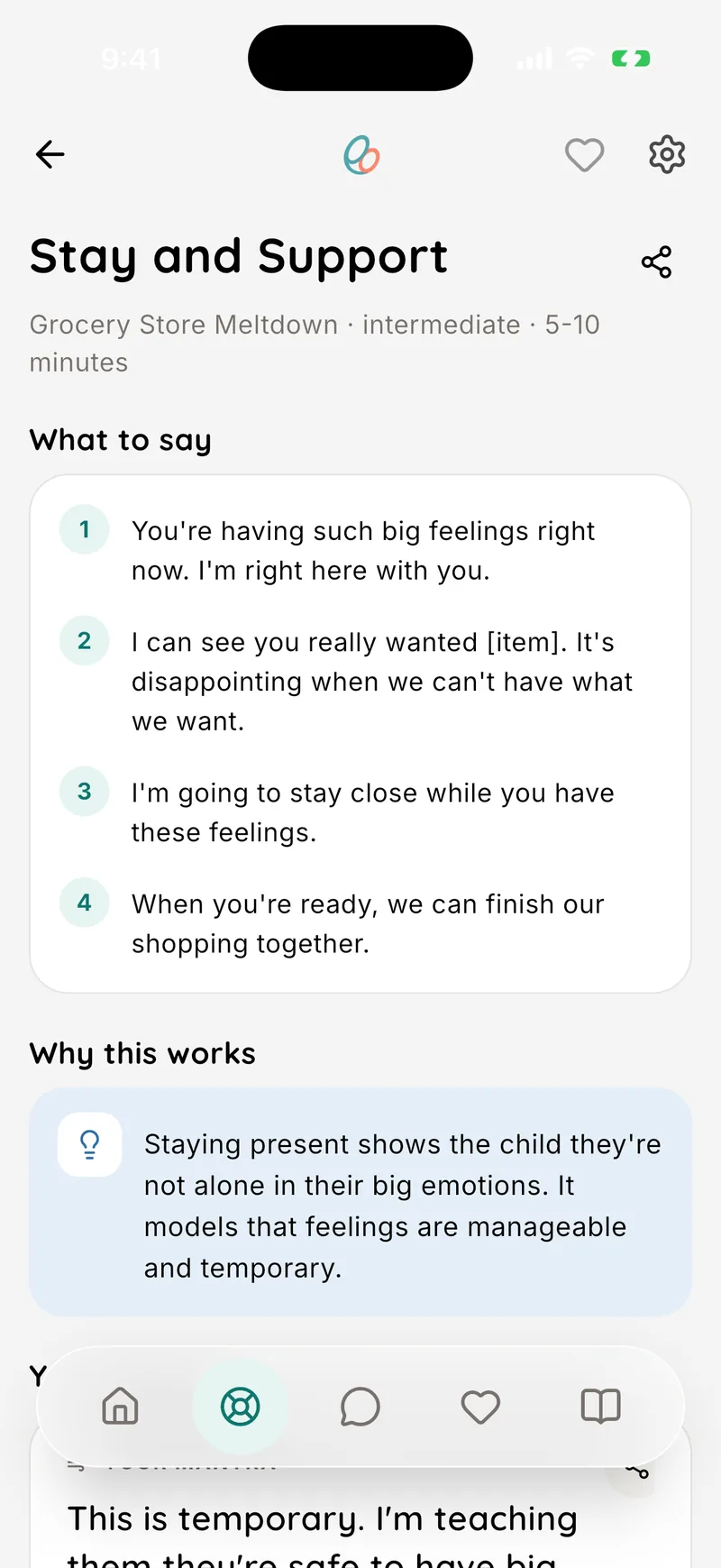
From the app
What to say when it happens
Two children are fighting, grabbing, or screaming over the same toy
Ages 2-10 years
Say this
- 1I see two kids who both want the same toy. That's really frustrating!
- 2I'm not choosing who gets it. You both want it - I get that.
- 3The toy's taking a break until you can work this out together.
- 4When you're ready to figure this out, I'll help you think of ideas.
Why it works
All 36 scripts are free in the app, no account needed.
Make attention predictable, not a prize
A jealous outburst gets your attention fast, and children learn that quickly. That is why it helps to give each child attention before they have to fight for it. A few minutes a day that are clearly theirs, at a time they can count on, means a jealous moment is not the only road to you.
When jealousy needs more support
Most sibling jealousy eases with time, predictable attention and a few changes at home. Sometimes it does not. Watch for signs that a child is struggling more than the situation explains: problems with sleeping or eating, withdrawing, frequent headaches or tummy aches (Parenting SA). If you are worried about a child's behavior, contacting a health professional early gives them the best chance of change (Parenting SA).
Our sibling rivalry guide explains the difference between rivalry and sibling bullying and when to get help.
Questions parents ask about sibling jealousy
"My oldest was fine with the baby for months. Why is he jealous now?"
That is very common. Many children are curious and even proud at first, while the baby mostly sleeps. Jealousy often arrives later, when the baby starts crawling into their games, grabbing their things and getting laughs from everyone at dinner. The baby is now a real competitor, not a doll. The same things help as at the start: time that is only his, a safe place for his things, and words for the feeling.
"My younger child is jealous of everything the big one is allowed to do. Is that normal?"
Yes. Jealousy runs in every direction. To a four-year-old, a seven-year-old's later bedtime looks like pure injustice. Explain the reason in a sentence, and give the younger child something to look forward to: "When you're seven, you'll stay up until eight too." It also helps if the younger one has privileges of their own that come with being little, like a story in your lap.
"Should I buy a small present for the sibling on a birthday?"
Occasional gestures are fine, but a regular "so you don't feel left out" present can teach that jealousy pays. Spain's pediatric association, for instance, advises against compensation gifts for an older child when visitors bring presents for a new baby (AEPED). A role in the celebration usually does more.
"My two count everything. Should I just make it all equal?"
You can try, but most parents find the counting gets worse, because children learn that the numbers are what matters. A few clear systems (one cuts, the other chooses; the calendar decides the front seat) plus short explanations for real differences work better over time.
"I think I do have a favorite. What now?"
Notice it without shame. Feeling closer to one child, especially during a hard phase with the other, is common. Then act on what you can control: one-on-one time with the harder child, one thing you genuinely enjoy about them each day, and a quick check that rules and consequences are the same for both. Children feel warmth more than they count minutes.
Where to go next
- Why siblings compete in the first place: sibling rivalry: why it happens and what helps
- When jealousy turns into fights: how to stop siblings from fighting, and what to say
- A new baby is coming or has just arrived: preparing your child for a new sibling
- Teasing that keeps going too far: why siblings tease each other, and what helps
- Jealousy of the baby, in the moment: what to say when your child is jealous of the new baby
- Ready-to-use words for the hardest sibling moments: RootWise for siblings
Sources
- Parenting SA (Government of South Australia): Sibling conflict and Disability: brothers and sisters
- Asociación Española de Pediatría, En Familia: Celos en los niños... casi normales
- Blake, P. R., McAuliffe, K., et al. (2015). The ontogeny of fairness in seven societies. Nature, 528(7581), 258-261.
- Loeser, M. K., Whiteman, S. D., & McHale, S. M. (2016). Siblings' perceptions of differential treatment, fairness, and jealousy and adolescent adjustment. Journal of Child and Family Studies, 25, 2405-2414.
- Jensen, A. C., & Jorgensen-Wells, M. A. (2025). Parents favor daughters: A meta-analysis of gender and other predictors of parental differential treatment. Psychological Bulletin.
- Buist, K. L., Deković, M., & Prinzie, P. (2013). Sibling relationship quality and psychopathology of children and adolescents: a meta-analysis. Clinical Psychology Review, 33(1), 97-106.
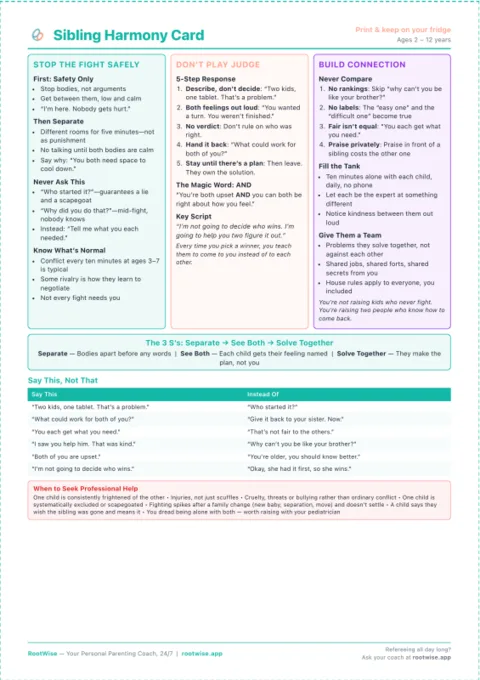
Sibling Harmony Toolkit
Stop sibling teasing and build family harmony with both-child approaches, empathy exercises, and conflict resolution strategies.
- The question never to ask when they fight
- Five steps to stop a fight without a judge
- How to make them a team instead of rivals
Frequently Asked Questions
Need personalized support?
Ask RootWise about your own situation and get an answer for your child's age, 24/7, when you need it most.
Get the app